

Off-Roaders Left With Just 3,800 Miles Of Trails After Judge Shuts Down 2,200 Miles To Preserve An Endangered Keystone Species
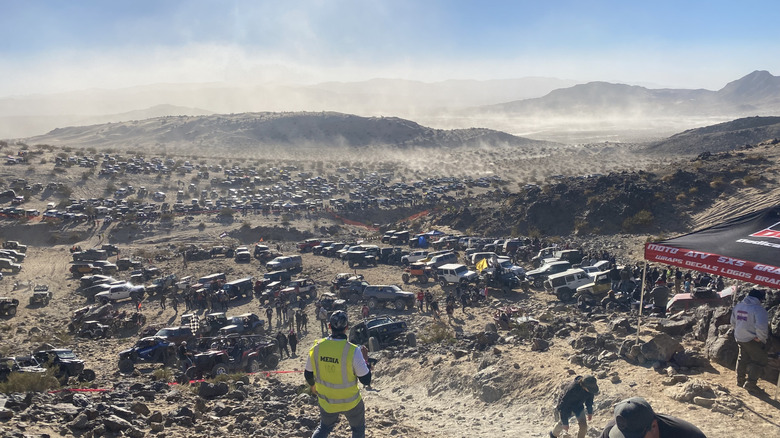
The Mojave Desert is known for different reasons in different circles. In the scientific community, it represents one of the hottest, driest, and lowest places in North America that's home to thousands of desert-adapted species and generations of human history. For the off-road community it's a giant playground, and to the surrounding communities, it's home. Regardless of how you understand the Mojave Desert, the Los Angeles Times reported that a federal judge recently ordered the Bureau of Land Management to close 2,200 miles of off-road vehicle trails that cut through the habitat of an endangered keystone species: the desert tortoise. The ruling still preserves about 3,800 miles of off-road routes that don't go through critical tortoise habitat, and 270,700 acres of open area that is unregulated.
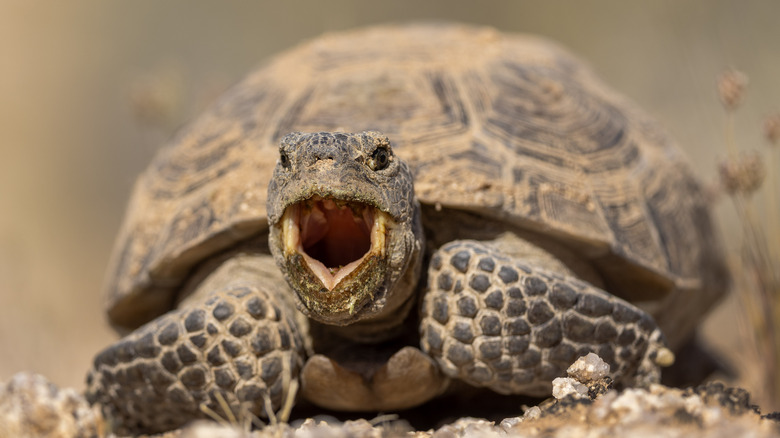
It's estimated that humans have inhabited the Mojave area for over 10,000 years, but desert tortoises are believed to have lived in this desert for several millions of years. Now, though, the Mojave Desert tortoise is an endangered species. How could this species that has inhabited the Mojave for millions of years suddenly become endangered? The LA Times said, "Since the 1970s, tortoise populations have fallen by 96% in some plots monitored by biologist Kristin Berry of the U.S. Geological Survey." What started gaining momentum in the Mojave in the 1970s and continues growing in popularity today? Off-roading, for one.
Legal battles regarding the use of the land have been going on for 20 years
Environmental groups have been butting heads with local residents, off-roaders, and the Bureau of Land Management, the federal agency that manages nearly a third of the western Mojave Desert, since the early 2000s in an attempt to preserve the fragile ecosystem. The Times said,
"The West Mojave Plan released in 2006 designated roughly 5,000 miles of offroad vehicle routes. Environmental groups sued, saying the BLM didn't properly account for the impact on wildlife and other natural resources. Illston largely ruled in their favor and ordered the BLM to redo the route network.
The agency revised the plan in 2019, adding nearly 1,000 miles of new trails. Environmental group sued yet again, and in October 2024, [Federal Judge Susan Illston] found that the BLM violated environmental law by failing to show how it minimized impacts to vulnerable species when creating the route network."
On January 23, Judge Susan Ilston granted the request for closure of 2,200 miles of off-road trails in order to preserve not only the endangered desert tortoise, but also the threatened Mohave ground squirrel and the endangered Lane Mountain Milkvetch plant. It went into effect immediately. The desert tortoise survives the harsh desert conditions by digging and living in underground burrows. Burrows that crush instantly under the tires of off-highway vehicles, or OHVs.
Locals and off roaders blame tortoise decline on other causes like invasive species
Ravens have become an invasive species in the Mojave due to human development increasing access to food, water, and perching opportunities. They prey upon juvenile desert tortoises, and their numbers have increased 1,500% since the 1970s, according to desertreport.org. Other threats to desert tortoises include upper respiratory tract disease attributed to people releasing infected tortoises that were kept as pets, and habitat loss and degradation from human development, military maneuvers, livestock grazing, and off-roading. Said the Times:
Vehicle access is linked to more vegetation destruction and soil disturbances, according to the report. That in turn leads to the spread of invasive weeds, which can crowd out the plants tortoises eat and fuel wildfires. People are also more likely to dump garbage alongside established roads, which can then attract ravens that feed on baby tortoises.
The trail closure still leaves 3,800 miles of open OHV trails in the Mojave Desert, as this map illustrates, and the closures do not impact popular off-roading areas like Johnson Valley OHV Area where King of the Hammers is held, Stoddard Valley OHV Area, Spangler Off-Highway Recreation Area, or El Mirage Off-Highway Recreation Area. Local residents still worry about how the closures will impact the influx of tourism provided by off-road enthusiasts and nature lovers alike, since all vehicle access is limited.
There is one area where desert tortoises are thriving
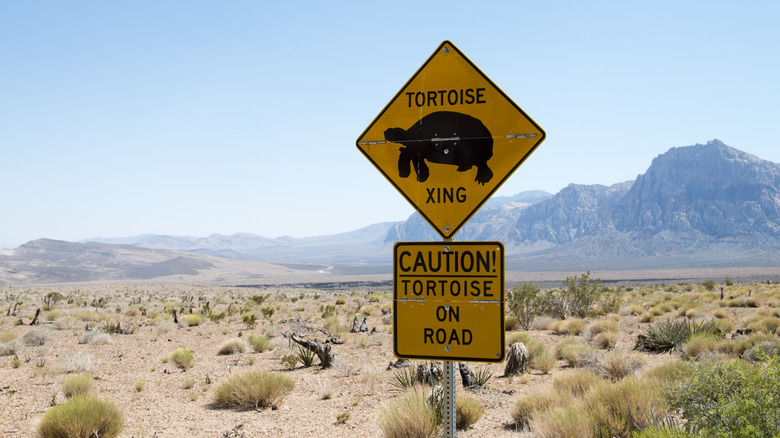
One area where desert tortoises are thriving in the western Mojave is the Desert Tortoise Research Natural Area near California City. This is a 40-square-mile preserve that's fenced off to protect the species from off-roaders, livestock, and some predators. Researchers monitor raven nests and oil their eggs which prevents them from hatching and feeding off the juvenile tortoises within the preserve. The LA Times spoke with Ed LaRue, a biologist who has chosen to study the decline of desert tortoises in the Mojave. Said LaRude, "If we could do something like that in three or four other places in critical habitat, we'd have a chance of tortoises coming back."
The desert tortoise (Gopherus agassizii) is a keystone species, meaning that it has a disproportionately large impact on its ecosystem, and plays a critical role in maintaining the structure, diversity, and function of the community. Desert tortoises live most of their lives in underground burrows that they dig, which also provide shelter for snakes, lizards, and small mammals trying to find relief from the harsh desert climate.
Without desert tortoises and their burrows, it suddenly becomes a lot harder for other animals to survive. Hopefully this court order will help the desert tortoise population rebuild, to regain the delicate natural balance of the Mojave, but it's difficult for the BLM to monitor such a vast stretch of land. We reached out to the BLM, which has until April 18 to appeal the court order, but it declined to comment due to the pending litigation.