

2026 Mazda CX-5 Is Bigger And Better To Live With, But Not Better To Drive
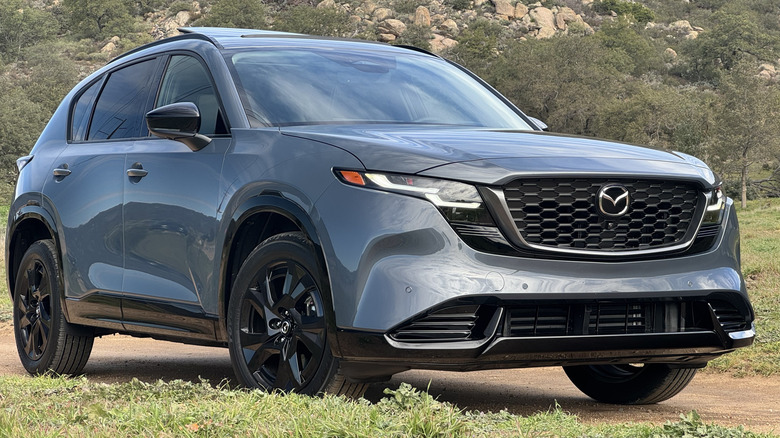
Mazda's claim to fame is its ability to develop affordable, reliable cars that place more of a meaningful focus on driving enjoyment than its competitors do. As such, its entrant into the extremely popular compact crossover segment, the CX-5, earned Mazda over 1.6 million U.S. buyers since its debut, and it is very likely to be the compact crossover that driving enthusiasts recommend.
Aside from its fun-to-drive nature, the outgoing CX-5 was criticized for a cabin that wasn't especially roomy and a love-it-or-hate-it infotainment system that relied solely on a scroll wheel. Now the redesigned third-generation 2026 CX-5 is here, and it aims to address those complaints. Does it? In a word, yes, but that's not the whole story.
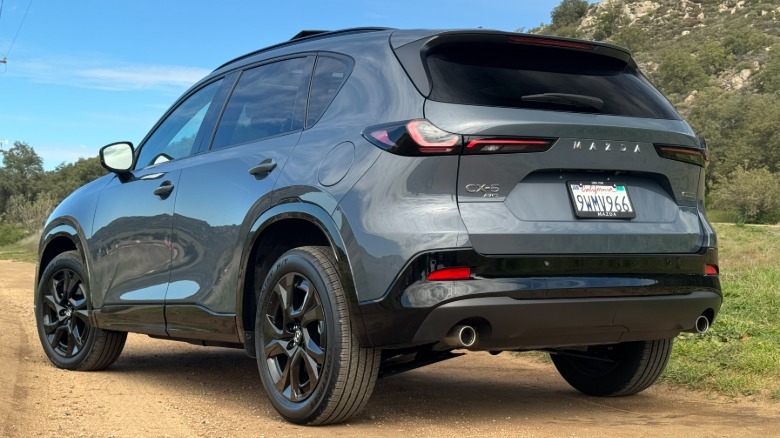 Logan K. Carter/ Jalopnik
Full disclosure: Mazda wanted me to drive its new CX-5 so badly that it put me up in a beautiful hotel in the San Diego area for a few nights and provided me with food and drinks.
The turbocharged powertrain is gone, but pricing is quite reasonable
The cheapest 2026 CX-5 2.5 S starts at $31,485 including destination, and the top S Premium Plus trim comes in at $40,485. That base price is up about $1,000 for 2026, and it's slightly higher than the Subaru Forester and Hyundai Tucson, but still about $1,000 cheaper than a CR-V, and about $2,000 cheaper than a RAV4.
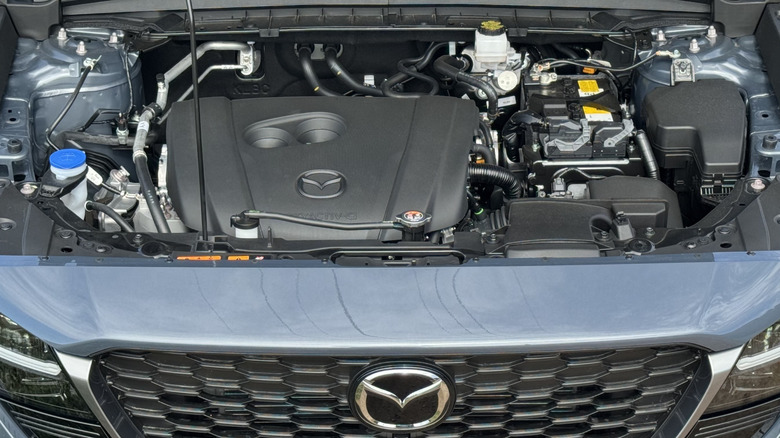
Sadly Mazda dropped the peppy turbocharged engine option from the CX-5 lineup, which leaves a carryover 2.5-liter naturally aspirated inline-4 engine that sends 187 horsepower and 186 lb-ft of torque to all four wheels through a six-speed automatic. Mazda says the new CX-5 takes a whopping 9.6 seconds to go from 0 to 60 mph, and it feels about that slow from behind the wheel.
 Logan K. Carter/ Jalopnik
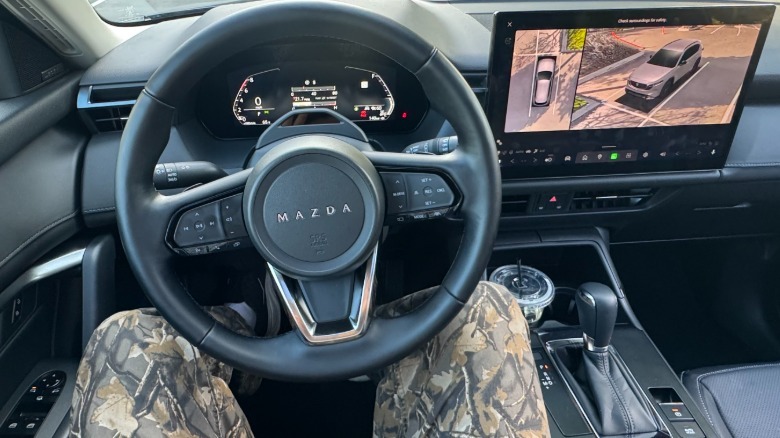
All CX-5s come pretty well equipped with a 10.25-inch digital tachometer, a 12.9-inch infotainment display, dual-zone climate control, and Mazda's array of active safety and driver assistance features including adaptive cruise control, rear cross-traffic alert and braking, blind-spot detection, lane-keeping assist, and front and rear parking sensors. The Premium Plus brings niceties such as hands-on Cruising & Traffic Support with lane change assist and driver monitoring, a massive 15.6-inch infotainment screen, a hands-free liftgate, a 360-degree camera system, and steering wheel-mounted paddle shifters.
Longer wheelbase, more interior room, and fresh tech
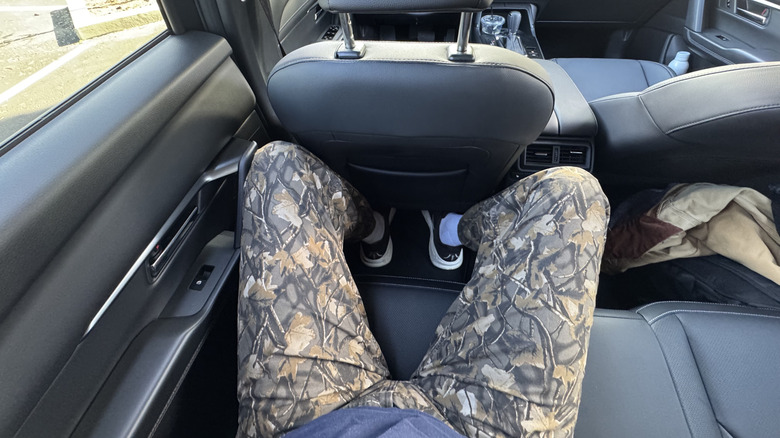
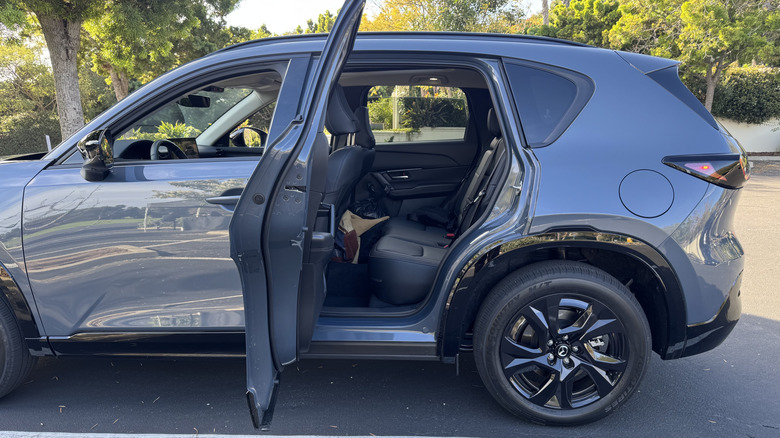
Mazda addressed prior complaints about the small interior and polarizing technology by lengthening the CX-5's wheelbase and its overall length by 4.6 inches to 110.8 inches and 184.6 inches, respectively. Those are just numbers on a computer screen without proper context, but in practice, as someone who stands 6-foot-8 tall, the new CX-5 has a roomier back seat than almost any other compact crossover I've been in. I was able to comfortably sit behind my preferred driving position, and could have stayed there for hours if need be. There's even standard 40/20/40-split rear seatback for maximum versatility, and rear air vents are standard on all trim levels above the base 2.5 S for maximum comfort.
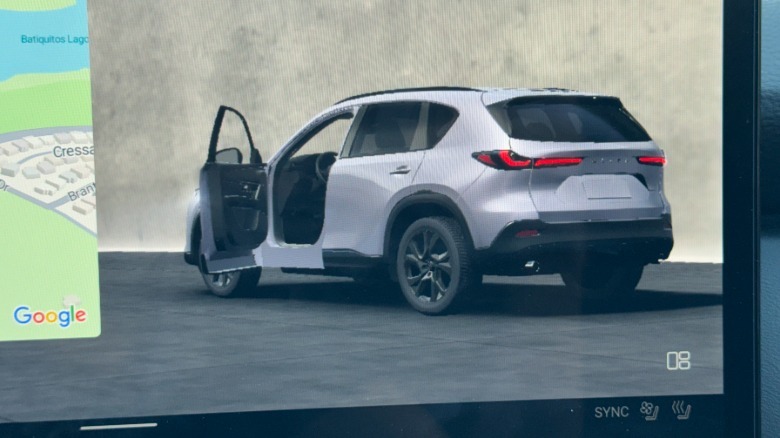
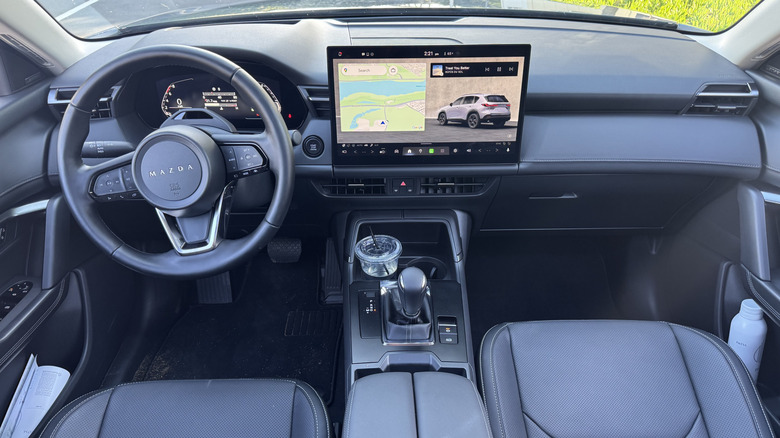
The confusing infotainment interface was another primary gripe about the outgoing CX-5, so Mazda did a full 180 with the infotainment system for the third generation, ditching the scroll wheel-based setup for a new touchscreen and redesigned infotainment system that does away with almost all physical controls in the center stack. The only physical buttons are a hazard light button, a button for the front defroster, and a button for the rear defroster. There isn't even a volume knob, which is occasionally annoying, but it's made less annoying for the driver thanks to intuitive physical buttons on the steering wheel. It now has Google Built-In, and though Mazda only includes a one-year subscription for connected services, you can always use your cell phone's data plan for Mazda's Vehicle Connect Services like remote start.
 Logan K. Carter/ Jalopnik
My press car is a top trim Premium Plus, which is the only trim that comes with the hulking 15.6-inch center screen. The user interface is intuitive to operate and feels more like you're using your smartphone than a typical automotive infotainment system. There's always a bar at the bottom of the screen that has basic HVAC functions like temperature and fan speed, as well as shortcuts to system settings, vehicle settings, navigation, phone mirroring, the home screen and the main menu.
 Logan K. Carter/ Jalopnik
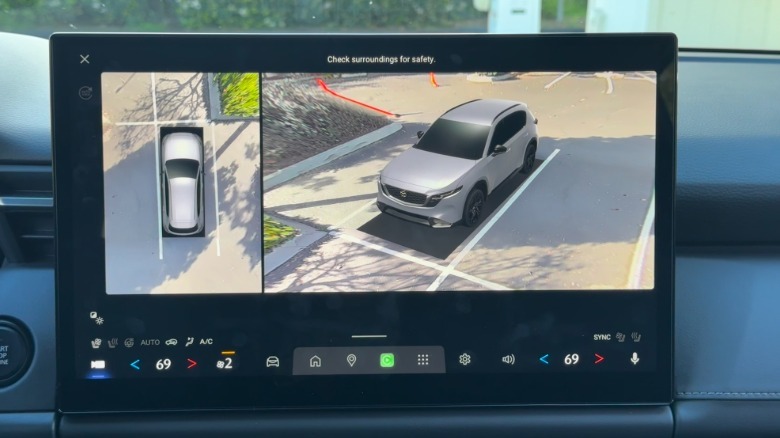
The surround-view camera system is excellent, and it's easily pulled up by a dedicated steering wheel button. The biggest flaw with the infotainment, aside from the lack of a volume knob, is the pixelated rotatable graphic on the home screen. On the bigger screen, it looks like a graphic from a PS3 game, but it's possible that could change with an over-the-air update. Overall, I actually really like using the CX-5's new infotainment system.
The CX-5's broad appeal is improved, but enthusiasts may find it lacking
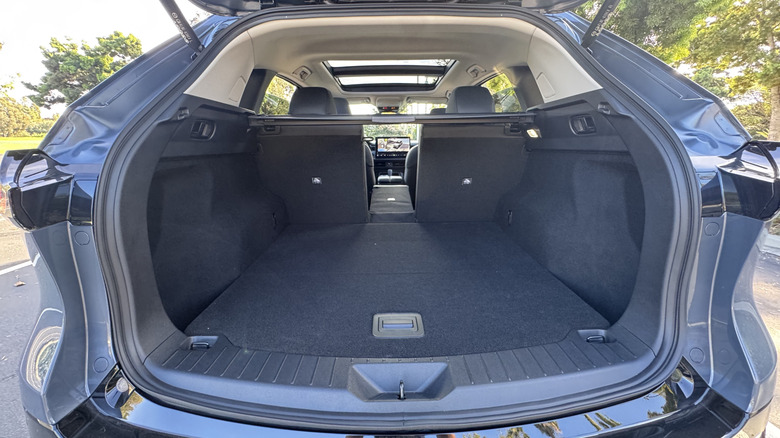
The new CX-5 is a supremely practical, modern, and family friendly compact crossover. The rear doors open very wide to make it easier to load car seats in, and the rear seat is spacious enough to fit a rear-facing child seat behind front occupants. The trunk space is two-inches deeper, over one-inch taller with a half-inch lower load floor, and subjectively, its exterior styling looks decidedly upscale, and the interior feels like it belongs in a more expensive car.
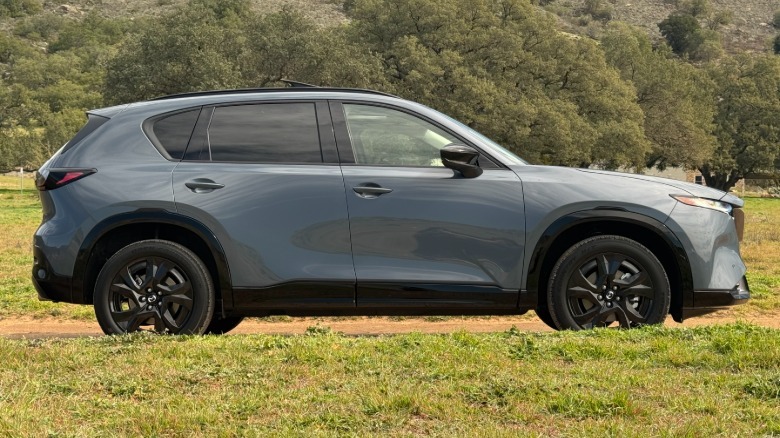
Unfortunately, I did not find the new CX-5 as engaging to drive as I had hoped. The powertrain is weak and gets loud in the upper rev range, and taking the CX-5 down a twisty mountain road just doesn't spark joy. The steering lacks feel, a problem exacerbated by the Toyo Open Country 225/55 R19 tires that are quick to squeal and understeer in protest of tight, twisty roads. When in Sport mode, though, the throttle response livens up and the transmission is eager to downshift and keep you in the wheezy engine's power band upon hard braking, and it will not automatically upshift for you if you hit redline while using the paddle shifters, so there are still a few sporting tendencies here.
 Logan K. Carter/ Jalopnik
Hooning the new CX-5 is by no means a bad experience; it's totally adequate, but it does not feel eager, communicative, or especially fun. While this may be a bit disappointing to driving enthusiasts (and Mazda fans), it's not necessarily a bad thing and it isn't likely to affect the CX-5's sales.
The new CX-5 tackles day-to-day duties in stride
On less exciting roadways like the freeway at rush hour, the CX-5 settles in nicely with a taut ride quality that never feels harsh. The upgraded Cruising & Traffic Support with lane-change assist that's only on the Premium Plus trim isn't a necessary upgrade. The system requires two hands on the wheel at all times, and I found the lane-change assistance to be quite fickle and deactivate mid-merge regularly. The CX-5's standard adaptive cruise control is plenty good. Getting the 3,865-pound CX-5 up to highway speeds requires the little engine to work hard and cause quite a ruckus, but once you're up to speed it settles down and road and wind noise are well suppressed.
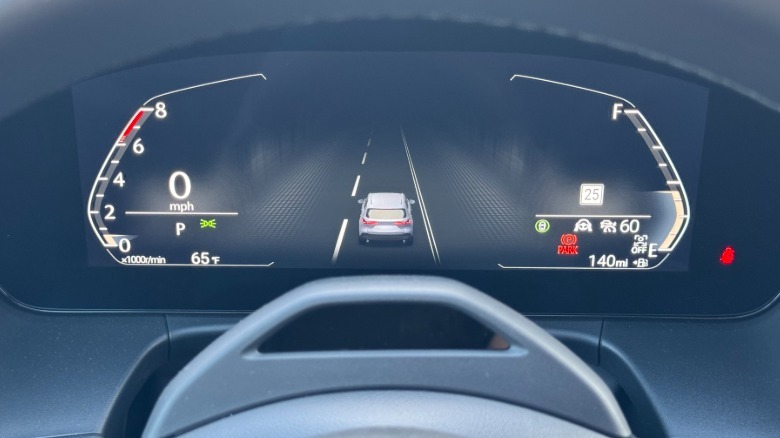
The interior looks and feels upscale, and while the digital driver's display isn't the most configurable, I absolutely loved the driver-assistance view that shows surrounding cars and makes it clear if someone's in your blind spot without requiring you to whip your head around.
 Logan K. Carter/ Jalopnik
A wireless charger is conveniently located in the center console and doesn't allow your phone to dislodge easily, and the split center arm rest is very Mercedes-like. It's not flush with clever cubbies and storage solutions, though, so there's not a lot of room to stow the miscellaneous goodies that many folks like to keep in their car. Overall, living with the CX-5 is likely to be a satisfying experience for most drivers.
It's a more appealing family car, but a less appealing driver's car
The redesigned CX-5 successfully addresses complaints about its predecessor, but sadly it drifts away from Mazda's fun-to-drive nature. It's a great option for folks who don't mind a competent if a bit dull driving experience, though. The CX-5 is well-priced and comes with lots of great features as standard, its interior is very spacious and feels upscale, and its technology is modern and intuitive. But it's also very slow and not especially rewarding to push on a twisty road, which is par for the course when it comes to affordable crossover.
In the extremely crowded and popular compact crossover segment, the CX-5 competes with all the big hitters like the also-new Toyota RAV4 and Volkswagen Tiguan; the slightly older Subaru Forester and Chevrolet Equinox; and the Honda CR-V, Hyundai Tucson, Kia Sportage, and Nissan Rogue, all of which are due for redesigns within the next couple years. Look for the 2026 Mazda CX-5 to arrive at dealerships later this month, but if you prioritize a spunky driving experience over larger size and new technology, you might be able to find a good deal on a 2025 CX-5.