

You Can Blame 60 Minutes For 'Unintended Acceleration'
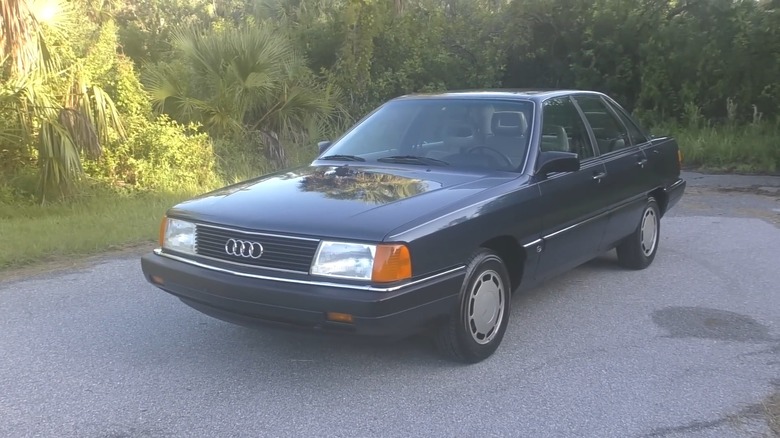
There have certainly been occasions where dangerous defects uncovered in vehicle models demanded swift and decisive action on the part of automakers. The largest automotive recalls in history (so far) don't paint manufacturers in the best light, with problems often originating from cost-cutting measures. However, in the case of Audi and an explosive exposé from "60 Minutes" in the mid-1980s, the automaker was not truly at fault and couldn't issue a recall — as it concerned a problem that didn't exist.
The now-debunked report from the journalism outlet came forward with claims that the Audi 5000 not only had the ability to accelerate on its own, but also that this behavior had resulted in the death of a young child. The truth was that a combination of greed and a lack of accountability led to lawsuits aplenty, despite thorough tests being unable to replicate the claimed vehicle behavior. Even original reports counter the statements that would be argued later in court. But how did this happen?
How it all started and what really happened

A tragedy occurred to a family in 1986, where a young boy was killed after being accidentally struck by a vehicle driven by his mother. The model was the Audi 5000, and what followed was pure sensationalism. A "60 Minutes" segment aired covering the story, following claims the car moved forward on its own, despite desperate attempts to get it to stop. Emotional interviews with grieving family members and footage of an Audi rocking forward all worked to drive the dramatic story.
The public quickly turned on the automaker with a cacophony of legal actions. The mother featured on the "60 Minutes" segment demanded $48 million from Audi. However, on-scene witnesses and law enforcement recall the mother explaining her foot wasn't entirely on the brake at the time. Oh, and the demonstration illustrated on 60 Minutes supposedly showing this horrible defect was completely staged. Apparently, it involved pushing high-pressured air into a hole in the car's transmission, causing it to jump forward.
Not deterred, lawyers representing the plaintiffs suddenly pivoted from "unintended acceleration" to Audi placing its pedals too close together causing drivers to make deadly mistakes. But experts compared various car model pedal measurements for themselves. They asserted that while the car did indeed have narrower pedals, the unintended acceleration was more likely a mixture of driver error and exaggerated media reporting. This isn't the only time such an issue grabbed some headlines, as the supercharged Ford Mustang suffered a recall due to potential unintended acceleration.
Audi was caught between a rock and a hard place
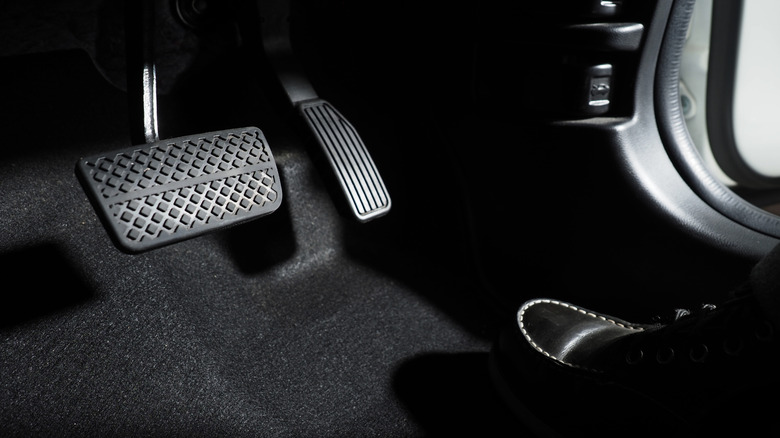
Following the "60 Minutes" piece airing, Audi suffered a massive drop in vehicle sales. According to Curbside Classic, 1984 saw 74,000 units sold, but by the early '90s, the automaker was only moving 12,000 units in the U.S. Concluding an exhaustive study, the National Highway Traffic Safety Administration released its findings in 1989, unable to find fault the Audi vehicles. Audi knew that unintended acceleration wasn't a real issue with its models, but telling its customers that they were making mistakes behind the wheel wasn't really feasible either.
So, Audi released some public relations videos following the hysteria, carefully negotiating around all the media hype. The automaker asked three-time Indianapolis 500 winner Bobby Unser to explain the facts surrounding the allegations. According to Unser in the Audi film, as seen on YouTube channel Kenny Storm, "In no instance have the government engineers been able to find any sort of mechanical malfunction in the Audi 5000 that could possibly account for unintended acceleration." Bobby Unser went on to demonstrate what many auto enthusiasts already know: brakes are more powerful than engines trying to accelerate. This is perfectly demonstrated when spinning the tires in place by pushing down on both the brake and accelerator.
In the end, the automaker was able to ride out the storm. It has continued to provide models that are seen as safe and attractive options for U.S. drivers today. In fact, there are several used Audi models you can buy today with confidence, including previous generations of the A6, Q3, and TT, for instance.