

What Are The Pros And Cons Of Forged Wheels?
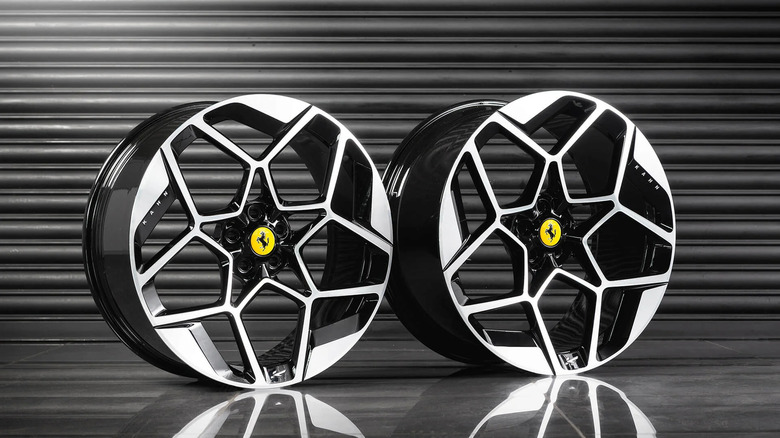
If you are looking to personalize your car, or tweak it for a particular discipline — whether that be overlanding, drag racing, or cornering on canyon roads — then fitting the right wheels is a great place to start. Depending on your needs, you could go for the unassuming look and fit an understated set of black steelies, or opt for some standard alloy wheels, whether they be from an automaker or an aftermarket producer. Or you could get something really quite special, like split-rim or forged alloy wheels.
It's the latter we're putting under the microscope today. These are specialist wheels, created by heaps of pressure and immense heat during the manufacturing process, which in turn leads to a lighter and stronger wheel. As such, these are generally designed with performance in mind, rather than just being seen as a cosmetic upgrade.
Some automakers will equip models with forged wheels as standard, or as optional upgrades, but you're unlikely to see them on the upgrades sheet for a CR-V or Camry. Instead, it's companies like BMW's M department and Ferrari that provide the choice. Going aftermarket provides plenty of choice too, with many companies churning out solid or split-rim forged alloy wheels, to complement your ongoing track build.
As with anything, there are pros and cons attached with forged wheels, both of which this article will dig into. We'll discuss everything from performance benefits, to cost and safety.
Advantages of forged wheels
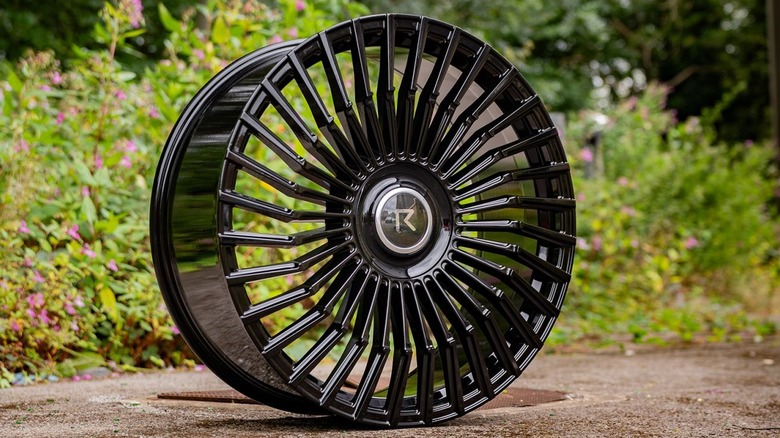
Let's kick off with the obvious benefit — forged alloy wheels are both lighter and stronger than typical cast units. In fact, they can be around three times as strong as their more commonplace counterparts, and up to 25% lighter. The additional strength means forged wheels are less likely to crack or shatter upon impact, which makes them a popular choice for motorsport purposes. Additionally, that saved weight means less unsprung mass in the corners, which in turn will aid performance and improve handling.
Secondly, while the primary purpose of a forged alloy wheel is to boost the performance of a car, we still can't ignore the added level of customization they bring. The list of options with aftermarket forged alloy wheels is practically endless, so if you need to stand out from the crowd, or are just dissatisfied with the OEM options, then a striking set of forged wheels could be just the ticket.
Finally, forged alloy wheels can take more abuse. That means they can take the added pressures of increased downforce, sticky track-only slick tires, and heavier cars (such as today's smattering of hybrid sports and supercars), whereas typical cast-formed wheels might fail. The process of forging provides a higher load rating per corner, which translates to an end product that's more tolerant of serious abuse.
Disadvantages of forged alloy wheels
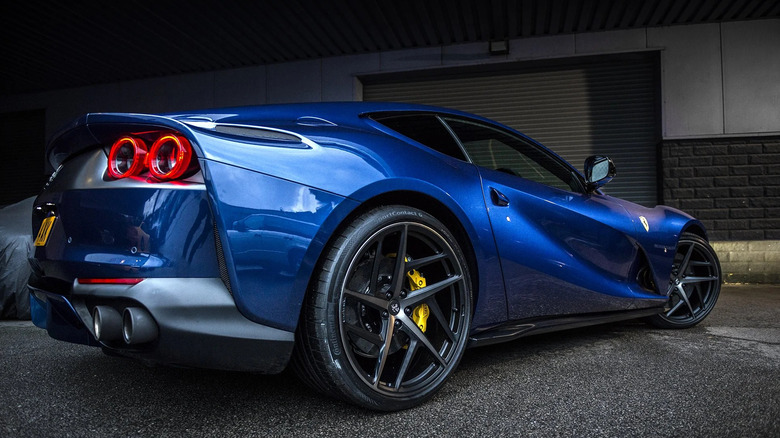
For many, the main detracting factor from the desirability of forged alloy wheels is the cost. You can easily spend more than $10,000 on a set of forged alloy wheels, and we're sorry, but you can get a great budget track toy or weekend sports car for that money, so the expense may not be easy to justify.
If you simply must have the coolest-looking GT3 RS out there, then of course, the expense could be seen as "worth it". However, forged wheels are still prone to damage on the road, especially if you're running stretched or ultra low-profile tires. When you've got such expensive wheels so vulnerable to damage, you can see why some might be put off. You also need to keep on-top of cleaning at all times, as muck from the road and built-up brake dust will quickly damage the factory finish – not what you want on a $10,000 set of wheels.
Furthermore, gearheads know how much forged wheels cost, and that makes them prime targets for theft, as Tesla found out when 44 wheels were stolen from cars in a storage lot in Texas. For someone familiar with popular forged-wheel brands, a shiny set sitting on your street-parked sports or luxury car could be all too tempting, and that might make buyers think twice.