

Why Magnesium Wheels For Your Daily Driver Just Don't Make Sense

Magnesium wheels (or mag wheels) are lightweight, which is why you typically see them from factory on Porsches and other high-end sports cars. While there are aftermarket solutions available, they might not always be suitable for your daily driver. First of all, they're stupidly expensive, and secondly, the material itself is more prone to corrosion, so it could be a royal pain in the backside when it comes to upkeep. And there's more.
Mag wheels bring about performance benefits, which is good if you're looking to shave tenths off your lap time, but not so much in day-to-day driving. As a material, magnesium is 1.5 times less dense than aluminum, but the advantage comes with a compromise. Magnesium is considerably less stiff than aluminum, which means it's less resistant to bending under load. Something like a medium-sized pothole can most certainly ruin your beautiful mag wheels if you're not careful, because magnesium, unlike aluminum, shatters more easily.
Additionally, welding or heating magnesium safely is a challenge no less. Suffice to say, it's almost impossible to fix/repair your magnesium rims, unless you ship them over to an expert. But even they have reservations regarding what is considered repairable.
The corrosion part is a bit nuanced, in that if it's protected well (through powder coats, protective wax, and pH-balanced cleaners), things should be okay. However, magnesium is inherently more reactive than aluminum and corrodes faster. Should the protective layer wear off, chemical breakdown can occur, especially if you live someplace where it rains a lot or there's salt on the road.
Magnesium has its pros, but aluminum seems better overall
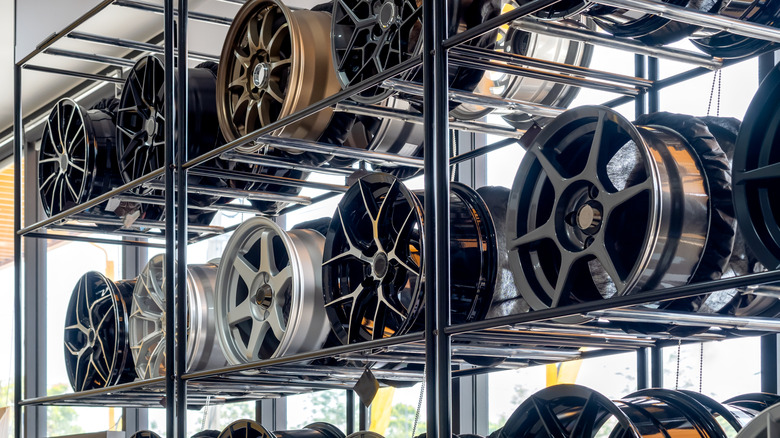
It's not all doom and gloom, though. Magnesium wheels are excellent when it comes to high-speed handling, braking, and steering response. Most of the perks stem from the material's relative lightness compared to aluminum. So if you've invested in weight reduction measures and the car is more or less a weekend toy, it makes sense to go with mag wheels, provided you can stomach the cost. But even if you manage to baby it, magnesium can still be a problem. It can become brittle over time, so a better trade-off might be forged aluminum.
Although there are compromises, aluminum is a great middle ground when usability and daily driving are taken into consideration. Sure, forged aluminum may not be the lightest solution, but its corrosion and bending characteristics are far superior to magnesium. Not only that, but an aluminum rim requires much less maintenance and is more affordable than its relatively exotic magnesium counterpart.
Repairs and availability are something else to take note of. It only takes a small mistake to damage your expensive wheels (let's be fair, forged rims are not cheap), fixing them won't cost you an arm and a leg. Shipping your magnesium wheels to a specialist will undoubtedly be pricier. Besides, you're more likely to find a shop close by that works on restoring aluminum wheels than you would a mag-wheel expert. Unless you're chasing the prestige/bragging rights or you're into racing and the Colin Chapman ethos, then forged aluminum should be fine for your daily driver. It does roughly 95% of what the magnesium wheels can.