

When Did Automakers Switch From 8-Track Players To Cassette Decks?
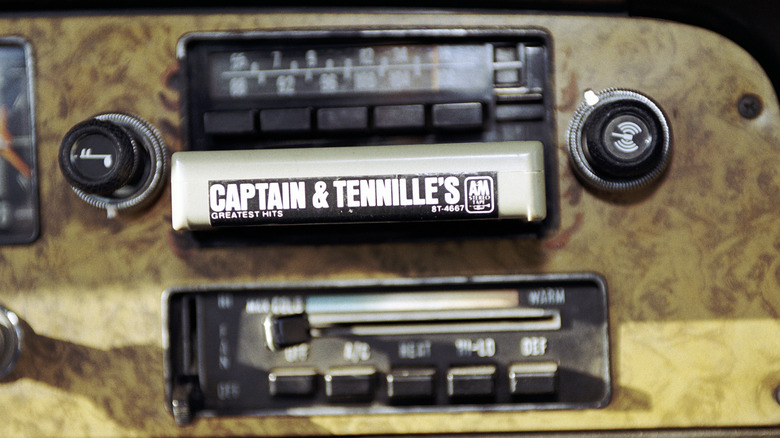
It was during the late 1970s that 8-track players started being replaced with cassette decks in the automobile industry. Major American automakers like General Motors had started pivoting away from 8-track with 1980 models having an option for a cassette deck. The format would limp along into the '80s, with manufacturers desperately trying to hang on to a share of the market. According to AmericanCollectors.com, by 1984, cassettes had achieved 51% market share. Making matters worse, as momentum for audio cassettes gained steam, 8-tracks became less reliable, using quality compromised materials in order to cut costs.
The 1966 Ford Mustang was the first model to get an 8-track player stock and back then, it was a big deal for music lovers. Before this technology, other than a previous attempt at an in-car record player that didn't take off, motorists finally had an alternative to radio. Listening to the song of your choice on demand is what helped propel the popularity of the technology. An 8-track used quarter-inch wide magnetic tape wound within a cartridge, that included four tracks in stereo, doubling the number to eight. They ran continuously and were divided into four programs. The playback head would move position to read the different tracks, filling the car with the sounds of popular artists of the time.
The 8-track would hardly be the only format to experience success, only to be abandoned in favor of other options. Even the long-standing foundation of car audio, radio, might be getting the ax. Though as EVs may have helped kill AM radio, Congress might be bringing it back.
Why was 8-track abandoned?
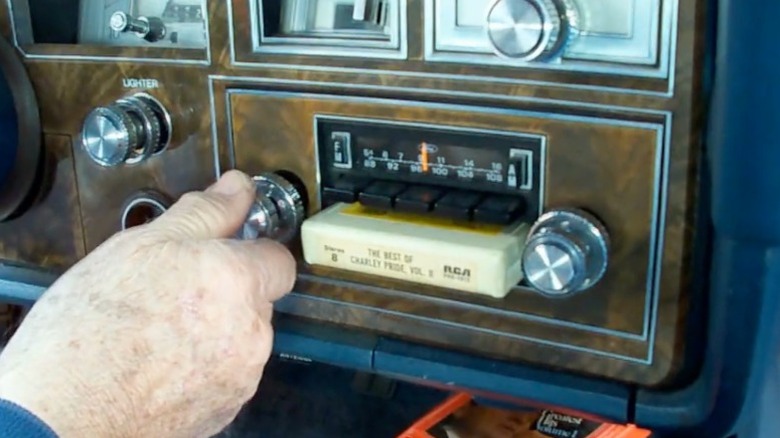
While the 8-track was the go-to car audio medium for over a decade, it had some disadvantages users eventually couldn't overlook. For one thing, their size made them less convenient and were considerably bulkier when compared to cassette decks. This meant that storage was a bit of an issue. Forget the compactness of something like a CD wallet (which came later), 8-track organization came in the form of a suitcase. And once that was filled, the glove box, under the seat, and console compartments were fair game. Furthermore, the actual tape inside the cartridge, was extremely sensitive to heat, with exposure causing audio distortion. Considering in just 60 minutes, the inside of a car can reach 137 degrees Fahrenheit on a summer's day, this was a major problem.
Far from its only drawback, the way the 8-track was designed, it would often interrupt the song that was playing to change tracks. The four programs were limited in duration to around 10 minutes, at which point the music would cutout followed by an audible clunky noise of the unit switching channels, and then the music would resume. An interruption like that today would be unthinkable. Just imagine getting in your car and cranking up something like the Boss Audio Systems Elite, only to have your tunes interrupted mid-song. But back in its heyday, 8-track provided enough positives for drivers that this quirk of the format was overlooked.
Cassettes were originally launched in the 1960s
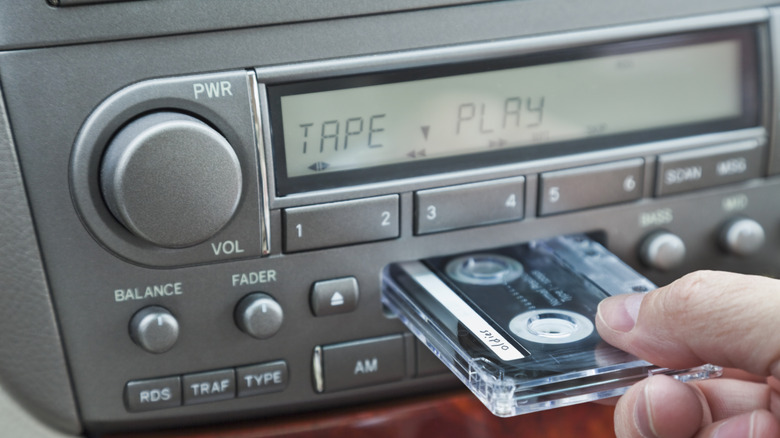
Since cassettes succeeded 8-track, you might be under the impression that they must have arrived on scene in the late '70s. The truth is they were around more than a decade earlier, with an automobile cassette player from Phillips available as early as 1968. This was just two years after the Mustang received the first factory 8-track. So, why did it take so long for cassettes to take over the market? It had to do with audio quality, and at that time, the 8-track format sounded better. Initially, dictation was the preeminent use for cassettes, helpful for a variety of professionals and hobbyists to record their thoughts for later transcription. However, while the quality was decent enough to be used for dictation, it suffered when reproducing music, a noticeable downgrade from 8-track. But things would change.
Cassettes utilized two interior spools which transferred the tape from one to the other as it played. This opened the opportunity to have multiple sides, since the tape didn't run in one single continuous direction like 8-track. With the capability to hold nearly 60 minutes of music on each side, songs were no longer interrupted.
Of course, the cassettes continued to get better over the years, utilizing chromium oxide for more robust tapes, and improved noise reduction technology. Even after the sun had set on this format, with the rise of compact discs, it lived on in a way. Let's hear it for the cassette aux adapter, the greatest in-car entertainment invention of all time.