

FAA Shuts Down El Paso International Airport For 10 Days, Except It's Already Open Again, Because The Army Fired Lasers Against Mexican Cartel Drones, Except There Weren't Any

The Federal Aviation Administration shut down all air traffic in a 10-mile radius around El Paso International Airport for ten days late Tuesday night because the U.S. Army was firing anti-drone lasers at nearby Fort Bliss without coordinating with anyone. Then Transportation Secretary Sean Duffy, along with other officials from the Trump administration, said this was because the Army was responding to an actual incursion from drones operated by Mexican cartels. Then several members of Congress said that there were no drones, and this was actually a test. Then the FAA lifted it's ten-day ban the next morning. Everything's going just fine in the most powerful country on Earth, why do you ask?
Details are still coming out, but what's already been reported is crazy enough (spoiler alert: America attacked a balloon). The background here is that Mexican cartels have been caught using drones to smuggle drugs across the border, something that U.S. has been slow to counter. The Department of Homeland Security claims that they were operating over 300 flights per day back in 2024; the cartels are also using drones as weapon platforms in their wars against each other, as the New York Times reports.
How do you fight against drones? If you immediately thought, "Lasers," first of all I applaud you, and second of all you're apparently right. Specifics are scant here, but CBS News says that Fort Bliss is in the process of standing up laser-based anti-drone technology to defend the border. In fact, just last week, our mighty Army heroically protected the nation by detecting and shooting down an aerial invasion from Mexico. Pew pew! The invader turned out to be... uh, a party balloon. Nailed it, guys.
Don't worry, it gets weirder
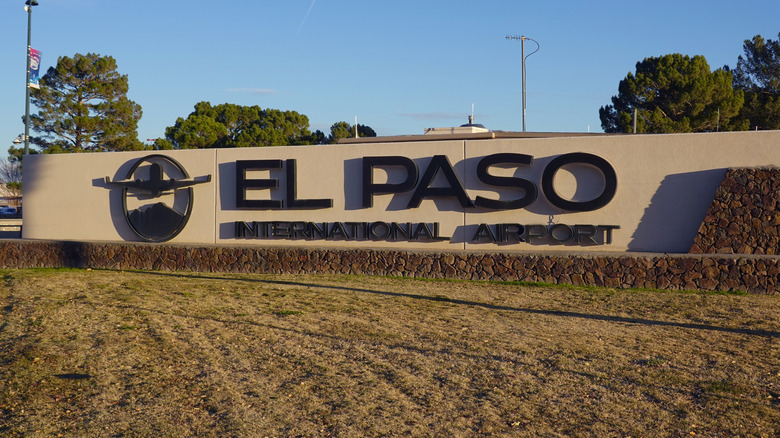
The American public can rest assured that we were not attacked by any more party balloons Tuesday night. What did happen depends on who you ask. For sure, the FAA shut down the airspace around El Paso International Airport. That is strange enough, but much stranger is the way that the agency did it. First of all, it shut down everything in a 10-mile radius (not including Mexican airspace, where it has no jurisdiction). Second, it shut down everything, including police and medical helicopters, per CNN. That is deeply unusual, as in nearly unheard of. Third, it did so (initially) for ten days, which hasn't happened since 9/11.
Fourth, and this is where it gets really nutty, the FAA's specific action was to declare the whole area as "national defense airspace," per the El Paso Times. That means this isn't like shutting down an airport due to wind or snow: this is the FAA effectively reclassifying El Paso as a military installation. Doing it this way authorizes any aircraft that flies in the radius to be shot down. Yes, the FAA declared that any plane, of any kind, in this area was as dangerous as a balloon, and thus worthy of destruction.
Pointing fingers
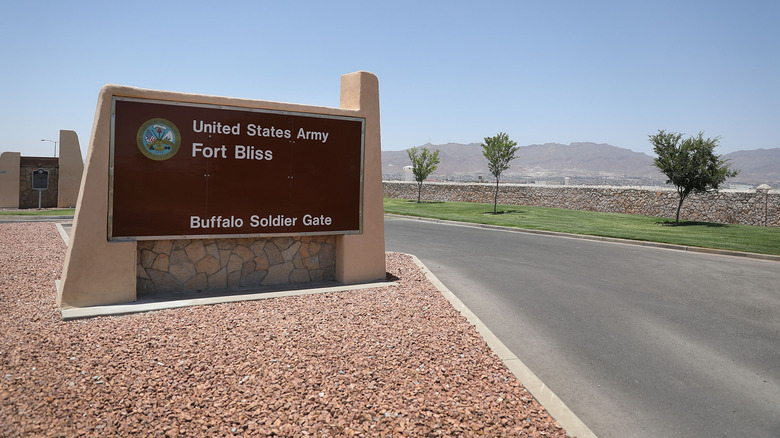
As the sun rose over a very confused El Paso on Wednesday morning, the supposedly ten-day shutdown was already being lifted. Secretary Duffy and others in the Trump administration claimed this was all because of another incursion of cartel drones; in other words, blame the Mexicans. But Representative Veronica Escobar of El Paso and Senator Tammy Duckworth of Illinois, both Democrats, later claimed that there were no drones at all: Fort Bliss was merely preparing to do a test of their laser system.
What on Earth is going on here? The answer, very likely, is the same as the answer to most things these days: infighting in the Trump administration. According to the AP's sources, the FAA had grave concerns about what Fort Bliss was doing and had a meeting scheduled with the Pentagon later in the month. The Army, however, just went ahead with test preparations anyway. The FAA's shutdown could plausibly be read as a major warning shot over Fort Bliss, an intentionally public spectacle meant for force attention onto the issue. Well, if so, that sure worked.
Whatever's really going on, it wreaked havoc on a major U.S. airport, leading to the cancelation of around 70 flights. For what it's worth, firing lasers right next to a civilian airport does seem like it might be something you want lock-step cooperation on. One way or another, that cooperation isn't there right now. In the short term, it might be best if we endured the party balloons until we're sure that literal attack lasers are safe.