

Here's How Much A 2021 Nissan Maxima Has Depreciated In 5 Years
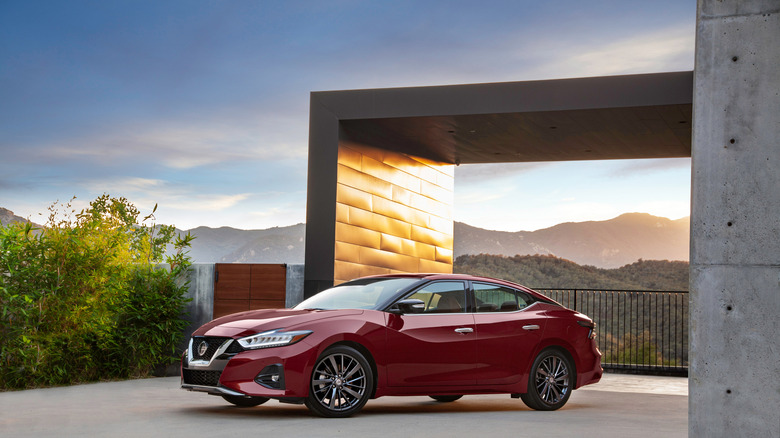
Nissan decided to pull at your nostalgic heartstrings when refreshing the 2026 Z, a car that traces its roots back to the iconic 1970 Datsun 240Z. Well, there's another long-running Nissan model that shared (some of) its mechanical heritage with that classic: The first-generation Nissan Maxima that relied on the same engine. It was a sign of things to come for the model, which became known as the "4DSC" (four-door sports car) for its third generation in 1989. By its final generation — lasting from 2016 to 2023 — the Maxima's unique performance positioning had mostly melted away, leaving a car that leaned more into luxury, instead. Today, we look at what the marketplace thinks of the eighth-gen Maxima by checking the depreciation rate for the 2021 model, which is the most recent to reach the typical five-year benchmark for depreciation evaluations.
The bottom line is that a '21 Nissan Maxima, which had an MSRP of $38,065 (including $975 in destination charges), has depreciated by about $22,165 – more than 58% — to show a Kelly Blue Book (KBB) resale value of $15,900 by early February 2026. The estimated trade-in value for a 2021 Maxima is $13,300.
Note that, for whatever reason, KBB lists the MSRP of the Maxima that year as $38,040, but we used Nissan's numbers for a starting point in our calculations. As for what goes into the depreciation rates, KBB bases them on the average prices of similar vehicles using the website's Private Party Values combined with data and predictions from Manheim auctions.
Trim-by-trim depreciation rates for the 2021 Nissan Maxima
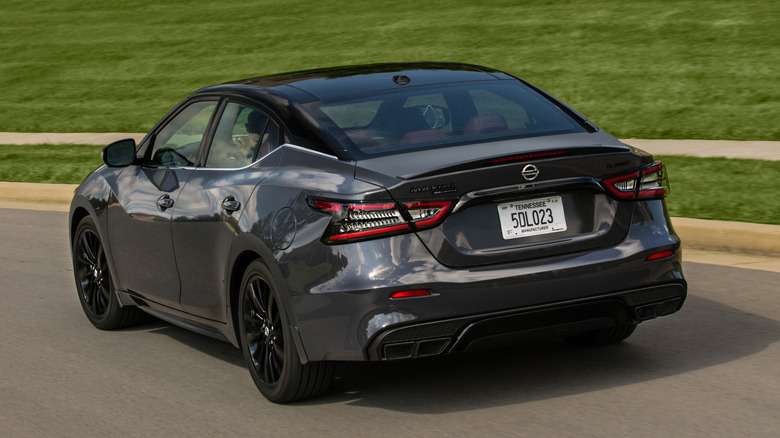
KBB can help us discover the specific depreciation rates for the individual Maxima trim levels, too. The math is slightly different here, as we'll be comparing the car's original 2021 pricing with KBB's current Fair Purchase Price for used examples. The 2021 Maxima lineup began with the SV trim, which opened at the $38,065 mentioned above and included Nissan's 3.5-liter V6 that was good for 300 horsepower. What perhaps wasn't so good was the car's CVT and front-wheel-drive layout. Still, with a current Fair Purchase Price of $17,300, that means a five-year depreciation rate just south of 55%.
The next rung up the ladder was the 2021 Nissan Maxima SR, the most athletically-focused member of the family. True, there was no actual upgrade to the car's output, but it welcomed enhancements like a sport-tuned suspension, an upsized front stabilizer bar, paddle shifters, Alcantara seat/steering wheel details, and 19-inch wheels. The price of admission to the SR was $43,225 (with a $975 destination fee wrapped in), and when you consider this trim's Fair Purchase Price of $21,600, it has only lost 50% of its value over five years.
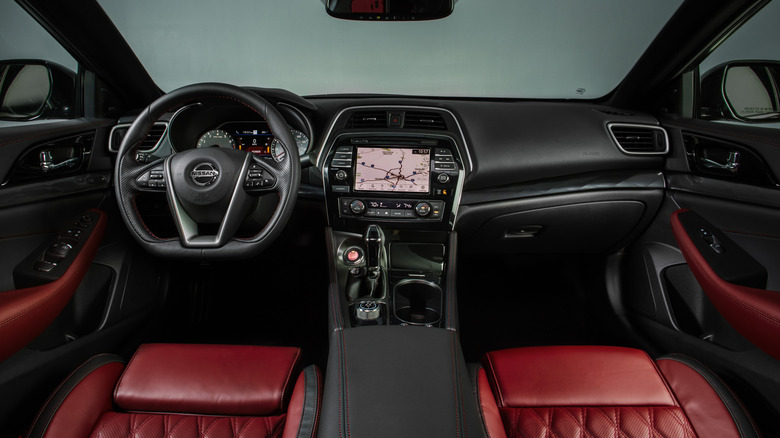
Platinum was the premium trim of the bunch, with a price only $70 above that of the SR, and it swapped performance features for luxury cues as part of its $42,320 MSRP. Among the additions were higher-grade insert materials for the front seats and maple wood accents. It seems as though these deluxe details held their value more than enthusiast-focused upgrades, as the Platinum trim had the lowest 2021 Maxima depreciation rate of just about 46% — amounting to the highest Fair Purchase Price of the bunch at $22,900.
How does the Maxima's depreciation compare to its rivals?
With sporty pretensions, 300 horses, and an original MSRP under $40,000, the 2021 Maxima matches up well with the 2021 Toyota Camry V6. Sadly, the only new Toyota Camry models at dealerships today are hybrids that tap out at 232 horses, but those V6 motors made 301 horsepower and could be had for as low as $33,210, which included a destination charge of $1,025. And that was for the TRD trim tuned by Toyota Racing Development. Depreciation-wise, the Camry TRD lost less than 20% of its value over five years.
The 2021 Kia Stinger also makes for an interesting comparison to the Maxima, since it had the same sort of sport-sedan vibe and price range — although with the advantage of rear- and all-wheel drive. At one end of the pricing spectrum, the least expensive Stinger (the RWD GT-Line) came to market with an MSRP of approximately $34,315, which includes a destination charge of $1,045. Its turbocharged 2.0 four-cylinder motor served up 255 horses (bumped up to 300 horsepower for 2022). The cheapest Stinger with an available 3.3-liter twin-turbo V6 made 365 horsepower, increasing the MSRP to $40,635 – destination charge included, as usual. When you consider the respective five-year depreciation rates, the former is a tad below 40% and the latter is just a few percentage points higher.