

Why We Call Motorcycles Hogs, And The Harley-Davidson Story Behind It
Americans have a love/hate relationship with pigs. Many people think of them as dirty, greedy creatures who love to roll around in the mud, yet they're also known to be impressively intelligent and make good pets. (For what it's worth, you can also use them to power a transatlantic flight.) The word "hog," though, hasn't gained much in the way of a positive reputation — unless you're a fan of the 1980s Washington NFL team. But the term certainly gets a warm welcome at Harley-Davidson rallies, where riders have a long history of referring to their bikes that way. Just be aware the practice has its origins in the pigs-as-pets department.
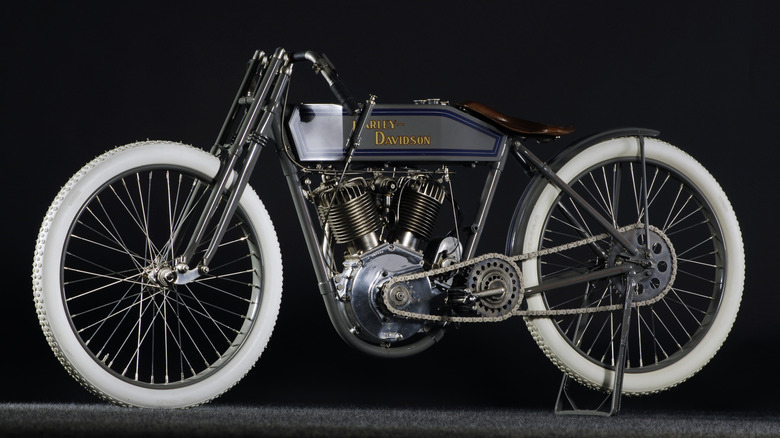
The starting point was one of Harley-Davidson's early factory racing teams. The first was fielded to little success in 1914, but the years after saw Harleys become the bikes of choice for motorcycle racing, with the company's teams grabbing checkered flag after checkered flag. Harley-Davidson remained a formidable force in the sport after World War I, and somewhere along the way, in the early 1920s, one Harley team rider, Ray Weisharr, decided to get his own pet piglet, which he named Johnny.
It must have been a close relationship, as Ray began taking Johnny with him on victory laps after Harley wins. And with the company racking up so many victories, Johnny spent a lot of time in the public eye. The Harley Hogs ended up becoming a nickname for the team as a result, helped by the fact that — per the press at the time — the team was "hogging" all the wins. Consider that chapter one in our story.
The corporate angle comes into play
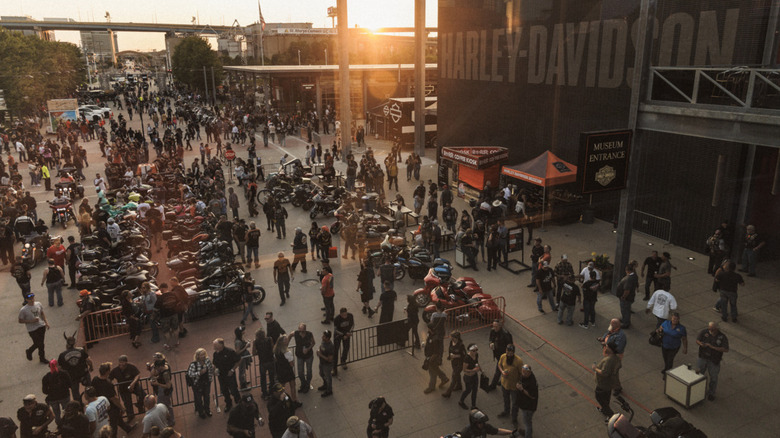
Fast-forward to the early 1980s, and we find Harley-Davidson — and much of the U.S. — still dealing with the effects of what was called "stagflation": a combination of a stagnant economy and inflating prices set in motion by the oil shortages that began in the '70s. Harley management was looking at ways to kick-start the business, and decided to leverage one of its main strengths, a strong and loyal fan base. The 1960s and '70s had seen major growth in both motorcycle clubs and their bad-boy reputation. So it made sense for Harley-Davidson to essentially start an official club of its own.
In 1982, the company began putting together the Harley Owners Group, which naturally shortened to HOG. According to Steve Piehl, a key member of the Harley marketing team behind HOG's creation, the group not only brought riders together, but also changed how the company did business.
"H.O.G. was effectively the start of the 'close to the customer' approach that has defined Harley-Davidson ever since," Piehl writes. "That was the start of Harley staff members being heavily involved in events, and company executives interacting with customers." In 2001, Harley even changed its New York Stock Exchange symbol from "HDI" to "HOG."
Cynics may look at all this as a classic example of how corporations co-opt cultural values for profit — in the words of a recent doctoral dissertation at the City University of New York — but it hasn't actually kept the company out of financial trouble. Harley-Davidson was in danger again last July and had to make a $5-billion deal to sell its motorcycle loans to stay afloat.