

The Pros And Cons Of Paint Protection Film
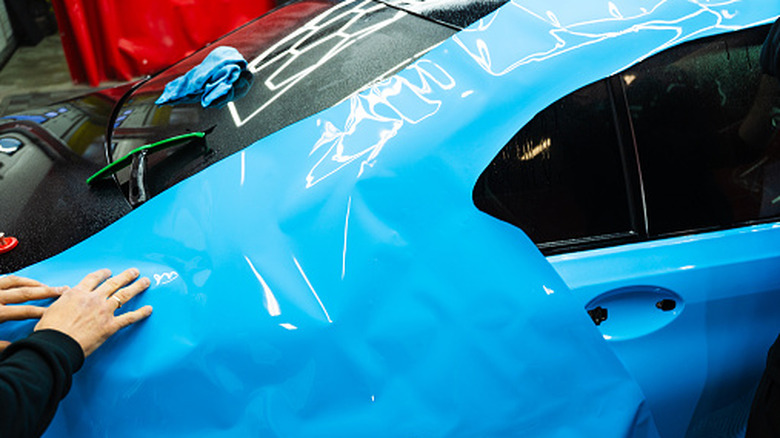
Are you thinking about having paint protection film (PPF) installed on your car? It can be a pretty amazing product, as long as you get the high-quality stuff. You'll also want to have it installed correctly by professionals.
PPF is designed to protect your car's paint against scratches, scuff marks, bugs, bird poop, and water damage. Amazingly, some of it is even able to heal itself. If it's installed right and taken care of, it can keep your car looking like new for a long time, and dealers mostly agree that it can even increase your car's resale value. But that's not to say it doesn't have some disadvantages. For one, it is extremely difficult to install, and we don't recommend you do it yourself. It's not cheap, either. It will likely set you back thousands of dollars, especially if you get your whole car covered. And then there's the maintenance. You're not going to be able to run it through any old car wash.
How do you know whether it is right for you? You'll need to take into account your budget, how long you plan to keep your car, and how much your car would be worth realistically at that time. Or, maybe you just want your car to keep looking it's best, whatever the cost. You do you. And we should note that PPF isn't the only way to protect your car. You might want to check out our guide on ceramic coating.
It protects against chips and it heals itself
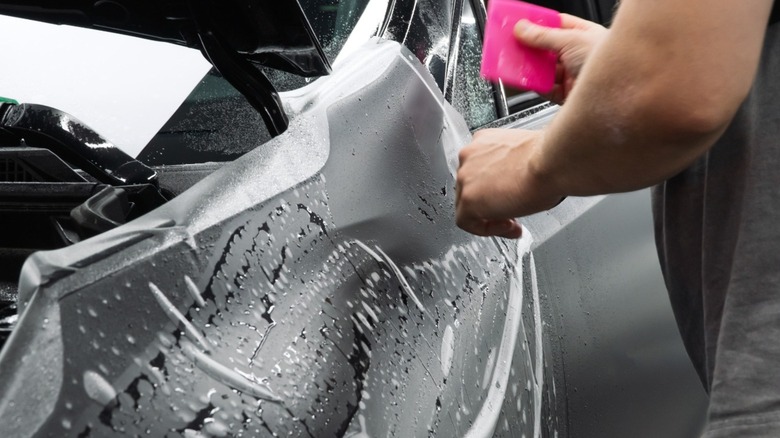
PPF acts like a tiny force field around your car's paint job. It's comprised of three layers. The bottom layer is the sticky layer that adheres to your car's clearcoat. It's okay, though, because this layer is removable. The middle layer is the tough layer. It's made of thermoplastic urethane, and it's the layer that protects your paint by soaking up the impact of rocks and other debris. This layer is very effective at dispersing the kinetic energy of the impact across the surface so it doesn't penetrate the paint. The top layer is the top coat that protects your paint from UV rays and the rest of the PPF from contaminants. All of that protection is sandwiched in a film that is only 8 to 12 millimeters thick.
PPF is not indestructible. It can get scratched and a little dented. But here's the crazy thing: Some of it is designed to heal itself, and it doesn't even need a band aid. Self-healing TPU film, a specific type of PPF, is made of elastomeric polymers. Those polymers "remember" their original shape. Once the polymers get hot enough, around 140 to 160 degrees Fahrenheit, they get soft enough to go back to their original state, closing up the scratches. How would the PPF get that hot? Direct sunlight or a hot engine will often do the trick. You can also apply a heat gun or hair dryer set on low, or warm water.
It preserves your car's resale value
Wrapping your car with PPF when it is new will increase your car's resale value, and not just by a little bit. A recent survey of 300 auto dealers across the U.S. revealed that it could raise your resale value by as much as 15%. Now, if you drive a car until it's nearly ready for the junkyard, that may not mean much to you. But, if you're the kind of driver who buys new and then trades your car in every few years, that 15% is pretty significant. The average price of a used car in 2025 was $30,000. We're guessing most private sellers aren't getting that much. But if you were to sell your car for around that amount, we'd be talking about an extra $4,500 added on to your car's value.
The survey was pretty convincing, because an astounding 92% of dealers feel applying PPF to the whole car when it's new would have a higher re-sale value. You don't have to wrap your whole car with PPF — it can be applied to parts of it — but the survey found 91% of dealers feel it's better to wrap your entire vehicle. Even so, 70% of dealers said just wrapping the front end can help the resale value. These numbers seem to make the benefits of PPF undeniable.
It might yellow over time
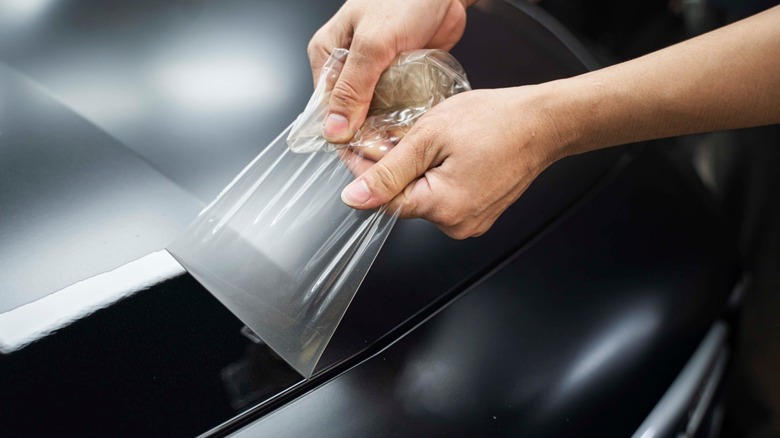
In spite of those figures, though, PPF isn't perfect. It can have its drawbacks, especially if you get the cheap stuff. Lower-quality PPF often tends to yellow after long exposure to the sun's UV rays. Contamination from chemicals, water, and dirt can also cause it to yellow. Leaving your PPF on too long might do it, too. It wasn't designed to last forever. The normal lifespan of PPF is five to 10 years, which is longer than some vinyl wraps last, so it might start to show its age eventually.
What can you do to make sure that your PPF doesn't yellow? For one thing, don't cheap out. This is one of those situations where if you're in for a penny, you're in for a pound. In other words, spring for the good stuff with UV protection, which will help prevent yellowing over time. The other thing you'll want to do is to have the PPF installed by professional installers with experience. That will help ensure that there are no gaps where contaminants can sneak in. And remember to replace it if it starts to show signs of age. PPF is only designed to last five to 10 years. Leaving it on longer than that could make it start to look worse than if you hadn't put it on to begin with. Washing your car regularly with a pH-balanced soap will help, too.
It's really hard to install and needs lots of maintenance
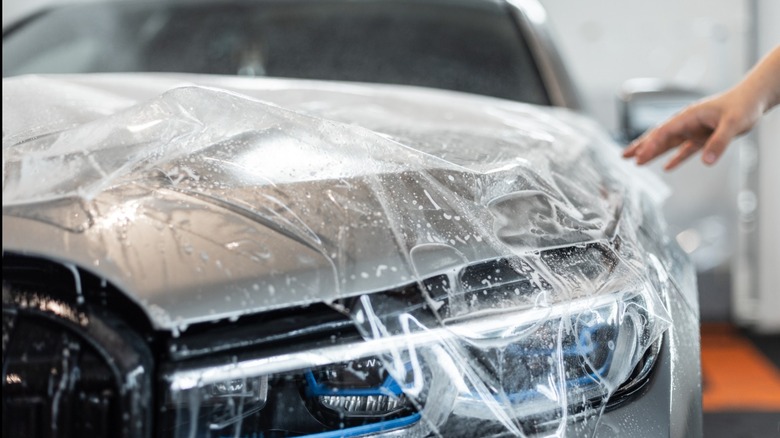
Putting PPF on your car is not a DIY project you can do over the weekend. You could try. Heck, they even make kits for it. But improper installation can cause the film to peel, bubble, or wear too early.
There's a lot to do before you even put the film on. The bodywork must be cleaned meticulously to ensure it's free of any contaminants. Then you have to make sure every piece of film is cut to exactly the right shape and proportions. After that, every panel has to be placed perfectly on the car, fitting just right around every curve and corner. Once that's done, you have to squeegee every bubble out and balance the surface tension. Professionals have special techniques for wrapping and securing the edges, as well as minimizing seams.
PPF is not a set-and-forget kind of product, either. It requires diligent maintenance. That means regular hand-washing of your car with a gentle, pH-balanced soap and sometimes using a squeegee to get out contaminants. Just taking it through an automatic carwash isn't a good idea, since it might use soaps and chemicals that are too harsh and the brushes could cause micro-scratches, or leave contaminants from other cars.
It will set you back
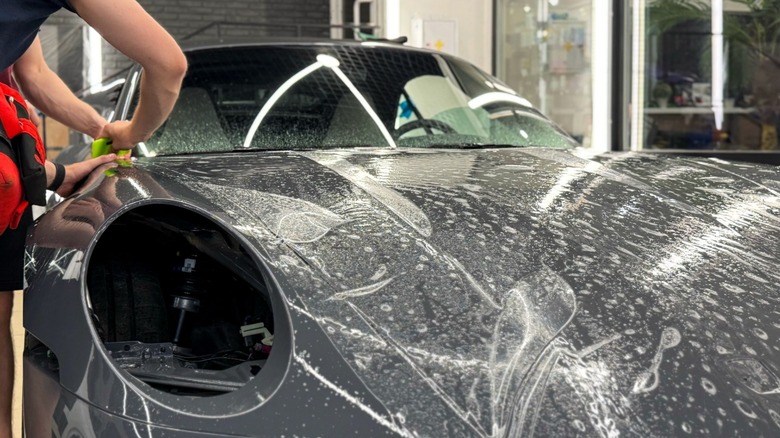
Having PPF installed doesn't run cheap. Edmunds took a Subaru BRZ to have PPF applied, and wrapping the whole vehicle cost well over $8,000. After adding some extras like windshield protection and window tint, the bill totaled $11,660. Unless you own a luxury vehicle, the gains in resale value will not likely cover that kind of cost. That's not to say you can't get it done more affordably than that. In fact, Tesla now offers it as an option on its new cars. And according to one source, prices for installation can start around $1,300, but easily rise exponentially, going up to well over $6,000.
So, you may want to shop around first. Do some calculations around how long you intend to keep your vehicle, so you'll be able to compare the cost of installing the PPF with its possible impact on resale value. Maybe consider wrapping just part of your car.
PPF is a truly remarkable product that can protect your car and keep it looking good for years to come, but it does have its downsides. That's why it's best to go in to this with your eyes open and doing the math to make sure that installing PPF is worth it to you.