

Toyota Crawl Control: What It Does And Which Vehicles Have It
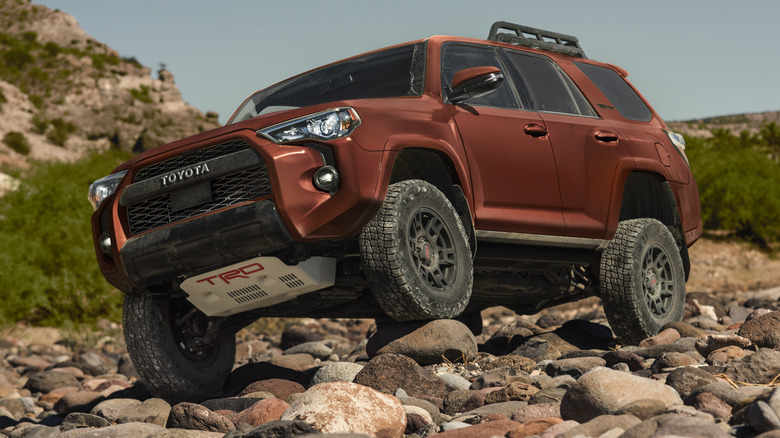
Toyota sits in an enviable position as one of the largest automakers in the world, selling millions of cars every year across a smattering of segments. While the Japanese brand doesn't generally interest itself in niche segments such as the super and hypercar corners of the market, it does produce a model or two for each of the more mainstream sectors.
That includes humdrum commuters like the Corolla and Camry, punchy little sports cars like the GR Supra and GR86, and a decent helping of SUVs and pickup trucks. While most of these SUVs and trucks are destined to rock the school drop-off route rather than tackle trails and treacherous terrain, a small minority will actually do real off-road work. Toyota needs to ensure they're equipped to do so, and that's where Crawl Control comes in.
Crawl Control is a feature that kicks in when off-roading at low speeds; it's essentially a cruise control of sorts. It modulates throttle and brake control, the speed varying depending on which of the five settings you've selected. This lets the driver concentrate on other aspects of driving, such as not careering into a boulder or dropping off the edge of a cliff. A pretty valuable feature for Toyota owners who like to take the path less traveled.
Here's how Toyota's Crawl Control works
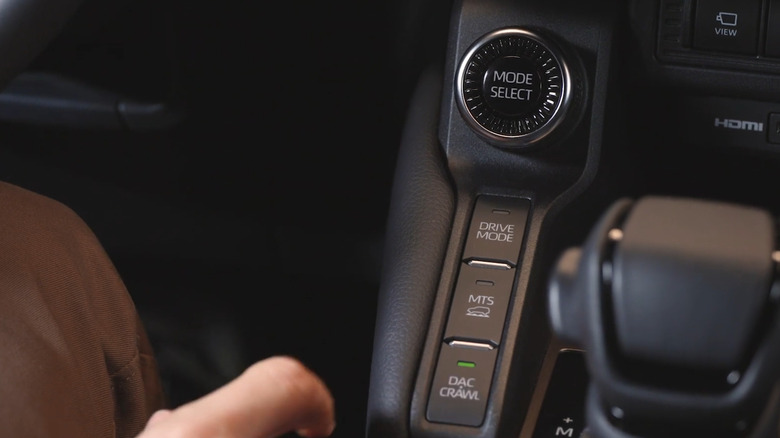
Crawl Control isn't something that springs into life itself. The driver behind the wheel must initiate it by depressing the brake pedal while in neutral, putting the transfer case into four-low, and then hitting the Crawl Control button, typically situated by the rearview mirror or gear selector.
At this point, the driver can then select one of five speed settings, from 1 through 5 mph. If you're traversing tricky terrain, speed is unnecessary, hence the low settings. Generally, drivers would stick to the lower speeds for rocks and deep gravel, but can switch to 3-, 4-, or 5-mph settings when crossing sand, snow, or mud.
The system works in collaboration with the standard ESC — Electronic Stability Control — system. While you can still slide a vehicle with stability control, the system works to eradicate slips, using sensors to tell the car's brain when each wheel needs traction. This way, the ESC system can direct power and braking to the wheels that need it, controlling skids and ensuring the Toyota keeps moving along.
When to use Crawl Control
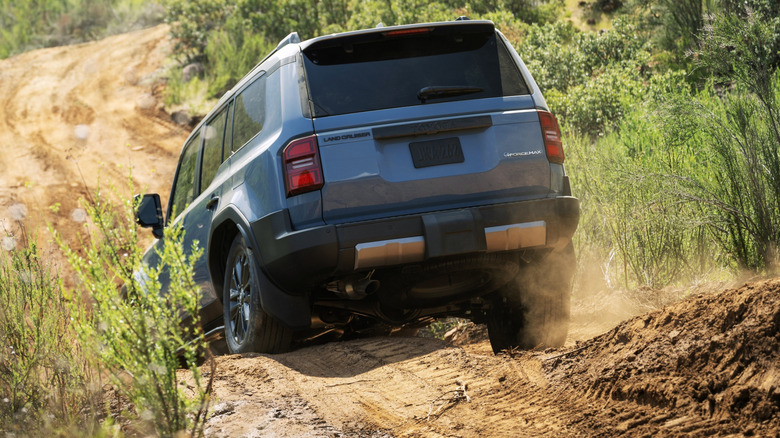
It might seem obvious, but we'll spell it out nonetheless; Crawl Control is intended for off-road use only. It isn't designed to help you cruise around a parking garage while you wait for a space to become available, and it's not intended to make creeping forward in traffic easier. In fact, Toyota built Crawl Control to cease after just 12 minutes of continuous operation. If you're still traversing rocky terrain, you'll have to reactivate it.
Exceeding 15 mph while the mode is active will cause it to pause temporarily, and stepping on the brake pedal will do the same, much like how cruise control operates. Ultimately, the system is designed to help drivers navigate particularly tricky sections of trail by allowing them to focus primarily on the job of steering, rather than having to feather the throttle and brake in order to find traction.
Toyota equips this function in its toughest off-road vehicles
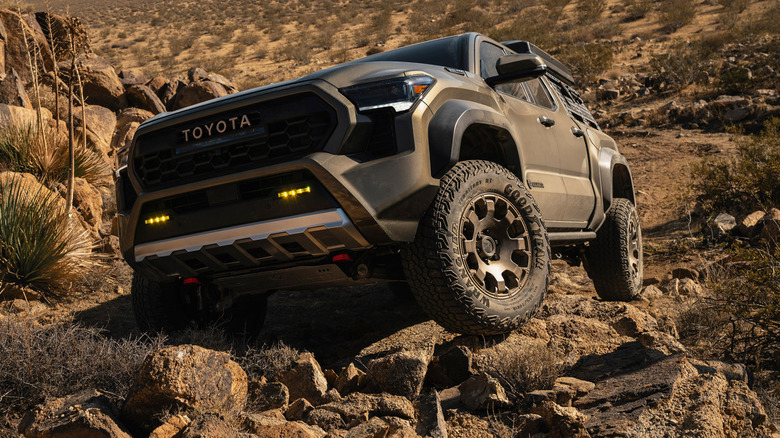
Before you hop into your Prius or Camry to check it out, don't bother — this isn't a safety feature Toyota builds into each of its offerings. Instead, it's available only on the brand's more adventurous models, such as the Land Cruiser, Tundra, Tacoma, and 4Runner.
These vehicles also pack a whole host of other adventure-friendly fixtures, fittings, and features that make crossing rough ground a breeze. They include all-terrain tires, specialized suspension packages, and more technical additions such as hill-start assist and multi-terrain camera systems.
If you fancy tackling some tough trails, but don't quite have the funds to stretch for a brand-new off-roading Toyota SUV or pickup truck, don't worry. Crawl Control has been around since 2008, so you could pick up a much older model of those nameplates and still get the system.