

Mazda SkyActiv-G Vs. Toyota Dynamic Force 2.5-Liter Engines: How Do They Compare?
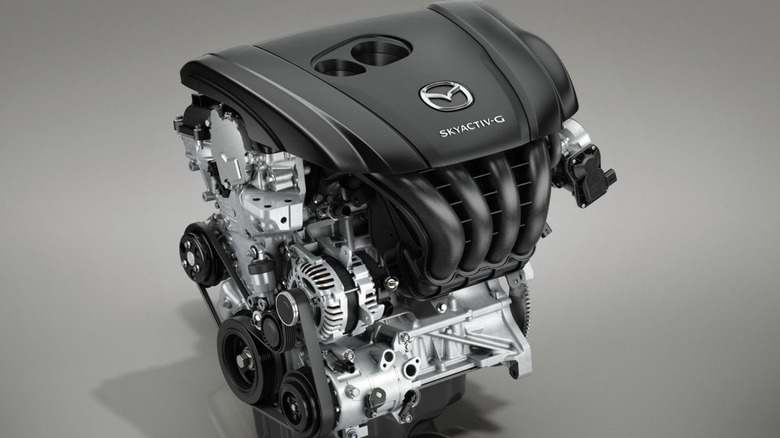
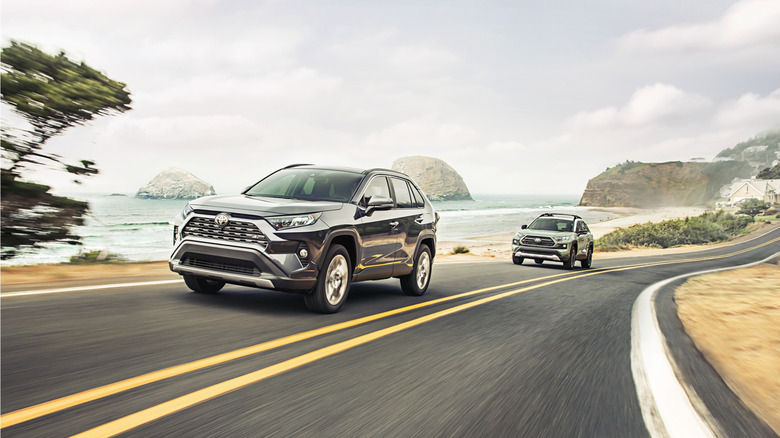
Japanese automakers Mazda and Toyota, among other brands, have been working hard on furthering efficiency without sacrificing performance or power. The SkyActiv engine was introduced in 2010 and debuted in the Mazda2. In 2026, you can find it in models like the Mazda3 and CX-50. The automaker has continued to innovate since, and here's what we know about Mazda's new SkyActiv-Z engine. Conversely, Toyota's 2.5-liter Dynamic Force powerplant was announced in 2016. It debuted with the 2018 Camry and was initially available in gas and hybrid configurations of various vehicles. With models like the RAV4 and Camry going hybrid only, you can still get the Dynamic Force 2.5-liter, but it's paired with electric power.
Both the SkyActiv-G and Dynamic Force 2.5-liter engines push the boundaries in terms of compression ratios. Mazda and Toyota had to make several adjustments to get their engines running smoothly while pushing 13:1 and 14:1 compression ratios. Furthermore, both utilize technology like variable valve timing (VVT), enhanced fuel pumps, and optimized injectors.
Output and fuel economy between the gas engines are similar, although Toyota offers more horses under the hood than Mazda's standard powerplant, unless you opt for a turbo version of the SkyActiv-G available on upper trims. While these engines have received praise, neither one has a spotless record, with both suffering from reported leaks, causing a potential cascade of problems.
SkyActiv-G versus Dynamic Force 2.5-liter: technology
One of the advantages of a diesel engine over a gasoline is that it uses fuel more conservatively because of the typically higher compression ratios involved, which enhance thermal efficiency. However, when increasing compression in a gasoline engine, you run the risk of something called knock. Knock is when combustion doesn't occur at the appropriate time or in the correct area within the cylinder. This nonoptimal scenario creates unbalanced ripples of force that harm engine components. To combat the issue of knock at high compression, Mazda crafted a more robust piston design and lowered torque by just around 12%. Other inclusions, like a 4-2-1 style exhaust manifold, help evacuate hot gases before they can go back through the system, reducing the thermal stress caused by the high compression.
Toyota's Dynamic Force 2.5-liter boasts around a 40% thermal efficiency, which is basically the measurement of an engine's ability to transform gas into energy. For context, according to Green Car Reports, the typical combustion engine vehicle only achieves approximately 20% thermal efficiency. The automaker accomplished this using an Atkinson cycle engine, adding a longer stroke, adjusting injector spray patterns, and including an oil pump with continuous variable capacity.
SkyActiv-G versus Dynamic Force 2.5-liter: performance
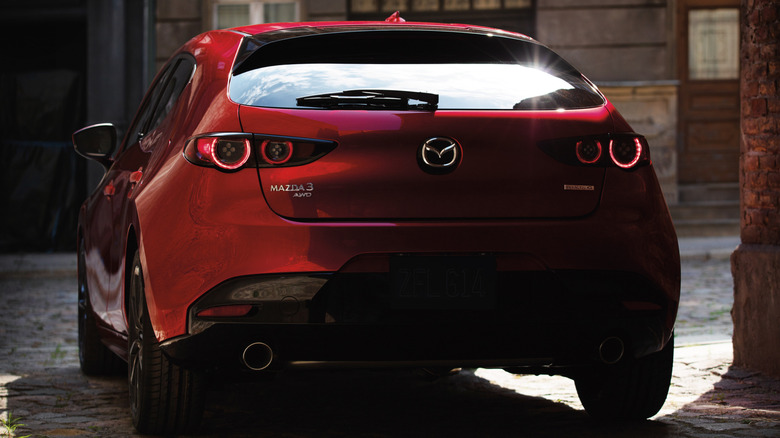
In terms of output, the SkyActiv-G offers between 186 and 256 horsepower, depending on the model and the fuel used. Models like the Mazda3 and CX-50 offer 186 and 187 horsepower with the standard powerplant. The dynamic pressure turbo version of the Mazda3 provides up to 250 horses, and the twin-scroll turbo CX-50 offers 256 horsepower, depending on the octane rating of the fuel you're using. Torque figures show a similar pattern, with a range between 185 and 320 pound-feet of torque. Again, the higher torque numbers are produced with the turbo iteration and vary in response to fuel octane ratings. Although, we did find the 2022 Mazda3 turbo nice, it's far from a hot hatch, which is unfortunate considering the output out of its 2.5-liter engine.
Comparatively, Toyota's 2024 (non-hybrid) Camry with the Dynamic Force engine produces more oomph at 202 horsepower. However, torque figures come in under Mazda's, with the Camry producing 182 pound-feet of torque. For comparison, the 2026 Camry still features the 2.5-liter engine, but it's only available in a hybrid powertrain. Specifications for the gas engine portion sit at 184 horsepower and 163 pound-feet of torque, but the hybrid system allows for a combined 232 horsepower. Of course, these are just a few examples, as both engine series have been around a decade or more.
SkyActiv-G versus Dynamic Force 2.5-liter: problems

No engine is perfect and there are ardent supporters behind both of these powerplants. However, it's important to point out some of the issues surrounding the SkyActiv-G and 2.5-liter Dynamic Force. Some owners of Mazda SkyActiv-G engines have described issues with coolant making its way into the combustion chambers, which then mixes with the oil. This can occur due to cracking in the cylinder heads and seals failing. While Mazda hasn't issued any recalls on the matter, there are a few technical service bulletins, such as TSB 01-002-23, which describes coolant leaks in select years of CX-5, CX-9, and Mazda6 models with the turbo versions of the engine. The lack of a recall resulted in some owners filing a class action lawsuit in 2024 citing this issue among others.
Toyota's Dynamic Force 2.5-liter engine has been the subject of a large recall for 2019 to 2020 models, after it was discovered that these engines could develop cracks. Fortunately for Toyota, this pales in comparison to the 2009 mess the automaker found itself in, which resulted in one of the largest automotive recalls in history (so far). Nevertheless, cracks could lead to fluid leaks. Coolant leaks appear to be the main problem, although the potential for oil leaking is also mentioned. The automaker describes this problem as the result of a defect, and it applies to models like the Camry and RAV4, among others.