

Choosing The Right Head Gasket: Pros And Cons Of 4 Popular Materials

Not all head gaskets are made equal. There are head gaskets made from different materials, all with various strengths for numerous kinds of applications. For example, there are copper head gaskets, which have been used since the Ford Model T. Copper head gaskets are still around, but, for the most part, they eventually gave way to composite head gaskets that were more flexible and better at sealing in liquids, though they would sometimes blow.
Then, multi-layer steel (MLS) head gaskets came along, using multiple layers of steel for greater durability and better heat dispersion. Not to be overlooked are elastomeric gasket heads that incorporate both metal and rubber to provide strength and flexibility for effective fluid sealing in heavy-duty diesel engines, though they aren't as well suited for most vehicles as MLS head gaskets.
So, how do you know which kind of head gasket to use? In most cases, you're going to use an MLS head gasket. It's the most commonly used head gasket by auto makers today, and it's even used in high-performance engines. It's just that good at handling heat and pressure. If you have to replace the head gasket on a car built before the 1990s, you may be able to upgrade to an MLS head gasket from a composite one, as long as your block and head surfaces are smooth enough. Head gaskets are a vital for protecting your engine and are one of the parts you shouldn't cheap out on.
Multi-layer steel (MLS) head gaskets
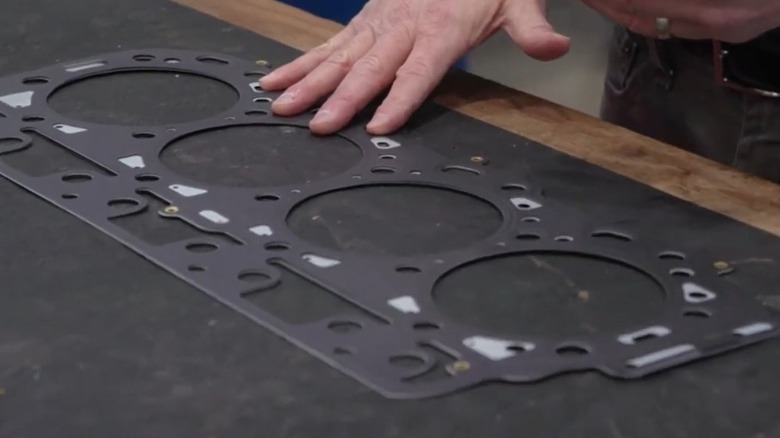
The most common type of head gasket used in cars today is the MLS head gasket, made up of two to five layers of steel and sometimes coated with a thin layer of material like Viton rubber. As you can imagine, steel itself is pretty rigid and lacks the flexibility of something like rubber. But MLS gaskets are embossed with ridges that act like springs. If pressure builds up enough to lift the head a little, these gaskets spring up to maintain the seal.
MLS gaskets stand up to heat and pressure very well. In fact, they work just fine in turbocharged engines. They are also great for sealing two different metals that expand at a different rate, like an aluminum head on a cast iron block. That's because the separate layers of MLS gaskets can slide against each other to keep the seal. The disadvantage of MLS gaskets is that the block typically has to be machined to a pristine finish before the new gasket is installed. If there are any pits or scratches in the block, the gasket won't seal.
When would you use an MLS head gasket? When replacing the head gasket on nearly any gas engine made since the 1990s (some heavy-duty diesel engines and commercial vehicles use elastomeric gaskets instead). For older cars that came with a composite head gasket, the surfaces will likely need to be machined if you want to upgrade to an MLS gasket.
Composite head gaskets
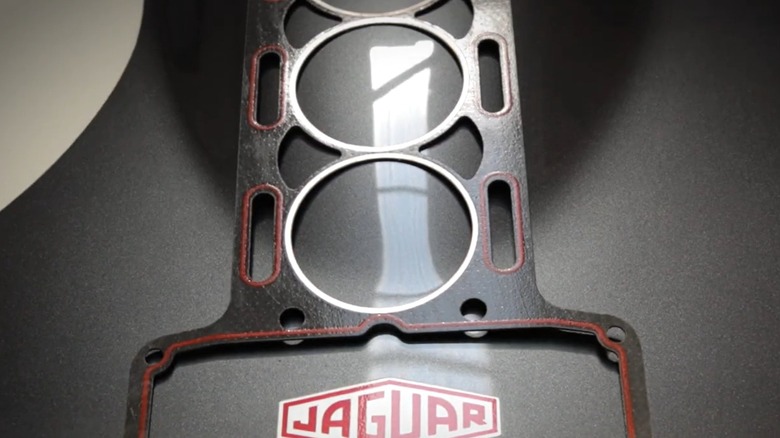
Composite head gaskets were the gasket of choice for car manufactures up to the 1990s. They are made up of cellulose, graphite, or aramid fibers. The gaskets in older cars used asbestos instead of graphite, but they were always mixed with some other type of resin or rubber.
These head gaskets did the job for their time. One advantage that they have over MLS gaskets is that the mounting surfaces don't have to be perfectly smooth before a new gasket is installed. That's because the materials that make up composite gaskets are more flexible and can squash into small pits and grooves to keep the head sealed to the block. By comparison, some composite gaskets can handle a roughness average (the measurement of peaks and valleys on a surface) of 100 Ra, while MLS gaskets top out at 60 Ra, though a lower Ra is better. One disadvantage of these gaskets is that they do not handle heat and pressure as well as MLS gaskets, and they can't spring back like an MLS gasket can when pressure causes the head to lift.
When would you use composite head gaskets? When you're replacing a head gasket on an older car that came with a composite gasket and you don't want to pay to have the block machined down to a smooth surface. You would not install a composite gasket on a supercharged or high-performance engine either.
Elastomeric (rubber-coated) head gaskets
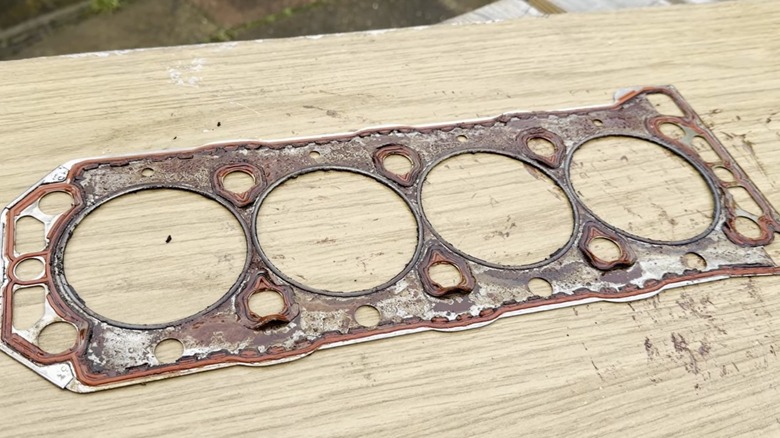
MLS gaskets are the most common head gaskets found in cars today, but they aren't the only game in town. Another type, elastomeric head gaskets, show up mostly in high-performance diesel engines and heavy-duty vehicles where sealing against fluid leaks is the priority. This head gasket has a thin core of metal that gives the gasket its shape. Coating the metal is a layer of rubber or rubber-like material that provides the seal between the head and the block.
This mix of metal and rubber provides some of the advantages of both MLS and composite gaskets, while also providing some of its own. For example, the metal core gives it some of the strength and durability you'd find in MLS gaskets. The rubber provides some of the flexibility that composite gaskets provide, since it can deform and squeeze in to pits and grooves. This means that surfaces don't have to be quite so perfectly smooth before the gasket is installed. However, elastomeric gaskets don't hold up against heat and pressure for as long as MLS gaskets, nor do they have the multiple layers that can slide and compensate for different expansion rates of diverse metal types.
When would you use elastomeric head gaskets? That decision is made for you by the vehicle manufacturer. Like we said, this type of gasket is made for specific applications. If the engine originally came with elastomeric head gaskets, that's what you should use to replace them.
Copper head gaskets
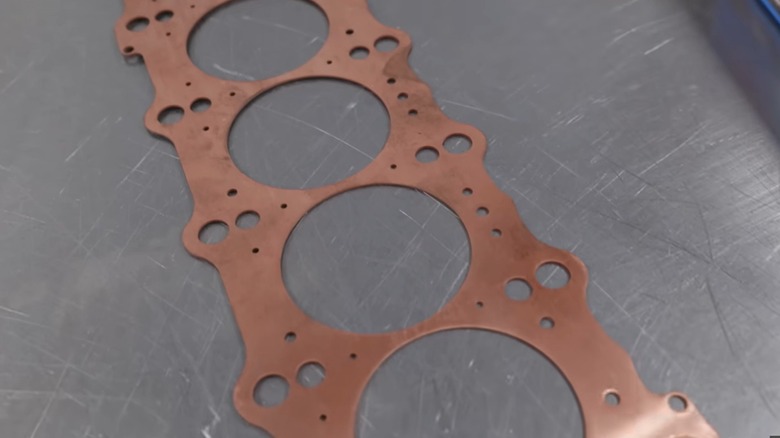
Maybe you've heard about copper head gaskets. These bad boys are solid sheets of copper and can handle heat and pressure like nobody's business. They were around before MLS gaskets, but today you'll find them in drag racing engines, where pressure on the cylinders is through the roof.
There are a lot of things about copper that make it a great choice for holding back the high pressure and hot temperatures experienced by racing engines. For example, copper is a little stretchy compared to other metals, making it more durable under high pressure. It can also spread the heat out evenly when used as a head gasket, due to its conductive properties. And you can reuse a copper head gasket, which isn't a good idea with other types of head gaskets. What it's not good at, though, is sealing in coolant and oil. A copper head gasket doesn't have a rubber or elastomer coating, so it needs to be used on surfaces that are even smoother than what MLS gaskets need. It also has only one layer, so it can't compensate for the different expansion rates of separate metals the way that MLS gaskets can. In other words, copper head gaskets weren't made for your Honda Civic.
So, when would you use copper head gaskets? You wouldn't, unless you're building a race engine. Even then, it would be only be for certain applications like drag racing. NASCAR doesn't use them, thanks to their shortcomings in sealing fluids.
Replacing a head gasket? Here are some dos and don'ts
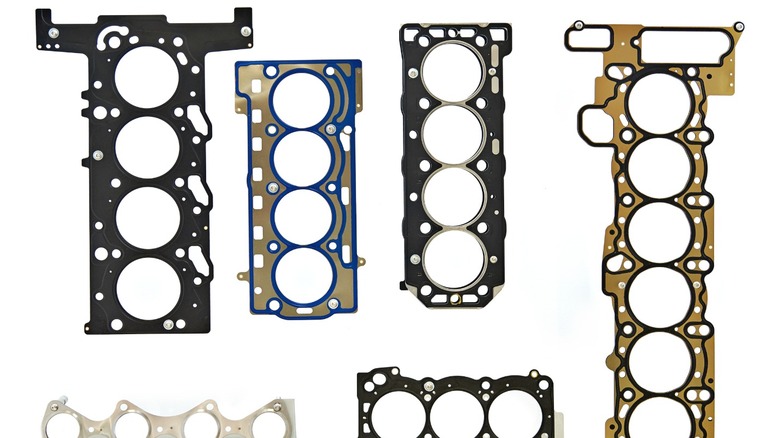
Head gaskets aren't like other gaskets. We say that because you may be used to spraying sealer on gaskets. You may have even done it with older composite gaskets. But you should never do that with MLS gaskets, since they have a thin coating to help with sealing, and sealer sprays and similar products can interfere with it. Likewise, using a sealer on an elastomer head gasket can cause a whole host of problems, like slippage, uneven sealing, or the breakdown of the gasket's rubber.
Speaking of sealers, don't use them to make a head gasket. Always use an actual head gasket instead. We've explained the intricacies of how gaskets have to distribute heat and handle pressure, as well as stop fluid leaks. A gasket maker is not up for the job. Another mistake to avoid is just slapping a replacement MLS gasket on the head without making sure the surfaces are smooth enough for it. Often, this involves getting the surfaces machined, especially if there are visible cracks, scratches, or corrosion.
Don't reuse old torque-to-yield head bolts, since torque-to-yield bolts are stretched when they were screwed in the first time. On the topic of bolts, the goal here is not to tighten them as much as possible to get the tightest seal. Tighten them to the exact specified torque rating. A head gasket may look simple, but it is a complex, vital part of the engine.