

Are There Any 1930s Cars Reliable Enough To Daily Drive?
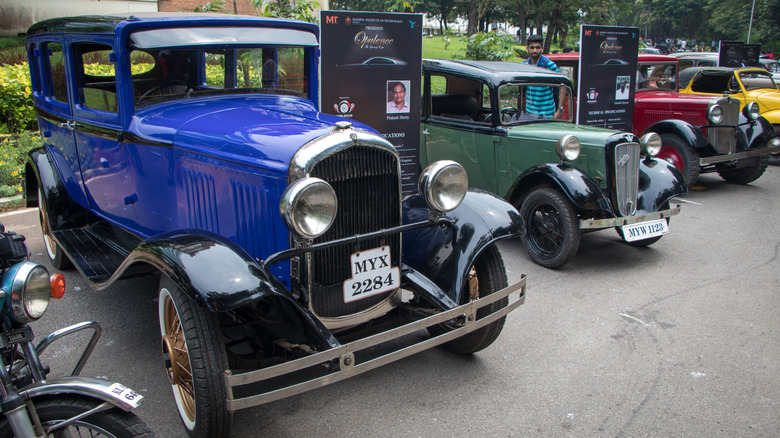
If you have a niche dream of owning a pre-war automobile as a daily driver, you've likely been scoffed at. A whole lot of enthusiasts look upon cars built before World War II as unreliable and temperamental cars, but they couldn't be farther from the truth. After all, back in the 1930s, every car was a daily driver. There were no cars reserved for weekend rides and no temperature-controlled garages to coddle them. If your car didn't start, you couldn't go to work. If it broke down on your way to work, you fixed it yourself by the roadside. In those times, reliability wasn't a matter of convenience; it was a matter of survival. And car manufacturers knew this.
Back then, cars were built to run on poor-quality fuel, survive horrible road conditions, and offer easy maintenance. Today, a primary reason why most pre-war cars feel unreliable is not because of poor engineering; it's because most users do not know the proper way to operate or maintain these vehicles. A 1930s car that's maintained properly and driven regularly is far more reliable than one that sits idle for a long time. Some vintage cars age the worst, but there's no denying that most vintage models have their own unique charm and character.
Reliability in the 1930s
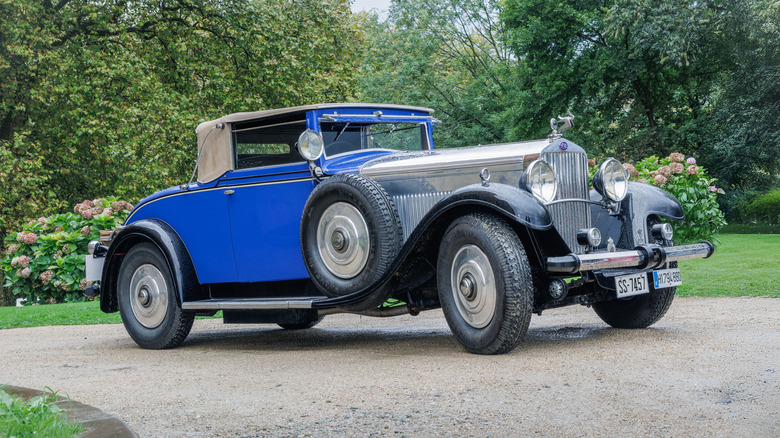
Back in the '30s and earlier, engines were built differently. They weren't designed for performance or speed; you had 2.9-liter engines that barely made 22 horsepower. At their heyday, most pre-war cars topped out at less than 50 miles per hour. But they were built to survive thanks to solid construction, and they could sustain those speeds all day. Peak horsepower would also be delivered around the 2,000 rpm mark. This mechanical laziness meant little stress on the engine, and that's what made them durable.
In those times, engine failures mainly stemmed from neglect in the form of fouled spark plugs, poor fuel quality, clogged radiators, or even improperly-adjusted ignition points. These cars were well-engineered for their time, and they could run flawlessly if they were well-maintained, too. In today's time, a mechanically-sound pre-war car does not need a lot to be dependable. It just needs simple things like fresh coolant, fine-tuning, mechanical sympathy, and proper operating knowledge.
Some prime pre-war examples
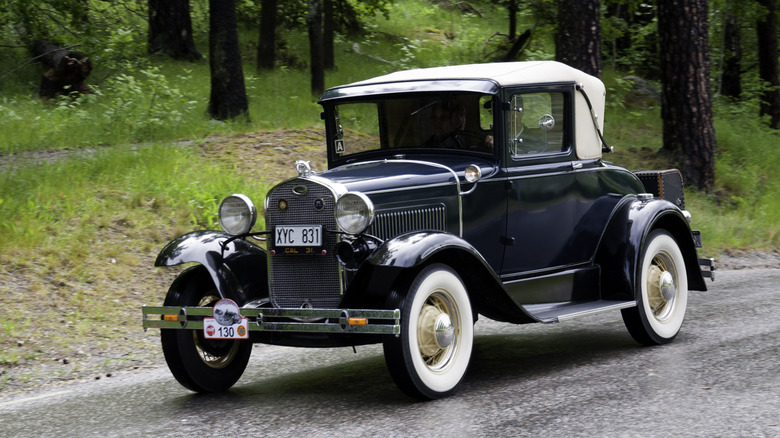
There are some fine examples of pre-war cars being built tough. In fact, some vintage cars are so good, they deserve a modern model — and some have great potential to be daily drivers in today's times. These include cars from Ford, Chevrolet, Packard, and Buick. Ford Model A cars and those with early Ford V8s can be fine daily drivers thanks to their simple builds. The Model A, for example, had a simple, rugged engine with a gravity-fed fuel system and mechanical brakes that were quite reliable, even when they were left unused for a while. Today, Model A parts continue to be plentiful and easily available.
Chevrolet cars with the Stovebolt straight-six engines are underrated daily driver cars. These engines were smooth, and by 1936, the cars they were in featured more advanced hydraulic braking systems. Late '30s Plymouth, Chrysler, and Dodge cars were other great examples. Chrysler in particular used flathead six-cylinder engines, also seen on tractors, and they impressed drivers with their unstressed, high-torque nature.
Packard and Buick cars from that era are another fantastic example. Their overhead-valve straight-eight engines were famed for their longevity and fantastic refinement. Some of these models have even lasted for nearly a whole century with minimal restoration efforts.
Why do pre-war cars feel unreliable today?
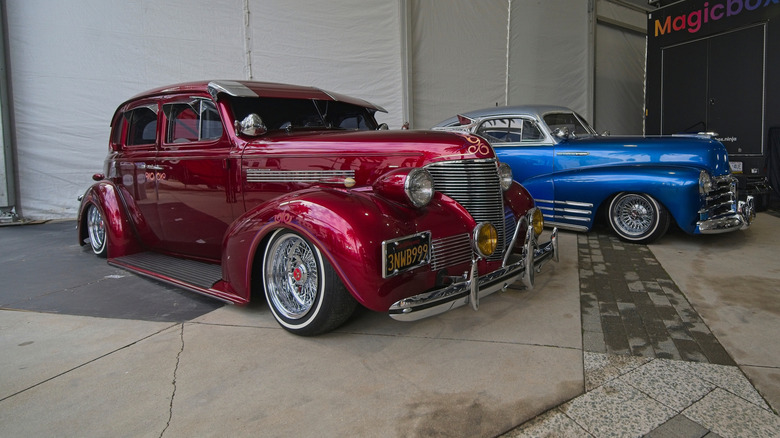
The simple truth behind pre-war cars being unreliable is that they aren't used often enough. Leaving a pre-war car stationary for a long duration will have adverse effects, particularly with the fuel. Modern fuels contain ethanol, which — if left idle for longer periods — can absorb moisture from the air and separate from gasoline in a process called phase separation. This ethanol-water mixture then settles at the bottom of the tank, causing rust and corrosion.
There is also the matter of restoration. Most restorations on pre-war cars are limited to their cosmetics, not focusing on mechanical issues at all. A car that's close to a hundred years old will likely have age-related issues like worn brakes and brittle wiring. Back in the day, these cars were regularly serviced. The oil was changed regularly, the cooling system was flushed, ignition points were adjusted, and suspension kingpins were greased. This maintenance culture is what made pre-war cars reliable. Let them sit for a long time, and you're going to have problems no matter what.
How to make pre-war cars reliable daily drivers?
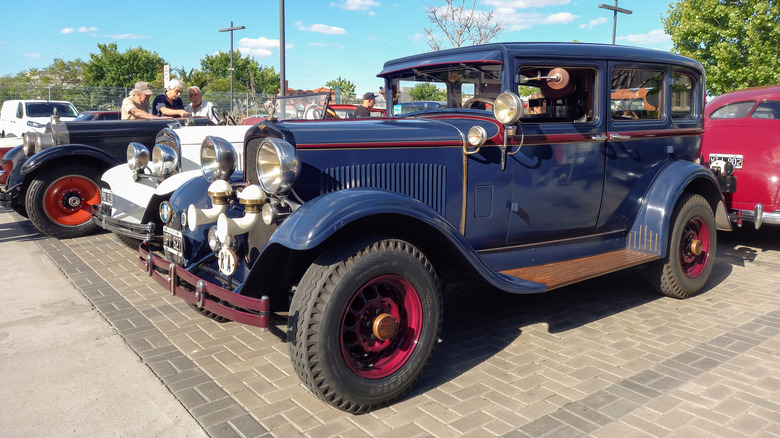
The best way to go about making a 1930s car a reliable daily driver is to give it a few simple, invisible upgrades. You primarily need to focus on three things: fueling, cooling, and ignition. (Or you could simply EV swap your vintage car.)
Pre-war car fueling systems weren't designed to run with modern fuels that now have ethanol content. Fitting ethanol-safe fuel lines and pump diaphragms should take care of issues with fuel lines clogging and leaking. The cooling systems of these cars weren't designed for stop-and-go traffic. Cleaning the radiator, replacing the coolant, and investing in modern cooling tech should help reduce overheating. Common failure points in these cars are the ignition system contact points; a modern electronic ignition should help solve this.
Once you get these things sorted, your temperamental car should turn into one that starts easily and runs effortlessly. Also, remember that most unreliable 1930s cars you encounter are just neglected ones. Get those gremlins sorted, and you'll be surprised by their consistency.
Dailying a 1930s car
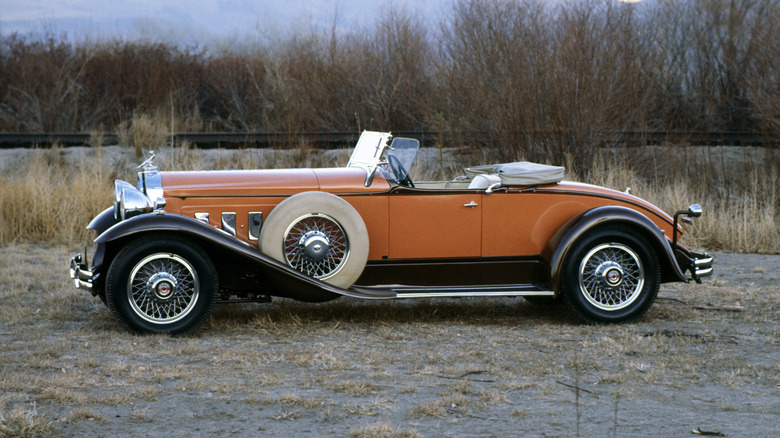
While we have covered the reliability part of making 1930s cars into daily drivers, now comes the human element. It's about learning to live without the comforts of power steering or air-conditioning. You have to learn the proper way to shift the non-synchromesh gears. Most pre-war cars have non-synchromesh gearboxes, also known as crash'" boxes. If you don't learn the art of double declutching, you'd end up grinding the gears quite often.
You also have to learn to live with the brakes, which are abysmal by modern brake standards. There's no sort of anti-lock braking system, and according to drivers of these older vehicles, even the best hydraulic brakes from the era need ample space to bring the car to a complete stop. You need to have at least a 2-3 car distance between you and the car ahead to compensate for braking distance. Pre-war cars aren't that bad on gas mileage though you have to figure a workaround using modern ethanol-infused fuel.
A 1930s car isn't a reliable daily driver if you treat it like your modern Honda Civic. These cars require mechanical sympathy for their simple nature. You can daily drive these cars so long as you maintain them regularly, drive them frequently, and keep them at reasonable speeds. A well-maintained 1930s Ford, Chevy, or Buick is not a gamble; these cars can go on forever if you care for them.