

Why Car Antennas Keep Changing Shape (And It's Not Just For Style)
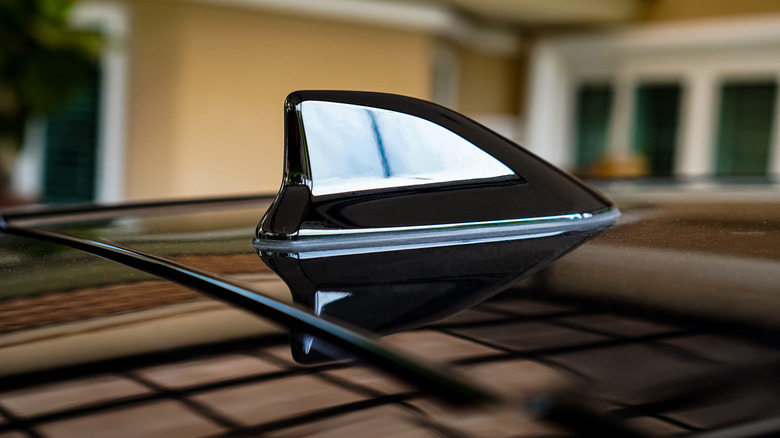
Car antennas have come a long way since their inception in the early 20th century. First used in the radio body itself, they have evolved from external whip-style mast antennas to integrated radio and telematics (for Bluetooth, Wi-Fi, and cellular). The technology kept improving as we kept advancing. And although this discussion is mostly about external antennas, you'll also find internal PCB-mounted antennas in a lot of modern cars.
Although aesthetics, protection, and durability are integral parts of the equation, function is also an important factor in carmakers siding with shark-fin and glass-mounted antennas. The days of relatively simple AM/FM radios are gone, and modern car antennas have to do a lot more work. Newer cars are often seen with built-in 4G and 5G connectivity, not to mention the slew of advanced driver assistance systems (ADAS) and stuff like over-the-air (OTA) updates. Put simply, a GPS antenna is not the same as a telematics antenna, and a radio antenna is not the same as antennas designed for 4G/5G cellular communication.
The shark-fin design you see atop many cars has several antennas within the casing, but all wired separately. ADAS often require vehicle-to-vehicle (V2V/C2C) and vehicle-to-infrastructure (V2X/C2X) capability, and most systems typically operate using the 5G spectrum. Even in the case of radio, Digital Audio Broadcasting (DAB) has been challenging the traditional AM/FM. Understand that most modern cars, even though they come with a radio, can hardly tune into medium wave or long wave band widths. That's a byproduct of carmakers getting rid of AM radio, although it seems Congress is forcing OEMs to bring back AM reception.
Car antennas are not just for the radio
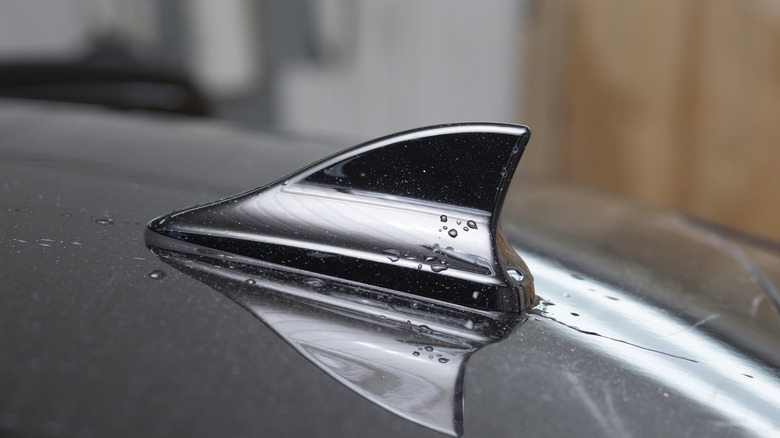
A standard radio antenna cannot pick up satellite radio signals. There's another specialized receiver for that, albeit not as long as the antenna we had on cars prior. Most of the cellular, GPS, and radio antennas are often roof-mounted, but windshields are also sometimes considered for mounting GPS antennas. Those V2X and telematics antennas are usually found closer to the roof or sometimes incorporated into the body panels themselves.
You might be surprised to know that window-mounted antennas, which are a lot more common these days, started showing up during the 1970s. Usually, it's on the rear window, but it's not uncommon to see them on side windows. The design is so seamless, at the rear especially, that you might mistake it for the defogger lines. If you inspect closely, however, you'll notice there are more lines than you'd find in a typical defroster window, especially ones that bend at right angles when they're at the edges of the window. These antennas are usually limited to just AM and FM reception.
With so many frequencies at play, the last thing you want is interference. Sometimes window tints can cause signal issues, especially if your car has window-mounted antennas. Low-quality or heavily metallic tints can potentially interfere with radio signals and can even lead to poor cell reception. Shark fin antennas are not fully immune to signal issues either, especially in remote areas. You can, of course, try upgrading, but that requires a lot of research. So much so that one might even call it a legitimate rabbit hole.