

Why Some Classic Buicks Have Three Portholes And Others Have Four
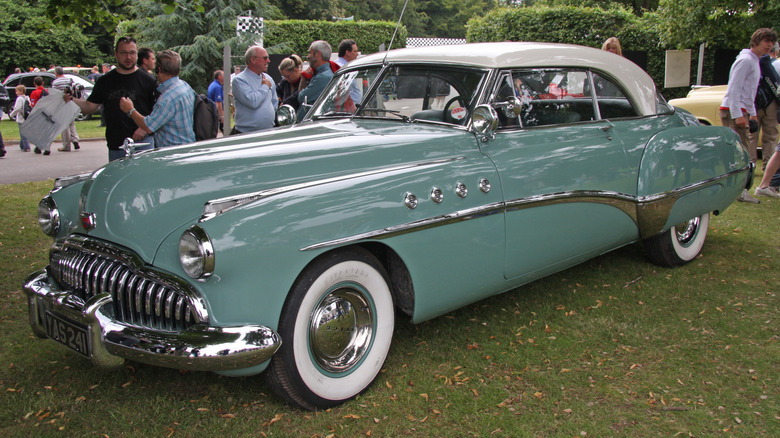
GM's Buick brand practically invented the modern idea of automotive styling when it introduced the Y-Job — considered the world's first concept car — in 1938. It was a massive machine with huge fenders and a power-retractable top, and it brought a purposely stylized approach to design that transformed the industry. Yes, some companies crush their perfectly good concept cars, but Harley Earl drove the Y-Job tens of thousands of miles.
That said, the influence of the Y-Job didn't really take hold until after World War II with the introduction of cars like the 1949 Buick Roadmaster — the very first Buick to have Ventiports alongside its hood. And they actually did triple duty on the car.
First off, they were distinctive style cues inspired by a project from one of Buick's designers at the time, Ned Nickles. He was the owner of a 1948 Roadmaster with a standard hood and decided to spice things up by installing a series of amber lights that — triggered by the distributor – would flicker in a way meant to get you thinking about exhaust flames of a fighter plane. They caught the eye of a GM exec who approved the basic idea for production, but without the flame-effect lighting. Instead, they would serve the functional role of helping to extract hot air from the engine compartment. For 1949, the Ventiports also served to distinguish exactly which mill was under the hood: Cars with the more powerful 320-cubic-inch inline-eight engine had four Ventiports per side, while those with the 248-cubic-inch inline-eight had three.
Ventiports over the years
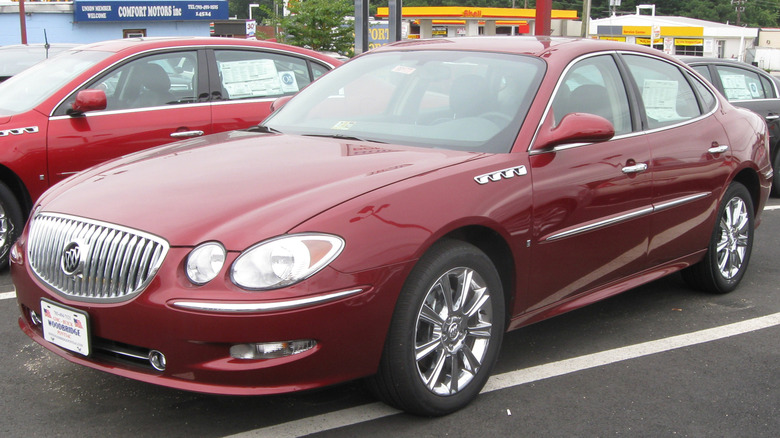
So far, so simple, but Buick was quick to start modifying the way Ventiports were used and what they did. Just a year later, for example, the 1950 Roadmaster switched to purely decorative vent accents. Nor did those decorative designs remain the same, as Buick continued to restyle the Ventiports, along with the cars themselves. The brand continued to use them to distinguish models as well during this period, with more premium cars having higher-displacement motors getting four Ventiports, with others limited to three.
Buick revived Ventiports for its cars in 1960, and began generally assigning four holes to model lines at the top of the sales ladder — such as the Buick Electra — and provided three-hole setups to "lesser" models.
Ventiports would come and go on Buick products after that, with icons like the Buick Wildcat, GNX, and Park Avenue all showing off Ventiport details up until the 1990s. They made a modern comeback in the 2008 Buick LaCrosse, where the specific number of ports was related to the engine's cylinders. The high-powered LaCrosse Super, backed by a V8, was adorned with four Ventiports, and less powerful trims were available with three. Ventiports were still appearing on LaCrosse models right up to the end in 2019 but are no longer part of the Buick design vocabulary. Which means, for instance, you can get a Buick Enclave with Super Cruise, but you can't get it with Ventiports.
Porthole vents: The European story
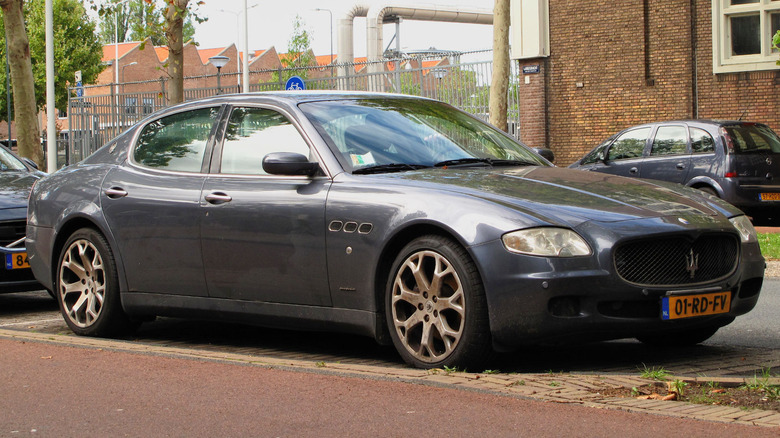
Of course, since we're discussing cars with portholes, we also have to deal with the (Italian) elephant lounging about the room — although it may not be the one you think. Yes, Maserati has made porthole-style vents a signature design touch of its own, but they seem to originate with the celebrated Italian coachbuilder Pininfarina — which, by the way, designed the prettiest Jaguar XJ220.
During the immediate post-World War II years, it was still fairly common for companies like Pininfarina to craft bodies for other automakers' chassis — some point to the Pininfarina-bodied 1945 Alfa Romeo 6C 2500 Sport Cabriolet Speciale as the first car to use the look. Then, in 1947, Pininfarina carried over a modified version of the portholes on its body for the Maserati A6 1500 Prototipo Turismo Coupé. Now, as you might guess from its name, this was a prototype. Maserati ended up axing the porthole vents for the production model, but Pininfarina didn't give up.
As a result, while many Maseratis offered fender vents of different designs over the years, the Buick-Maserati comparison may have come to a head when Pininfarina designed the body for the 2005 Maserati Quattroporte. Motorweek, for one, made the connection clear when it reported that the Quattroporte's "Buick-like portholes in the front fenders ... don't hamper its sexy lines." Meanwhile, reviewers at the Robb Report took a harder line, awarding the 2005 Quattroporte its Car of the Year title with a single complaint: "The addition of nonfunctional front-fender portholes reminiscent of no Maseratis within our ken, only of '50s Buick Roadmasters."