

What Is An Opera Window, And Why Did It Go Out Of Style?
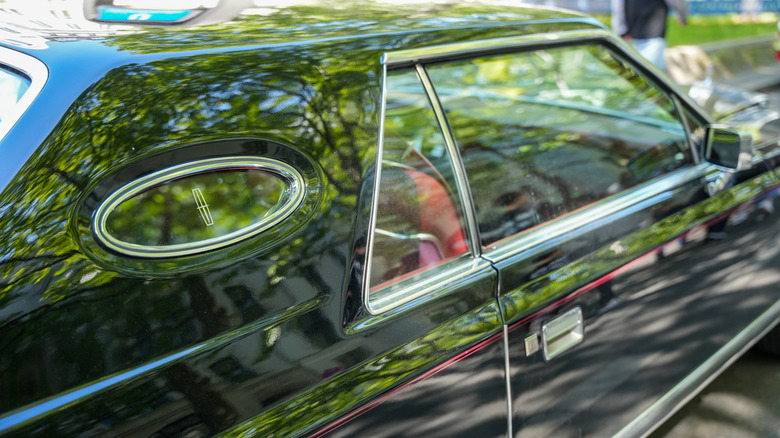
There is no shortage of odd designs that have fallen in and out of fashion in the automobile industry over the years. Take, for instance, the weirdest car windows ever built, which you'd think wouldn't offer much room for variation. One such bizarre example is the opera window, which is a small glass covered opening over the rear roof supports. It wasn't made to open, but it did serve a practical purpose, at least initially.
Mainly found on two-door models starting in the 1950's, you could find some four-door examples in the wild, like the late '70's Lincoln Town Car. Every vehicle has pillars, which help support the roof, hold components like hinges and seat belts, and reinforce the overall structure. The rearmost pillars that flank the back window are called c-pillars, and some car designs featured much larger ones than others. Thick c-pillars pose a visibility issue for drivers, as they create huge blind spots. So, automakers decided to add a small window in the c-pillars to improve sightlines.
However, while opera windows may have started with purely functional motives, over the course of their life in car design, they became a symbol of luxury. Take the early '70's Fleetwood (Cadillac) Eldorado, for example, which included fender skirts, incorporated the intricate wreathed hood emblem for the first time, had a vinyl covered rear roof section, and featured opera windows. Although, as history demonstrates, styles continuously change for better or worse.
Toward the end of their run, opera windows began to be seen as passé
When something becomes popular, it loses its uniqueness. In the case of opera windows, this was only exacerbated by automakers excessively adding the feature to a wide range of models. Some of these cars perhaps shouldn't have had them.
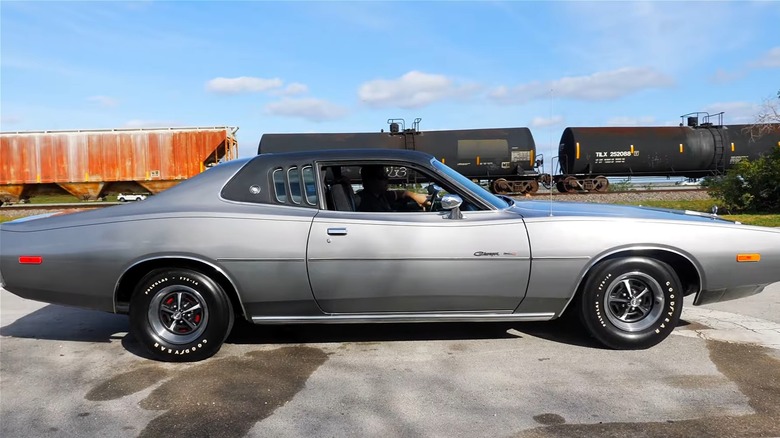
For instance, the 1974 Dodge Charger was in the midst of a shift from muscle to luxury car. This was years after the height of the muscle car era, or was it? Here's when you think American muscle peaked, and there are some unexpected answers. Nevertheless, the '74 Charger also included opera windows, but their slotted vertical design arguably didn't seem to fit with the rest of the car, nor did it appear to aid much in visibility. What was once seen as a status symbol was quickly losing its luster. Toward the end of the disco decade, Daihatsu even jumped on board, placing an awkward spherical window over the c-pillars of its Charade Runabout, a compact hatchback.
One of the last examples you might be able to find with a true opera window came out in 1989. The TC By Maserati looked awfully similar to a Chrysler Le Baron, except that it featured a little round opera window that some have referred to as a "porthole." It wasn't successful, only being produced for 3 years and selling 7,300 units total, per Curbside Classic.
C-pillar shape and design have changed in some cases for the worse
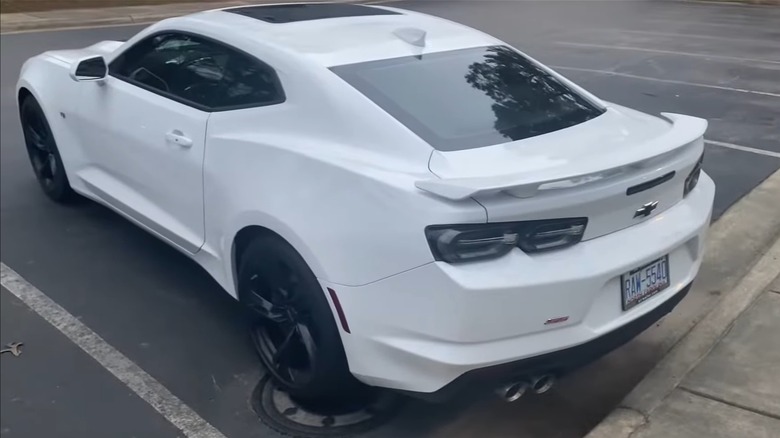
Modern vehicles often showcase a more sleek and aerodynamic overall shape than those fondly remembered classics. So, you may think driver visibility has dramatically improved along with these changes. Well, it depends on the model, but a side effect to more comprehensive safety requirements has been thicker pillars. In addition to thick pillars, the stunning profile of the modern car also forces the windows into an aggressive angle, minimizing visibility. For example, according to a Consumer Reports test, as reported by GM Authority, the Chevy Camaro was rated the worst in the sports car category for visibility back in 2021. One look at the vehicle and it's easy to see why, the angled slope of the roof and constrained rear windows with large c-pillars make for some sizable blind spots.
This is counter to the design of the '60's and '70's, which exuded a more upright boxy appearance. It's hard to argue that your favorite cars from the 1970s aren't still a sight to behold today. However, rather than bring back opera windows for better sightlines out of the car, automakers have been packing their vehicles with the latest driver assistance systems, like blind spot monitors. This technology uses things like radar sensors and cameras to alert the driver of another motorist. According to the IIHS, lane-change collisions have dropped 14% with the help of blind spot monitoring.