

Why Automakers Abandoned Wraparound Windshields After The 1950s
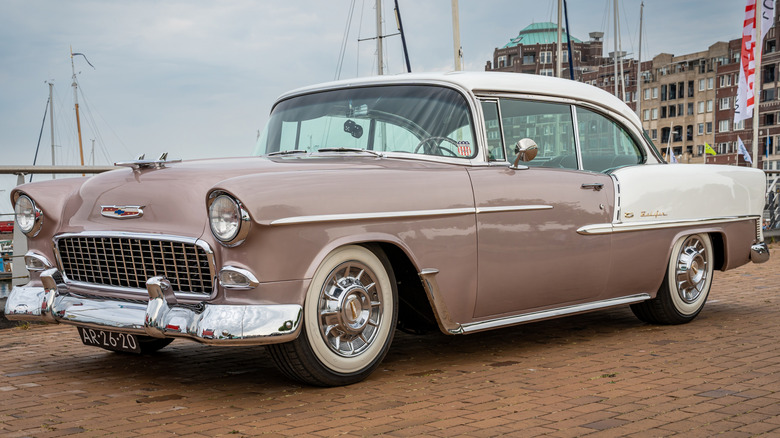
The wraparound windshield once was a trend in the automotive world. It's a design solution in which the windshield is built forming a curve toward each side of the cabin. As a result, the frontmost pillars, the ones between the windshield and the front window of each side, are displaced away from the car's front end, and the window next to it becomes narrower. That solution has been used on the rear windshield, too, where the wraparound design displaces the rearmost pillars in the opposite way — or, sometimes, wraps around the other way.
This trend is credited to the 1951 GM Le Sabre, a concept car dreamed up by Harley Earl and inspired by jet fighters — remember, jet design was all the rage in America back then. The Le Sabre's wraparound windshield resembled the canopies used in jet fighters and only became a reality after the industry spent years improving the technology for it. After GM started using it in mass production in 1953, Ford and Chrysler quickly followed suit. Over the following years, it was used on other cars despite the need to adapt the original design — the Le Sabre was a convertible concept car, so it didn't have the conventional roof and windows of a sedan or station wagon.
Sadly, wraparound windshields were largely dropped from automotive design in the 1960s; newer examples are much rarer. Among the practical reasons, having such a large glass area made the cabin excessively hot, especially in warm weather, and occupants would feel too visible from the outside. From a technical point of view, the curved glass causes some distortion on the sides. Besides, using larger glass areas led to making the pillars thinner, which raised concern that the cabin would become less resistant in a collision.
Wraparound windshields proved more beautiful than functional
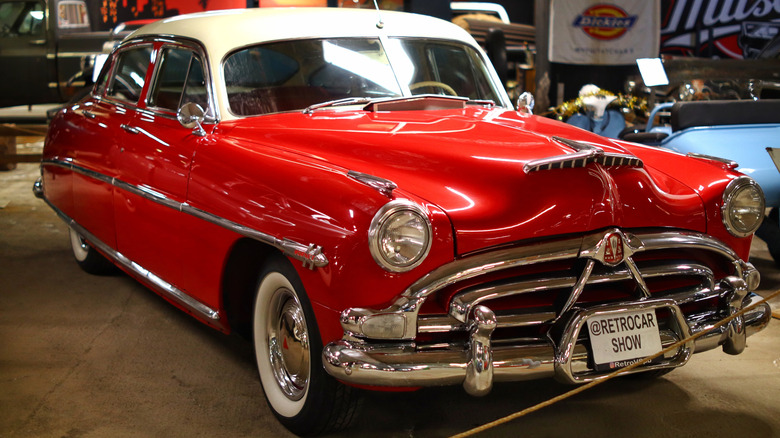
To understand why wraparound windshields were a short-lived fad, all it takes is a closer look. By being larger than usual, they allow more sunlight into the cabin, so they tend to make it hotter. Using an air conditioner would help but in the 1950s, automotive AC was in its early years. It used too much energy, was too noisy, and its components were too heavy, so it wasn't so popular. Another consequence of such large windshields was huge inward visibility, which diminished occupants' privacy. Both factors made people uncomfortable.
The distorted view was a consequence of looking through a curved glass, like what's used on side mirrors to increase the driver's field of vision. Automakers tried to address that issue by using less-curved windshields, like on the 1953 Hudson Hornet, but that diminished the wraparound concept.
Also, the more glass there is in a given area, the thinner the pillars must be. Resources such as high-resistance steel weren't available then, so being thin meant those pillars had low structural resistance in case of a rollover. This correlation between glass area and pillar resistance ended up making automakers choose between style and safety.
After the trend ended in the early 1960s, the few newer examples available use a rear windshield with wraparound design. The 1964 Plymouth Barracuda became a notable one for its massive rear windshield.