

What's The Biggest Load A Semi Truck Can Tow?
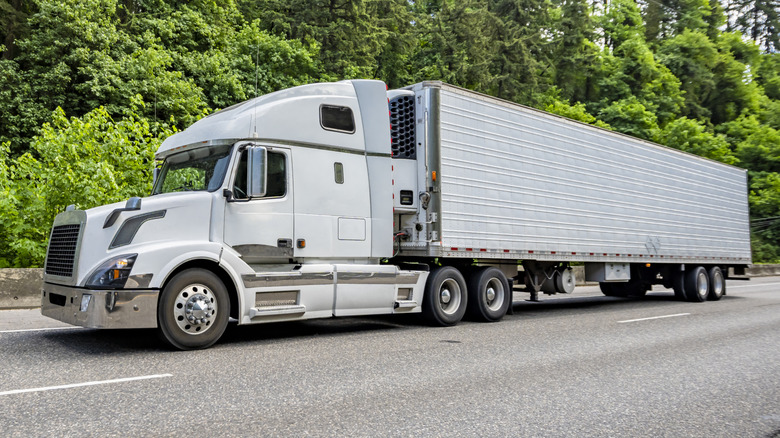
Semi trucks are massive pieces of equipment powered by massive diesel engines (not gasoline V8s). They're also designed to haul large loads, with some of these tractors — the front of the truck that does the work and holds the driver — able to tow two or three trailers at once. But have you ever wondered exactly how much one of these semi trucks can tow? Surely there's a limit like there is in pickup trucks, right?
When it comes to physical limits, a Volvo FH16 was able to tow over 750 tons across a short distance in 2016. (For reference, the heaviest load ever hauled on the road was over 4,800 tons.) In most cases, though, limits are set by law for safety reasons. Semi trucks are classified as class eight commercial vehicles, and their max towing is based on several factors. First, there's a Gross Vehicle Weight Rating (GVWR), which is the maximum amount of weight the truck is designed to handle — including passengers, cargo, the trailer, and the truck itself. Secondly, beyond certain exceptions, there is a nationwide maximum limit capping the total GVWR to 80,000 pounds on interstates. Even if the truck could handle more by design, it would be illegal to exceed that total weight. The limits are different in Europe, which has higher maximum towing weight regulations.
A diesel-powered tractor can weigh up to 25,000 pounds. The weight for an unloaded 53-foot trailer comes out to around 10,000 pounds. With these examples, the unit itself already weighs 35,000 pounds. That means the trailer can hold up to 45,000 extra pounds without exceeding the limit. Many trucks end up being loaded to that limit, since the more cargo you can load, the fewer trucks you need overall.
There are some exceptions to the rule
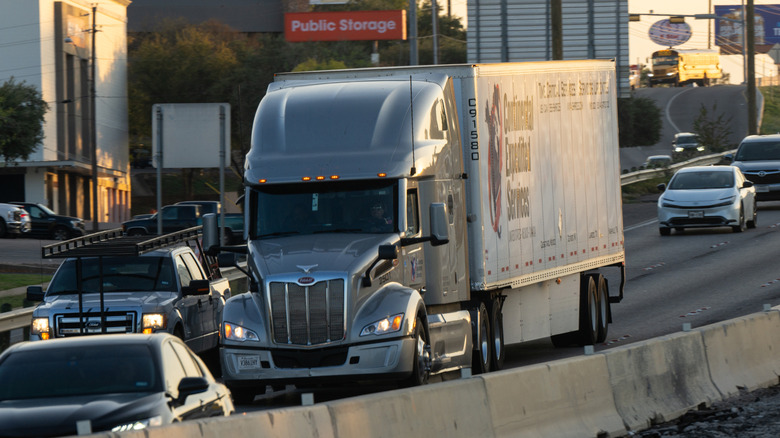
Electric tractors, such as the Tesla Semi, weigh more than a diesel-powered unit. That means there's less free weight available for carrying cargo. For some logistics companies, the trade-off is worth it. Hydrogen-powered trucks, such as those used by Toyota at the Port of Long Beach in California, weigh about the same as a diesel-powered tractor. There's not much of a weight penalty associated with using the alternative fuel, but you have to have hydrogen infrastructure to refuel them. That being said, a green power train in California allows operators to have up to an 82,000-pound GVWR on interstates.
All of these maximum weight limits are meant for the federal interstate system. Many states have different rules for non-interstate highways, though. In Michigan, trucks can go up to 164,000 pounds even on the interstate system, due to a grandfather provision under Federal law. Axle limits must be maintained, so a truck would need 11 axles for that weight limit. Extra weight on the trucks increases wear and tear on roadways, and it's part of the reason why Michigan's roads have such a poor reputation.
The U.S. Department of Transportation's Federal Highway Administration tracks all of the state law variances. Enforcement of weight limits happens in a variety of ways, including the weigh stations that sit along the interstates at various locations. All of this is designed to help keep you safe on America's highways and byways.