

Trump 'Defied The Will Of Congress' In Cutting EV Charger Funding: Judge
Happy Monday! It's January 26, 2026, and this is The Morning Shift — your daily roundup of the top automotive headlines from around the world, in one place. This is where you'll find the most important stories that are shaping the way Americans drive and get around.
In this morning's edition, we're looking at yet another judge telling the Trump administration the limits of executive power, as well as how tariffs are affecting Audi's long-nebulous plans for a U.S. factory. We'll also look at the foreign car market in India, and the immortality of the BMW V12.
1st Gear: Trump can't unilaterally end EV infrastructure funding
For the duration of his presidency, Donald Trump has tried to slash EV funding anywhere and everywhere. This includes funds approved by Congress, which the Executive Branch doesn't have the power to cut — a fact that the courts keep having to remind the President. Now, a District Judge in Seattle has done the same. From Reuters:
A federal judge on Friday ruled President Donald Trump's administration unlawfully suspended funding awarded to support the expansion of electric vehicle charger infrastructure, in a victory for 20 Democratic-led states that sued over the action.
U.S. District Judge Tana Lin in Seattle ruled, opens new tab in favor of 20 states as well as the District of Columbia, which had filed their lawsuit after the U.S. Department of Transportation in February suspended an EV charger infrastructure program enacted by Congress in 2021 under Democratic President Joe Biden.
...
States led by California, Colorado and Washington sued in May, alleging the Trump administration was wrongly withholding billions of dollars they were previously awarded.
The administration argued it was but a temporary pause, which it later ended after the judge earlier issued a preliminary injunction and the agency issued new guidance.
But Lin said the 2021 law never contemplated even temporary pauses in funding for the construction of EV infrastructure.
"In short, Defendants defied the will of Congress by withholding funds in a manner not contemplated by the IIJA," she wrote.
Is this the first part of a Roberts two-step? At this point, it's honestly impossible to tell the high-level Heritage Foundation legal maneuvering from the addled whims of a mad king.
2nd Gear: Volkswagen puts its U.S. Audi plant on the back burner
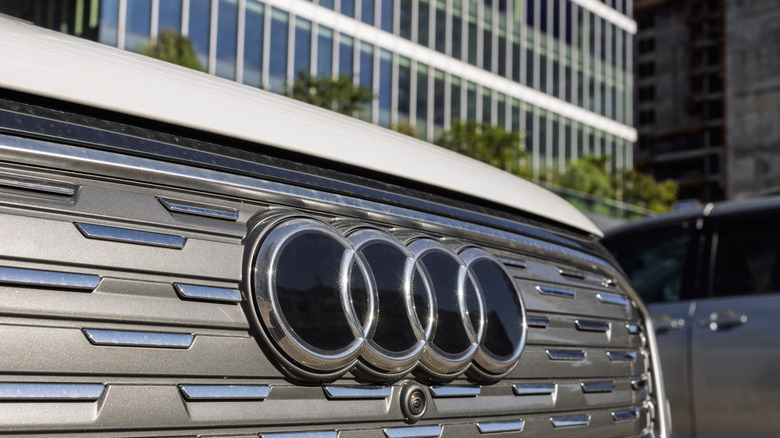
Trump has also been big on tariffs, with the intent of incentivizing manufacturers to bring their production facilities stateside. But for Audi, which has long been considering an American plant, the tariffs have had the opposite effect. Apparently, Volkswagen isn't looking to spend to import parts, either. From Bloomberg:
Volkswagen AG's plans for a possible Audi factory in the US aren't progressing as President Donald Trump's tariffs weigh and talks for local incentives haven't yielded results, Chief Executive Officer Oliver Blume told Handelsblatt.
Europe's biggest carmaker has considered adding a second American manufacturing site on and off for some time, including dating back to 2018 during Trump's first presidency. Talks for an Audi plant have been ongoing, initially encouraged by subsidies making an investment economically viable.
That calculus has shifted as the Trump administration placed tariffs on European carmakers, Blume said in an interview with the German newspaper, citing duty costs of VW €2.1 billion ($2.5 billion) in the first nine months of 2025.
It's not that Volkswagen is exactly short on cash, being the largest automaker in the world, but maybe it's the principle of the thing. Or, perhaps, other markets look juicier.
3rd Gear: As India makes a play for imported cars
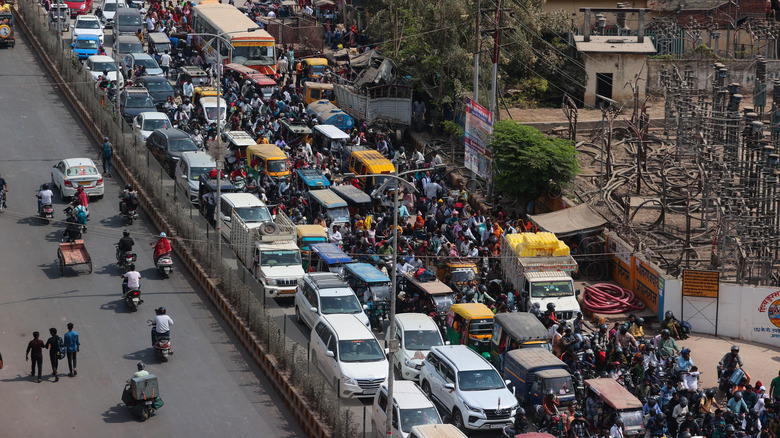
Like, for example, India. The nation has long been opposed to vehicle imports, instead relying on China-style investment alongside local companies, but now it's opening its doors to European competition — or, at least, undoing some of the locks on the doors. There will still be tariffs on European cars in India, just much lower than they were before. From Reuters:
India plans to slash tariffs on cars imported from the European Union to 40% from as high as 110%, sources said, in the biggest opening yet of the country's vast market as the two sides close in on a free trade pact that could come as early as Tuesday.
Prime Minister Narendra Modi's government has agreed to immediately reduce the tax on a limited number of cars from the 27-nation bloc with an import price of more than 15,000 euros ($17,739), two sources briefed on the talks told Reuters.
This will be further lowered to 10% over time, they added, easing access to the Indian market for European automakers such as Volkswagen, Mercedes-Benz and BMW.
4th Gear: BMW's V12s aren't going anywhere
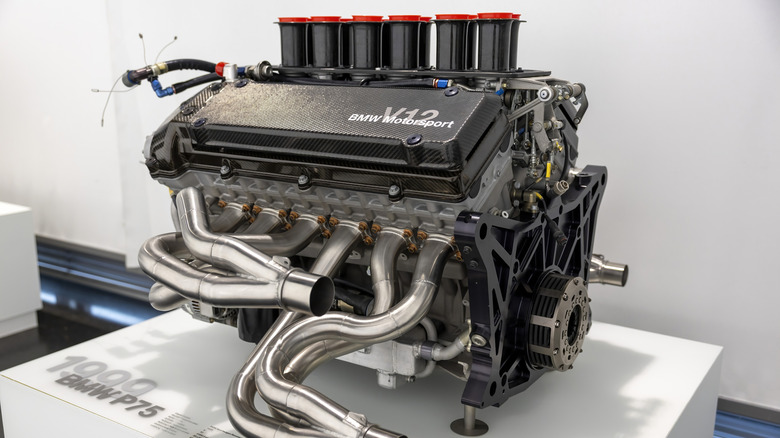
BMW may not sell V12s in its own cars any more, but it does still manufacture them for Rolls-Royce. The company doesn't seem interested in entirely going the way of the Spectre, though. Those big engines will live on in spite of emissions regulations, and that's all thanks to the good ol' U.S. of A. From Automotive News:
BMW is sticking with large combustion engines, including V-8 and V-12 units, even as it pivots its core lineup toward electric vehicles under its Neue Klasse strategy.
"High-performance engines remain a central part of our strategy," a BMW spokesperson said, pushing back against speculation that the automaker was preparing to phase out its biggest engines.
Those rumors gained traction after BMW ended V-8 production at its Steyr plant in Austria at the end of 2025. The move marked a relocation rather than a shutdown.
The V8s are the engines that you're more likely to see on the road, but the V12s are something special. Seems like luxury buyers aren't yet entirely ready to ditch gas.
Reverse: RIP Kobe
On The Radio: Halsey - 'I'm Not Mad'
I had a couple flights last week, with only Halsey downloaded on my phone for the plane. Turns out "Manic" is a perfect plane listen.