

What Happened To International Harvester?
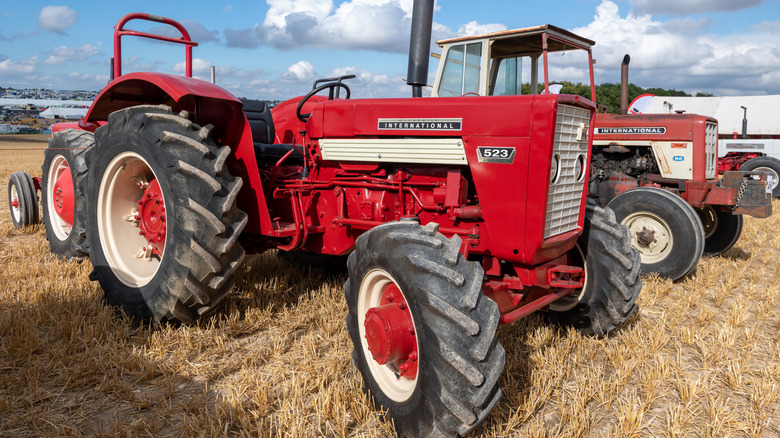
As one of the biggest icons in the agriculture industry for over 80 years, International Harvester (IH) has faced dramatic successes and devastating loses. It was the result of a merger that came about just after the turn of the 20th century, bringing together multiple companies in order to leverage each one's strengths in the production of farming equipment. With notable operations like the Deering Harvester Company and McCormick Harvesting Machine Company, the new venture entered the market as a major player in the industry — but IH itself would eventually be absorbed into another company, too.
Some of the most notable contributions from IH include the inaugural Farmall, a row-crop tractor which was the first to find success commercially. And there was plenty of competition, especially with automakers like Ford making tractors for decades. Later on, the Farmall H secured the title of the most sold crop tractor model ever, moving more than 390,000 units between the late '30s and mid '50s. The McCormick Super WD-9 offered a boost in power to '50s era farmers looking for additional power as productivity increased due to more effective fertilizers and pesticides. Towards the end of its run, IH also produced the 1586 tractor, which offered a turbocharged six-cylinder diesel for heavy-duty field work. It was produced from the mid-'70s to early '80s, but the cracks in International Harvester were beginning to show by then.
An inability to adapt to emerging market changes and over diversifying product offerings
One of the biggest challenges a manufacturer of agriculture equipment faces is the inherent instability of the farming market itself. Crop yields can be impacted significantly by ever-changing weather and shifting demand, among other challenges. When farmers are forced to be especially frugal with their finances during more challenging years, equipment manufactures need to pivot and adapt, which IH was unable to do.
Technology is always evolving, and companies capable of incorporating new advancements into their products have an advantage over their competitors. While IH had made several memorable and successful tractors over the years, other manufacturers like Case and John Deere were pushing ahead with state-of-the-art designs and features. IH tractors, while still known for their power and durability, were quickly looking and feeling like they belonged in the past.
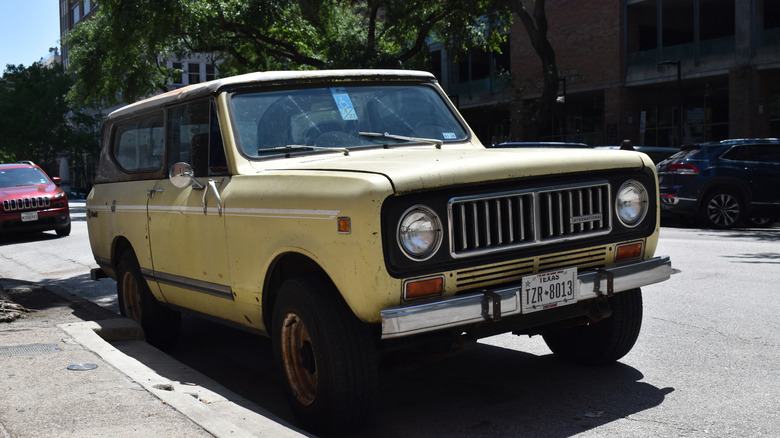
IH wasn't new to expanding beyond agriculture. Less than a decade into its run, it had started making trucks. It later went on to manufacture other well-revered additions to automobile history, such as the 1961 International Scout 80. However, this was when the end of IH was approaching, as it had over-expanded its reach into other markets. While diversifying its products beyond agriculture, its rapid growth spread the company thin. A lengthy labor strike also brought about further complications, straining industrial relations within the company. Due to how much money it was hemorrhaging, IH was forced to strike a deal with Case – one of its largest competitors.
International Harvester under Case ownership
While International Harvester itself ceased to exist in 1984, Case IH was born just a year later, combining two agricultural giants into one of the largest manufacturers of farm equipment. Case IH combined aspects of both companies to create the Magnum series of tractors a few years later, which are still being produced today. As reported by Top Crop Manager, Case IH Marketing Manager, Dan Klein, mentioned that the Magnum series "introduced the red paint that has become the signature of the Case IH brand. Their cab-forward design and fully integrated mechanical front-wheel drive (MFD) were examples of International Harvester's reputation of innovative leadership."
At the start of the 21st century, Case IH reintroduced the memorable Farmall name from IH's past. While passionate fans of IH may not recognize the brand as it exists today, it still made a tremendous mark on agricultural history, with classic models continuing to plow fields to this day. Although, as technology continues to evolve, some worker shortages in the U.S. may be addressed with self-driving trucks, tractors, and trains, which could change the lasting impact that International Harvester had.