

Winter Driving Mistakes That Could Get You Into Serious Trouble
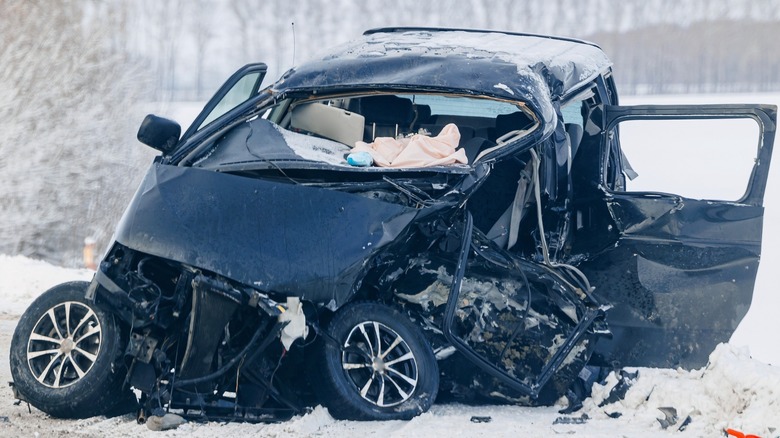
Ah, Winter. It's a wondrous time of slippery roads, dead batteries, and iced-over windshields, when your daily commute becomes even longer, thanks to road conditions and the inevitable ice-scraping pre-show that happens every morning. It's a fact that driving is more complex during this time of year, so it's no wonder that so many people are doing it wrong. There are certain mistakes drivers make during the winter that have become pretty common.
For example, we've all come across drivers who keep the pedal to the metal as if there's no snow or ice on the road. These are the same drivers who will barrel right up on the car in front of them, when instead they should be creating a longer following distance than usual. But it's not just reckless driving habits that can be dangerous. Neglecting certain kinds of vehicle maintenance can be perilous, too. Driving on worn tires or the wrong tires can easily lead to an accident, for example. Some cars aren't very good for driving in bad weather either.
But it's not just what we do behind the wheel that can be dangerous in the winter. Sitting in an idling car with the windows rolled up can be deadly, for instance. Not thoroughly scraping the snow and ice off of our windows or roof is not only hazardous, but is also illegal in certain localities. Speaking of illegal, some states don't even want you on certain roads when the weather gets really bad unless you've got snow tires or tire chains. We can avoid making most of these mistakes by using a little caution when driving and keeping up with responsible maintenance.
Winter driving mistakes that could cause an accident
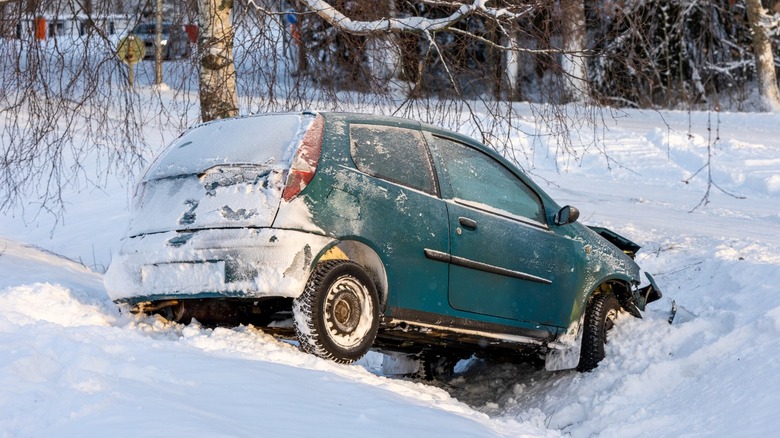
You can't drive on a wet or icy road the same you would on a dry road. You're probably thinking that would be obvious, but judging from all the cars we see get rear-ended or end up in a ditch during the winter, there are plenty of people out there who don't seem to grasp this. If you venture out on the road when it's wet or slushy from snow, for the love of Dale Earnhardt Jr., slow down. You must give yourself more time to come to a stop and more time to react if you start to slide.
The same goes for driving behind another car. You need way more distance between you and the car in front of you. This leads us to the other mistake some drivers make, which is relying too much on AWD or cruise control. All-wheel drive is great for increased traction, but it doesn't help the car brake faster. However, thinking that they'll be able to brake faster causes some drivers to tailgate the cars in front of them, which is very dangerous. Likewise, cruise control can be a bad idea when roads have icy patches. The last thing you want to do is slam on your brakes in those conditions, which means you have to constantly adjust the pressure you put on the gas. The extra time it takes to turn off the cruise first is time you may not have.
It's also important to choose the right tires, replace them if they are getting worn, and make sure they are properly inflated. Traction is everything when driving in winter conditions. If you're driving on incorrect, worn, or underinflated tires, that traction is compromised. Check out our all-season vs. all-weather tire comparison.
Winter driving mistakes that could kill you
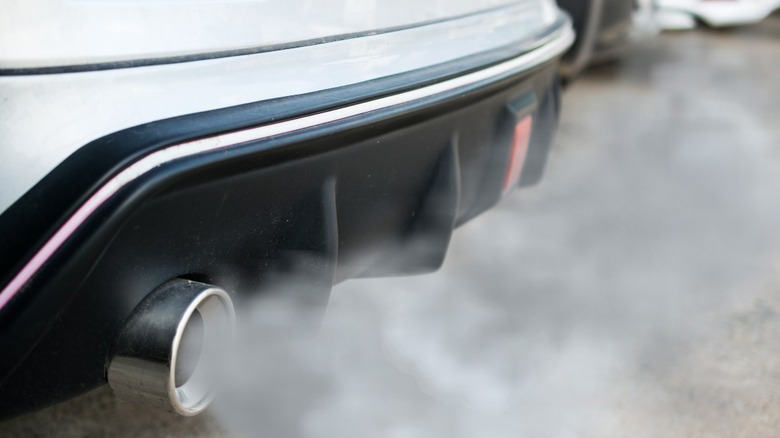
We've talked about winter driving mistakes that could cause an accident. All of those could potentially kill you. However, there are mistakes that have unfortunately killed some drivers when their cars weren't even moving. One common mistake is sitting in the car and letting it idle so they can get warm. Most people likely know you should never do this in an enclosed space like a garage. But some drivers have made the deadly assumption that they are okay if the car is outside. But snow or ice can be blocking the exhaust. When that happens, idling the car with the windows up will cause carbon monoxide to back up inside the cabin, which could kill you before you're even aware that it's happening. If you have to run the car to stay warm, don't leave it on any longer than it takes to warm the cabin.
Another winter driving mistake that drivers make is to hit the road without an emergency kit. Having a well-stocked kit when you've found yourself stranded somewhere could be the difference between survival and freezing to death. What should you have in your kit? According to the National Weather Service, your kit should include a flashlight with extra batteries, a first aid kit, a snow shovel, an ice scraper with a brush, blankets or sleeping bags, non-perishable food like granola bars and dried nuts, bottled water, jumper cables, extra clothes like mittens and hats, some sand or kitty litter for traction, a charger for your smartphone, and flares or triangles. We would add a portable car jump starter, since cold weather can be hard on batteries. And here are some things preppers say you should keep in your car at all times.
Winter driving mistakes that could cause you to break down
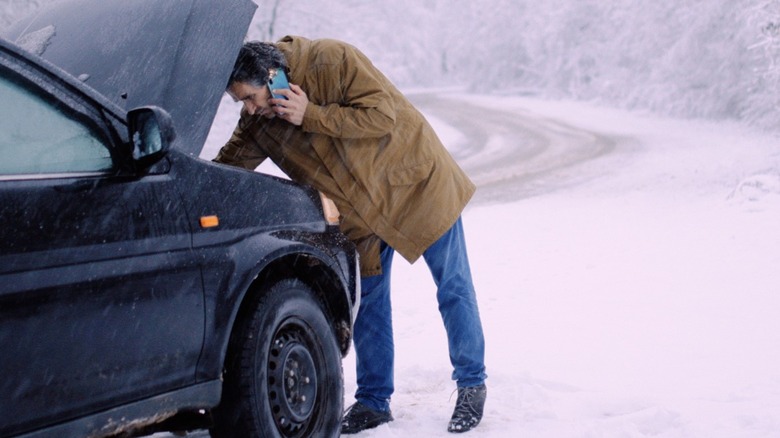
Did we mention that cold weather is hard on car batteries? It is, which means that if your battery is getting close to the end of its life before winter starts, the cold weather will likely push it the rest of the way, maybe at the worst time. But some drivers forget about their batteries and start winter without having their batteries checked. If you're battery is old, you should think about replacing it before winter hits.
Have you checked whether your antifreeze is low? How long has it been since you flushed your coolant? If your coolant/antifreeze is too low or too old, it's not going to protect your engine from freezing. You can pick up an antifreeze tester tool for less than $4, which will tell you the freezing point of the antifreeze in your car. It's also important to make sure the mix of the antifreeze and water is right for the temperatures you'll be facing. The right mix is normally 50/50, but it may need to be adjusted if the winters where you live are especially frigid.
Another winter mistake drivers make is not having the transmission checked when there are signs of possible leaks. Cold weather can cause transmission seals to become brittle and cracked, resulting in leaks and low transmission fluid. Some also recommend switching to synthetic transmission fluid, which doesn't thicken as easily in cold weather. Thickened transmission fluid doesn't lubricate as well. Another mistake to avoid is not allowing the transmission to warm up before driving your car. Otherwise, shifting can be sluggish, which could potentially cause the transmission to slip.
Winter driving mistakes that could cause damage to your car
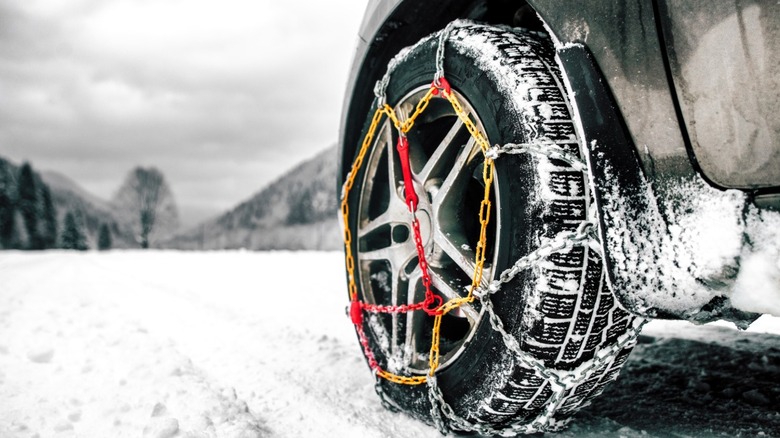
Putting chains on your tires can be a good idea if you have to deal with icy or snowy roads in the winter, unless you put them on incorrectly, that is. More than a few drivers have put their chains on backwards. At the very least, backwards tire chains aren't going to grip the road like chains that are orientated correctly. Another mistake is not putting tire chains on tight enough. Not only will loose chains not provide the traction you need, but they may come off the tire, creating a hazard for other cars. Also, chains that aren't installed properly or chains that aren't the right size for your tires can rub against the sidewalls, causing significant damage. You'll also want to make sure the chains have enough clearance so that they don't interfere with or damage brake or suspension parts.
Speaking of brakes, make sure that the chains are compatible with your car's anti-lock braking or traction control systems. And take it slowly when driving with chains, below 30 miles per hour. Finally, check your chains for rust or corrosion, as these can cause the chains to fail and break while you're driving down the road.
Another common mistake drivers make in the winter is pouring boiling water on their windshield to melt the ice. Quick temperature changes like that can crack glass and even cause it to shatter. In fact, it's not even recommended to turn your heat on full blast at first. Start with heat on low. After the glass is defogged, you can switch to high.
Winter driving mistakes that could get you fined
We mentioned that installing the right tires is important and that tire chains can be a good idea. Well, there are some states that require drivers on certain roads to have snow tires during the winter and even to carry chains in their car. Colorado state law allows officials to put any highway under "traction law" in the event of a winter storm if conditions warrant it. In that case, drivers must either have chains on their tires or be in an AWD or 4WD vehicle with specific types of tires that have tread that is 3/16-inches deep. Failure to comply can get you a $50 fine.
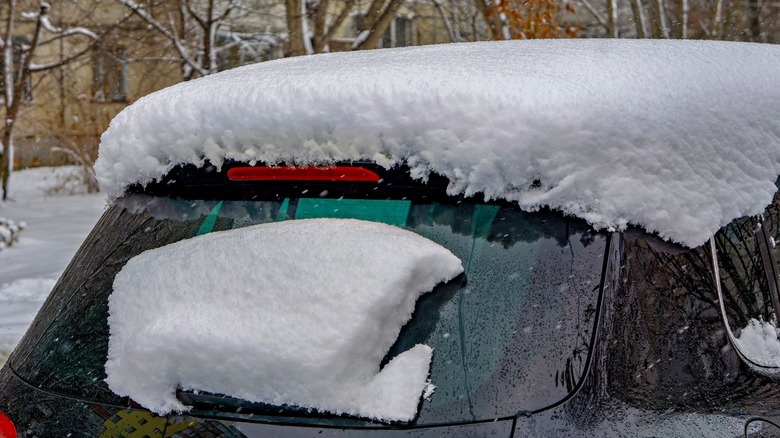
Have you ever been in a hurry to get to work and only cleared the snow off your windows, leaving a pile of ice and snow on your roof? That can get you a $310 fine for the first offense in New Hampshire. That state enacted Jessica's Law, named after a young woman who was killed when snow came off the roof of one truck and hit another, causing it to collide with her car. New Jersey will fine you $25 to $75 for each time you're caught with snow on your roof. If it falls off and causes injury, fines can run from $200 to $1,000.
Some of the winter driving mistakes we've covered are due to not driving safely. But most of them probably boil down to just not knowing better. A little self-education can go a long way toward not making those winter driving mistakes.