

What's The Difference Between The 700R4 And 4L60E Transmissions?
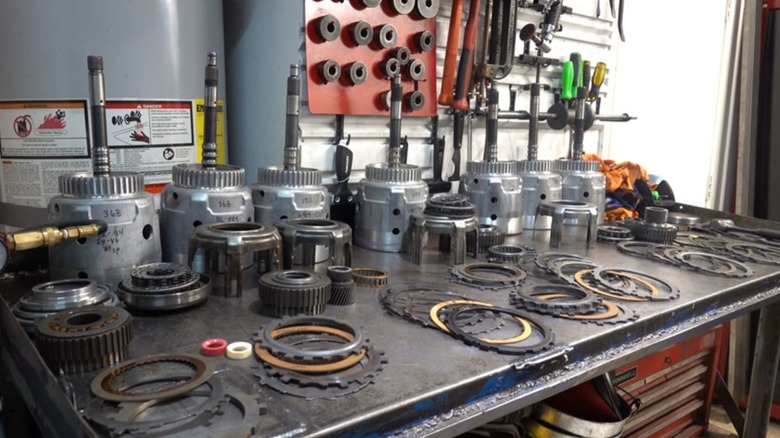
Poor reliability is a car problem that isn't as prevalent as it used to be. Automatic transmissions were among the worst offenders, with some going from smoothly shifting between gears while accelerating to a bunch of neutrals with a bang. This phenomenon is one reason 700R4 and 4L60E automatic transmissions have such bad reputations.
Key differences between the 700R4 and 4L60E automatic transmissions include their control mechanisms and the dates they served General Motors automobiles. The 700R4 transmission served several GM vehicle models from 1982 to 1993. The 4L60E replaced the 700R4 in a number of applications in 1993, although GM also used the 4L60 (without the E) in some of its vehicles for a time. While the two transmissions share similar designs, there are some greater design differences between them. The 700R4 transmission is mechanically controlled whereas the 4L60E is controlled electronically, as indicated by the letter E in its name. While the 4L60E receives shift inputs from the vehicle's computer, the 700R4 uses a throttle-valve cable to control the transmission's activity. Additionally, they have some easy-to-spot visual differences between their covers and connectors:
These differences make telling one from the other simple, although the design of other GM automatics can confuse the issue. If you're sure the transmission you're dealing with is either a 700R4 or a 4L60E, look for the case connector location. On the 700R4, it'll be on the driver's side while the throttle-valve cable hook up is on the passenger side. The case connector on the 4L60E is on the passenger side. Another identifying characteristic is a governor cover on the driver's side of the 700R4; it's missing entirely from the 4L60E.
Which is the better transmission, the 700R4 or 4L60E?
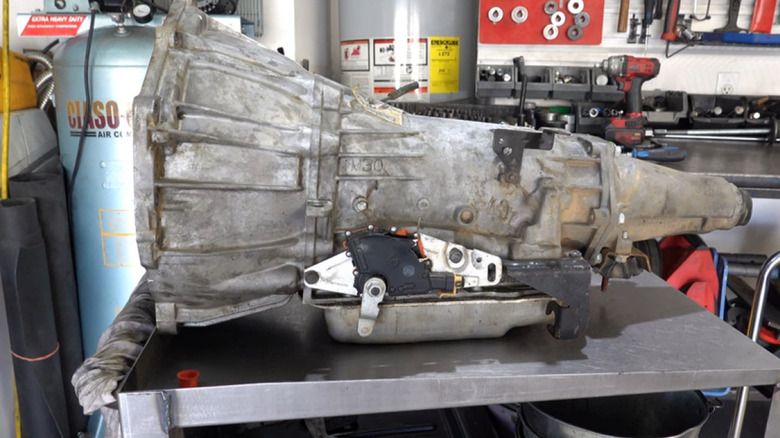
While both transmissions evolved over their respective production periods, a common belief is that one isn't inherently better than the other. Additionally, they're not all interchangeable despite having a variety of similar internal components. The most significant improvement didn't come until the 4L65E replaced the 4L60E through a phased approach beginning in 2001.
The 700R4 automatic transmission, with its less complex mechanical operation, is often a simpler solution for production vehicles and project builds without computer-controlled systems. However, it often delivers more abrupt shift characteristics due to its mechanical nature. In vehicles with computer controls, the 4L60E is often the better option. It can deliver more precise shifts and has more tuning options than the 700R4.
Both transmissions perform well enough when engine torque remains under around 350 pound-feet. That was part of the problem with the 4L60E. It couldn't stand up to the abuse as GM began producing better-performing vehicles with more torque. Aftermarket alternatives — like the StreetMonster Chevy 700R4 from Monster Transmission or the Chevrolet 4L60E Performance Transmission from GearStar Performance Transmissions – can handle higher amounts of torque.