

GM Really Did Transform Car Buying At Saturn Dealers: Here's How
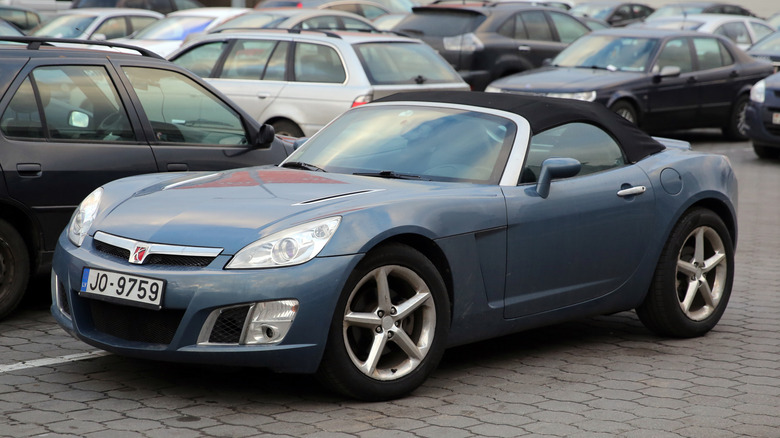
When General Motors called Saturn "a different kind of car company," the conglomerate wasn't joking. Saturn operated differently within GM's umbrella, even transforming the car-buying experience by introducing customers and dealers to the no-haggle pricing policy. For the uninitiated, this meant every Saturn customer was paying the list price, and dealers never had the competitive pressure to offer discounts just to register a sale.
While some dealers still insist on in-person negotiations, there are folks who don't want to go through the haggling process itself, with many finding it unnecessarily overwhelming and a complete waste of time. In a Saturn dealership, the list price was the final price, and someone who bought a Saturn was reassured that no one else got a better deal. The only thing worse than watching an annoying car YouTuber is listening to the person who brags about how much less they paid for the same car you bought.
For dealers, GM ensured no new Saturn outlets (under different ownership) would open in the area, allowing them to operate without the burden of internal competition, a common sight in the automotive landscape. The policy wouldn't deter someone from buying a Saturn simply because another dealer down the road gave them a better discount. It shouldn't come as a surprise that Saturn's innovative pricing policy played a huge part in the brand's early success during the '90s.
Saturn customers were happy
It's not like Saturn did not suggest an MSRP. The price, however, was more of a guideline that dealers could change before the sales process. But once set, they were not allowed to modify the price. It wasn't just the no-haggle pricing that became a Saturn highlight: The company also insisted on building and fostering customer relationships. When you bought a Saturn, the dealership folks would gather around and applaud as you drove away in your new car — awkward to some, wholesome to others.
That's not all. GM took things further by hosting its first Saturn Homecoming event in 1994, where more than 44,000 Saturn owners met up and partied at the factory in Spring Hill, Tennessee. This kind of buying experience was unheard of in the '90s, especially for an American brand selling small, affordable cars. The customer-centric approach proved so successful that Saturn built over a million vehicles by the end of 1995. No wonder that while the company was still in business, it ranked consistently higher in J.D Power's customer satisfaction surveys. Although Saturn closed for good in 2010, you can thank the GM-owned company for reshaping certain aspects of modern auto retailing. And dare we say the time is right for General Motors to consider bringing back Saturn.