

Charging People To Drive Into Manhattan Might Be The Smartest Thing New York Has Ever Done
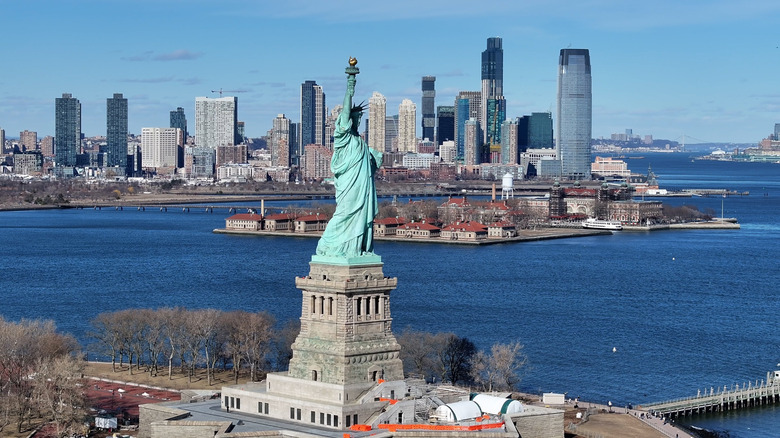
It's officially been one year since New York City began charging drivers to enter the busiest part of Manhattan, following a years-long battle to finally make it happen. To say it was controversial at the time would have been a serious understatement, but as they say, the proof is in the pudding. Either the congestion relief program would work, or it wouldn't, and either way, we'd all get to see. So how'd it go? Well, the New York Times looked into the data, and what do you know, it's been an unmitigated success.
Granted, if you've been paying much attention to the congestion relief pricing saga (or reading Jalopnik with some regularity), this isn't much of a surprise. Republicans in the Trump administration tried their best to kill it off, but as Secretary of Transportation Sean Duffy found out the hard way, sometimes your best just isn't good enough. Congestion pricing worked great right out of the gate, it was still working after six months, and another six months didn't change anything. Somehow, a policy that worked in Europe also worked in the United States. Weird, I know.
In fact, you could argue that charging people to drive into Manhattan might be the best decision New York has ever made. And while it definitely improved life for the roughly 1.6 million people who live in Manhattan (a population larger than the entire population of at least 10 individual states), the benefits haven't been exclusively reserved for Manhattanites. Let's take a look at what the Times analysis found.
Fewer cars and faster traffic
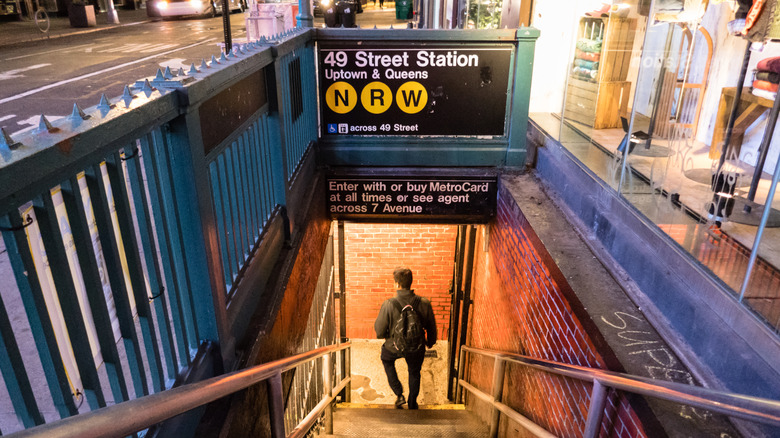
On average, the Times found that every day, 73,000 fewer vehicles drive into the congestion zone. That adds up to about 27 million fewer cars in the last 12 months. The analysis also found a spike in drivers entering before 5:00 a.m., when the $9 charge kicks in, and after 9:00 p.m., when it drops back down to $2.25. That said, entries still peak about 8:00 a.m., suggesting that while some drivers are still committed to saving money, the majority of those who haven't switched to the train are sticking to their previous schedules.
Why? Well, aside from a lot of people not wanting to wake up early enough to get into the city before sunrise and the typical car commuter in NYC making enough money to afford it, congestion pricing has come with another benefit — faster traffic. Vehicle speeds are up 4.5% in the congestion zone, but the central business district isn't the only area that's seen improvements. In the area just outside of the congestion zone, vehicle speeds are up 2.2%, and they're up 1.4% throughout the rest of the city. Some of those who responded to a survey the Times conducted said it didn't feel like traffic was moving faster, but one look at the data shows the improvements are there, even if anecdotes don't always back that up.
One area where drivers are definitely seeing fewer delays is in how long it takes to cross the bridges or get through the tunnels that lead into Manhattan. Weekday morning commute speeds are up 29.3% on the Queensboro Bridge, 28.3% on the Williamsburg Bridge, and 24.7% in the Lincoln Tunnel. The Holland Tunnel, however, takes the cake for the biggest improvement, with vehicle speeds up a full 51%. As one survey respondent, Salvatore Franchino, put it, "Traffic approaching the [Holland] tunnel has saved me 15-30 minutes on the rides back to New York and given me hours of my time back."
Better public transportation
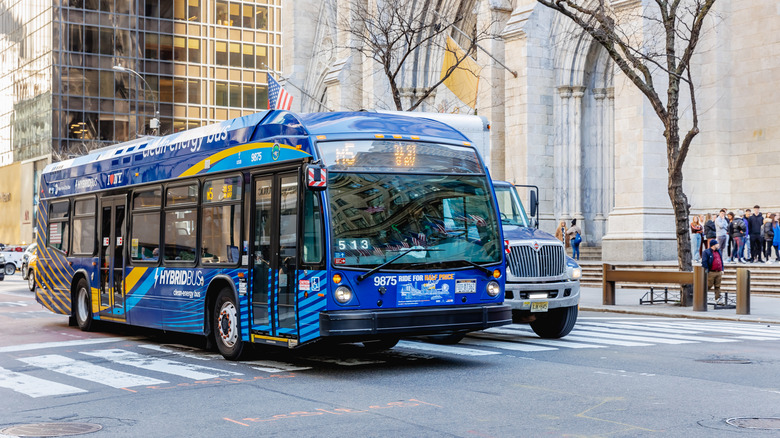
Since it now costs more to drive into the city, even if it takes less time to get there, you could probably imagine a scenario where incentivizing more people to use public transit might overwhelm the system. Especially if you exclusively get your news from sources run by billionaires who actively hate anything that benefits the public good. But with fewer cars on the streets, buses that go through the congestion zone are also moving faster. A 2.4% increase in bus speeds might not sound like much, but it's still an improvement and a reversal of the previous trend showing bus speeds getting slower every year.
The people are noticing, too. "The crosstown buses are faster than they used to be, even during peak commuting times," Marc Wieman told the Times. Meanwhile, John Ruppert told the newspaper, "It has significantly improved my bus trips from N.J., cutting about 20 minutes of traffic each way."
The funds generated by the congestion charge will be used to improve public transportation in the city, making both the bus and the train better, faster, safer, and more convenient. After accounting for expenses, that figure is expected to come out to roughly $550 million in the first year, about $50 million more than the MTA initially projected. Additionally, ridership is up massively year-over-year, even if congestion pricing isn't the only factor:
Paid transit ridership is up this year compared with 2024 across the subway, M.T.A. buses, Long Island Rail Road and Metro-North Railroad as transit has continued its recovery from pandemic declines. About 300,000 more people are riding the subway each day — far more than the 70,000 cars that have been taken off the road in the congestion zone. So while congestion pricing is probably contributing to rising transit ridership, it's not the main driver of it.
And while the doomers would have you believe fewer people driving into the city would be a disaster for local businesses, that hasn't actually happened. In fact, visits to the congestion zone are actually up 2.4%. According to OpenTable, restaurant reservations in the area were also up, and even the president of the pro-business advocacy group, Times Square Alliance, has been won over. As TSA president Tom Harris put it, "We're thrilled we have not seen negative impacts to local businesses. It seems like it has been absorbed."
Better city life
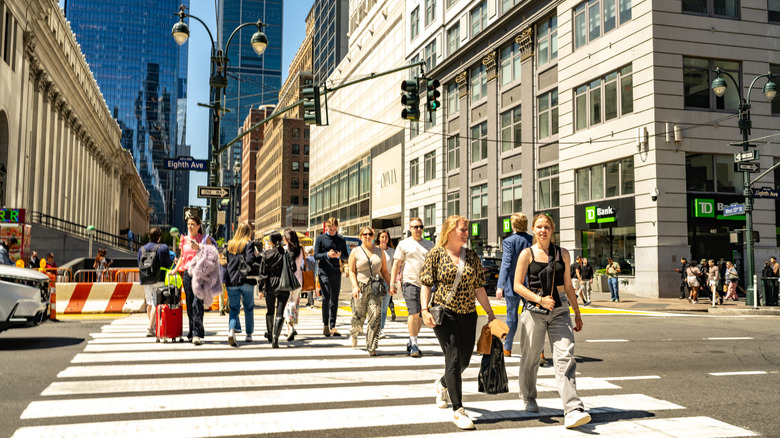
As Daniel Ludwig, who lives in Weehawken, New Jersey, told the Times, his life has gotten better since congestion pricing kicked in, saying, "I finally taught myself to use the subway. Between the tunnel toll, congestion pricing and parking, I'm saving an enormous amount of money, time and inconvenience." But life has also improved for the people who actually live in the city, too.
Vehicle noise complaints inside the zone are down 17%, and, as Manhattan resident Grant Louis told the Times, "It turns out that mostly when people say 'New York is noisy' they really mean 'cars are noisy.'" Fellow Manhattan resident Melanie DuPuis agreed, telling the paper, "Midtown is so much quieter now."
More importantly, the streets are also safer. Crash data shows that the number of serious injuries reported is down 8.6% inside the zone and down 1.6% in the rest of the city. The people have noticed, too, with Brooklyn resident Charlie Rokosny saying, "Fewer cars honking, fewer cars running red lights, fewer cars blocking crosswalks." Or, as Manhattan resident Alice Baruch put it, "Nobody's trying to run me over." That's especially notable when you consider that traffic speeds are also up. You don't usually see safety improve when cars move faster.
That said, we haven't seen conclusive evidence of better air quality, even if there are plenty of anecdotes that support the claim, including Brooklyn's Rob Hult, who said, "As an asthmatic, I can also palpably feel improvements in the air quality.":
One final aim of congestion pricing — improved air quality — has the potential to benefit everyone in the region. But the data remains inconclusive so far. A recent study from researchers at Cornell found a 22 percent improvement in one air quality measure over six months. But another analysis, by the Stanford and Yale authors, found little to no effect on air quality using local community sensors and comparing New York with other cities. And the M.T.A.'s own analysis of the program's first year found no significant change in measured concentrations of vehicle-related air pollutants.
A few complaints
Of course, if you ask more than 600 NYT readers about anything, you're going to find at least a few complainers. Queens resident Linda Fisher told the Times, "Sadly Manhattan is no longer an option for many things we once enjoyed." However, at the time of writing, Google Maps estimates taking a bus from Queens to Manhattan would be about 44 minutes, compared to the 35 minutes it would take to drive into Manhattan. That estimate also doesn't take into account how long it would take to find parking or the cost of parking if she did drive.
David Pecoraro, another Queens resident, said he "will not use doctors in Manhattan, limiting my health care choices," which sounds a lot more like a personal choice than an actual problem. Meanwhile, Manhattan resident Justine Cuccia told the Times, "Congestion pricing has made my world much smaller," without elaborating on what the $9 charge prevents her from doing (while living in a part of the city where the average rent for a one-bedroom apartment is more than $5,000 a month).
That said, those complaints appear to be the exception rather than the norm. As Queens resident Vincent Lee told the Times, "I don't like the cost but I also can't deny its effectiveness." Meanwhile, Bronx resident Vincent Lee said, "As a car owner myself, I think it's fair that the cost of driving is now being passed from city residents onto the drivers." And at a time when it feels like everything just keeps getting worse, the success of New York's congestion relief pricing is also giving New York residents hope that not everything is doomed.
As Brooklyn resident Hanna Horvath put it, "It's allowed me to believe that perhaps America can change for the better."
Of course, the New York Times wrote a lot more than we could hope to include here, so head on over and give the original a full read. It's a gift link, so you shouldn't have any issues with the paywall.