

The Biggest Satellite Ever Just Reached Low-Earth Orbit, And It's Coming For Starlink
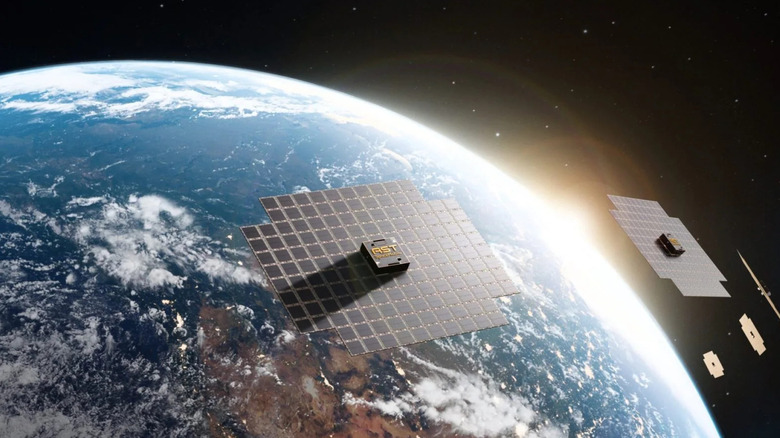
SpaceX may have launched 10,000 Starlink satellites into orbit, but now it's got big competition. As in literally, physically big. Texas-based AST SpaceMobile has just launched the largest satellite ever put into low-Earth orbit. The BlueBird 6 comes in at a full 2,400 square feet, or about the size of a three-bedroom apartment. The startup believes that bigger is better, because that very size allows it to do something even Starlink can't: provide direct 5G service to your normal old cell phone. The company hopes to put around 50 more into orbit next year, and then open up to customers shortly thereafter.
Basically, the idea is to make it so you never lose cell signal, anywhere, ever, to the chagrin of horror movie fans everywhere. Starlink, with its puny little satellites, can't actually hear the signal from your phone, which is why it requires its own equipment to relay your signal up to space. By contrast, a massive antenna allows BlueBird to pick up the weak signal your phone puts out, which it then digitally cleans up and sends to one of the company's dishes on the ground. The company then relays your signal to your normal cell service; it currently counts AT&T, Verizon, and over 50 others as partners. The integration is meant to be seamless, so your phone will automatically switch to the satellite once it loses contact with the tower. According to AST, that'll get you 120 Mbps, which is pretty good.
Quality vs Quantity
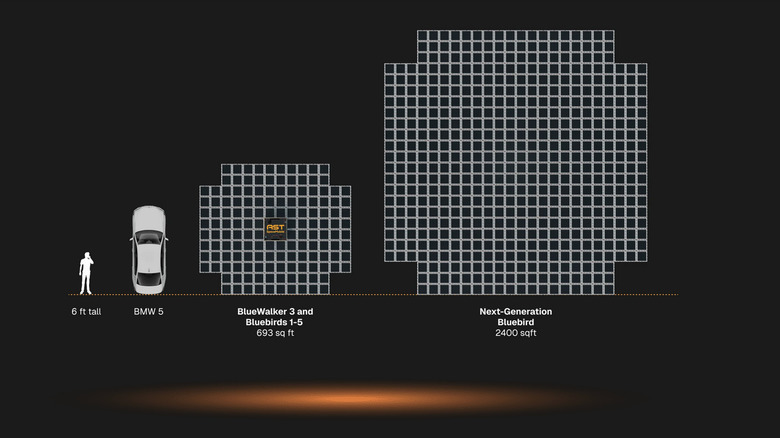
AST SpaceMobile already had five satellites in orbit, but BlueBird 6 is three times larger, per Gizmodo. That's great, if you're only thinking about cell service. But it's really bad if you care about things like astronomy and light pollution. The older satellites, with their huge reflective solar panels, ended up becoming as bright as some of the top ten brightest stars in the entire sky, as Gizmodo also reported. If AST ends up putting hundreds of these things into orbit, as they intend to, that will pretty much ruin the view for observatories on Earth and in space.
As you would expect, SpaceX is taking this challenge with grace and poise. By which of course I mean it's telling the FCC that BlueBird satellites are a crash risk. Never mind that SpaceX has thousands of satellites in orbit, the big one is the dangerous one! Didn't anyone ever tell SpaceX that size matters not? Well, clearly it must, or it wouldn't be spooked like this. It's all part of the race to put constellations into orbit, which only looks to get more congested and contested in the near future.