

These 5 States Have The Most Dangerous Roads In The Winter
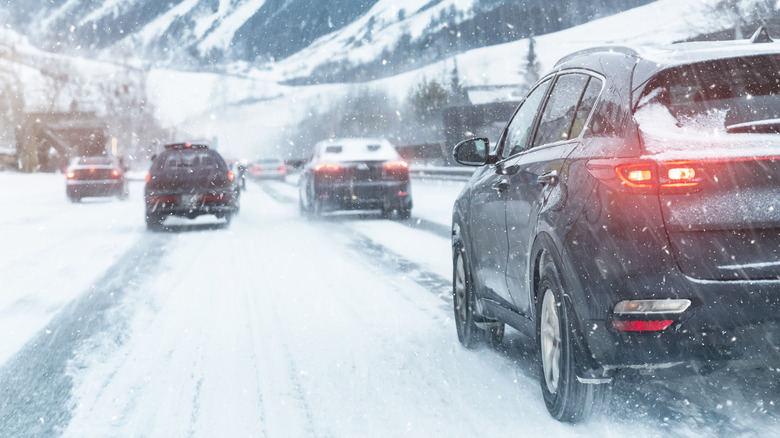
When it comes to driving in harsh weather, winter sits at the top rung. In fact, 17% of accidents are due to frigid weather conditions, and these are our reader's worst winter driving experiences. Some states top the list of fatalities, making driving there in the winter months extremely dangerous. According to MoneyGeek, these states include Alaska, Illinois, Michigan, Ohio, and Pennsylvania, all of which have a common theme — cold weather. However, there are also other factors that contribute to making these roads so dangerous when the temperature plummets, including things like geography, topography, infrastructure, and even population density.
The best approach is to avoid driving during severe winter conditions. However, if that's not possible, there are some unbreakable winter driving rules that can help you make it through your commute alive and in one piece. You can start by buying proper tires. Forget all-season tires, the smart money is with winter tires. These specialized components have a softer rubber compound with complex tread patterns that are flexible and grip the road, even when temperatures drop below 45 degrees.
Michigan

Topping this list is Michigan, the state of the Great Lakes. In winter, these huge water bodies turn into giant ice machines caused by a phenomenon called lake effect snow. When cold air passes over the warm waters of a lake, it picks up moisture from the lake's surface and dumps it in the form of intense snowfall. It can lead to whiteout blizzards that deposit more than 3 inches of snow per hour. Lake effect snow also leads to snow squalls. These are short, intense burst of snow that reduce visibility to less than half a mile, accompanied by strong gusts of wind that rapidly bring temperatures down below freezing. These are mostly found in Michigan, Ohio, and even New York. This weather phenomenon is localized, so it's difficult to predict. There are other factors, too, which help Michigan top this list.
Michigan has high-volume traffic highways like I-75 and I-94. Due to the high-density traffic on these highways, the snow deposited on the roads sees a lot of melting and refreezing cycles, which can create vast sheets of black ice. These invisible sheets of ice offer little to no traction. The resultant carnage of crashes and pileups puts Michigan in the top spot when it comes to states with the most dangerous roads for winter driving.
Pennsylvania

Second on this list is Pennsylvania, a state that seems normal to drive through until you hit the Appalachian Mountains. You have important highways that crisscross the mountains – I-80 for the east-west corridor and I-81 for the north-south corridor. Besides contending with steep inclines and precarious descents, the mountain passes are subject to sudden temperature drops. This can cause ice patches to form on the road and more dangerous localized snow squalls.
To safely drive in Pennsylvania's mountains, visibility is a crucial factor. While the weather isn't something you can't control, there are a few steps you can take to ensure maximum visibility. For example, keep your windows clean. As much as it is a pain to clear ice from your windshield, clear the whole darn thing. Do the same for all windows, mirrors, headlights and taillights, and even the roof. The roof is important because excess snow can fly onto the windshield of the driver behind you, or it can slide onto your own windshield if you brake suddenly, resulting in an abrupt loss of visibility.
Ohio

The third state on this list is Ohio. It is one of the most important freight corridors for the eastern part of the U.S. and features a massive network of highways like I-70, I-75, I-80, and I-90. These roads are perennially swamped with big semis. Like Michigan, parts of Ohio also reel under the consequences of lake effect snow during winter. Add black ice and huge semis to that mix, and you are suddenly in a very precarious situation.
The most common theme between the states here is black ice. This invisible killer is a thin layer of transparent ice that forms on the road after snow melts and then refreezes, or when moisture condenses on cold roads. The biggest problem with black ice is that it is almost impossible to spot when driving. The moment your car's tires hit black ice, the coefficient of friction between the two surfaces drops to near zero. So, basically, you have no traction and no control over your vehicle as you spin out. You mostly find black ice on bridges and overpasses because air circulating above and below the road cools the road surface faster.
Alaska

We all knew Alaska would be on this list. However, it's not here primarily for the cold — it's the sheer isolation. You could be driving in Alaska for hours without seeing another car on remote gravel and ice roads. If you crash, help could be hours away, and even that's not guaranteed to be due to the weather. If your car breaks down on an Alaskan highway, it's not a matter of inconvenience — it's survival. In regions like Alaska, the huge land mass and low population mean that infrastructure is often poorly maintained, and paramedic response times can be extremely long. Crash victims often succumb because they don't receive proper medical attention during the first 60 minutes (the golden hour), due to paramedics being far away. What should you do if you get stuck in such a situation?
First off, your car is your survival capsule. Do not leave your vehicle unless you can see help in the form of a populated area that's within a short, accessible distance. For warmth, run your car sparingly. Ensure your car's tailpipe isn't blocked by snow, as this can leak deadly carbon monoxide gas into the cabin. A survival bag is a must. Start by packing for warmth and insulation. Next is food and first aid. You'll also want a tow strap and a small shovel in the car. You may also want a bag of kitty litter, which can provide traction if you get stuck in the ice. A portable power bank and a flashlight with extra batteries are next on the list. Finally, get some flares, as these can help paramedics or rescue personnel pinpoint your location in a whiteout.
Illinois

Illinois earns its spot due to a combination of population density and huge, open landscapes. The vast, flat stretches of the Prairie State expose heavy traffic highways like I-57 and I-80 to violent crosswinds and thick snow. The roads can become infested with black ice while visibility drops.
To be safe while driving in such conditions, be patient. Increase your following distance, as well as your field of vision. A good rule of thumb is to leave between 180 and 600 feet of space between you and the car ahead of you when driving in snowy or icy conditions. This buffer makes a big difference when you're driving on low-friction icy roads instead of dry asphalt. Looking ahead helps you be preemptive when the car in front brakes or spins out of control.
The biggest danger, though, often comes from the person behind the wheel. Speeding, not braking in time, and not reading the road properly can all lead to catastrophic results. Often, drivers do not adapt to icy road conditions and can lose control. Slow, gradual, and measured inputs are the key to safe driving in these conditions. Light throttle inputs will help ensure you don't lose traction on low-friction surfaces, while progressive braking helps prevent you from spinning out of control.