

Full Synthetic Vs. High Mileage Oil: Which Should You Use?
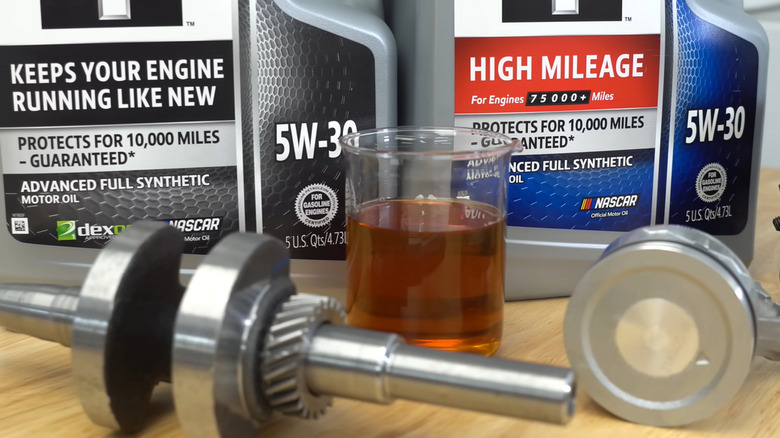
Choosing between full synthetic and high-mileage oil isn't about chasing the perfect product. It's about understanding what your engine actually needs at its current point in life. As engines rack up miles, oil choice becomes about managing wear, not chasing perfection.
Full synthetic oil is built from chemically-consistent base stocks, with polyalphaolefins being the most common. They stay fluid during cold starts, hold together when things get hot, and keep viscosity longer under stress. It also reduces sludge formation, and supports longer oil change intervals. That's why modern engines, especially turbocharged or high-output ones, often ask for full synthetic oil from day one.
High-mileage oil isn't a different category. It is also made from base stocks — just loaded with additive packages. It's typically designed for engines that have gone past 75,000 miles, though that number isn't set in stone. The formula usually includes additives like seal conditioners and detergents, all to compensate for wear inside an aging engine. The goal isn't performance, but stabilization.
So the key distinction isn't which oil is "better." It actually depends on what problem you're solving. Full synthetic focuses on protection and efficiency. Switching to high-mileage oil will focus on managing wear that already exists. They overlap, but they're not interchangeable by default.
Key differences and real-world tradeoffs

The biggest difference between full synthetic and high-mileage oil is purpose. Full synthetic oil prioritizes better wear protection, longer oil change intervals, and consistent lubrication under load. In terms of extreme temperature performance, full synthetic wins outright as it's designed to operate better in hot and cold temperatures – though high-mileage oil benefits old vehicles with less resistance to those conditions. Full synthetic oil also holds its viscosity longer and leaves fewer deposits behind.
High-mileage oil doesn't really outperform full synthetic oil at extreme temperatures. It does, however, reduce oil consumption in worn engines. High-mileage oil prioritizes sealing through its additives, and it helps to slow wear in engines that have already lived a full life. That's useful, but it's not going to fix mechanical damage.
Cost is where the decision gets real. Full synthetic oil changes typically cost more per service (usually an additional $15-$25), but they're designed to go longer without needing those changes. High-mileage oil usually costs slightly more than conventional oil, but less than full synthetics. Over time, the total cost can balance out depending on how you drive and how often you change oil. Neither oil is universally superior; one provides precision and the other manages wear.
Choosing the right oil (and what happens if you don't)

Choosing between full synthetic and high-mileage oil comes down to engine condition, not mileage milestones. A well-maintained car that doesn't burn oil may benefit more from full synthetic than from a high-mileage formula. Meanwhile, a 50,000-mile engine with leaks or consumption issues might genuinely benefit from high-mileage oil earlier than expected.
Using the "wrong" oil usually won't cause immediate damage, but it can accelerate wear or waste money. Putting high-mileage oil into a healthy, low-mileage engine won't hurt it, but the additives don't provide meaningful benefits either. On the other hand, mixing the two oils will weaken the additives from the high-mileage oil, making it less potent.
The safest answer is boring but correct: follow your owner's manual first, then adjust based on real symptoms. The presence of oil leaks, high consumption, and rough cold starts could be signs that high-mileage oil might help. Clean operation, longer oil change durations, and better fuel economy point toward full synthetic. Oil isn't a cure-all; it's a maintenance strategy. Next time you DIY your oil change, pick the one that matches the life your engine is actually living.