

Is Switching To A K&N Cold Air Intake Worth It?
One of the first things many people do when they want to improve their vehicle's performance is look for bolt-on modifications. These items bolt onto the vehicle, making them easy to remove if you decide to restore the car to its stock setup, and can add decent gains for relatively little money. There are several mods that'll easily make your car faster.
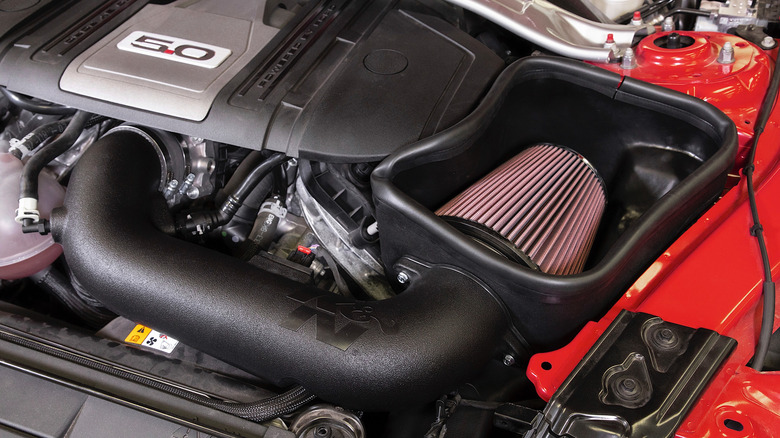
A common first step is to install a cold-air intake. They are offered by a variety of manufacturers, with K&N among the leading players. Is a cold-air intake from K&N worth it? Should you switch from the intake you already have? What exactly does a cold-air intake even do?
A cold-air intake increases horsepower through science, as we'll explain. But if you're running a stock intake now, upgrading to a cold-air intake will almost certainly improve your performance. If you already have a cold-air intake, switching to a K&N may or may not deliver a performance boost over your current setup. Your mileage may vary.
Colder air is denser air
An engine intake draws air from outside the vehicle and funnels it into the engine. The air mixes with the fuel and is then ignited by the spark plugs (or compressed until ignition occurs in the case of a diesel engine). Combustion happens, which is what makes an engine do what it does. Thermodynamics tells us that colder air is denser. Denser air makes combustion more efficient. That's why at lower altitudes, engines make more horsepower than at higher altitudes, where the air isn't as dense.
A cold-air intake moves the intake farther away from the engine, where the air is cooler, and funnels that air into the intake system. A filter still keeps particulates out, but those filters are often engineered to improve overall airflow.
Your stock intake can be more restrictive, but it generally works perfectly fine for normal driving. That said, one benefit of stock intakes is that they are often better protected from the elements than cold-air versions. A cold-air intake, if its positioned too close to the ground, may suck in some water. If it sucks in too much water, you may hydrolock the engine. That is one of the several cons of installing a cold-air intake.
For many, though, the risk is worth the reward. A K&N cold-air intake with its high-flow air filter can add up to 25 horsepower and 12 pound-feet of torque. Those are real-world benefits you'll likely be able to feel.
Less restriction, more fun
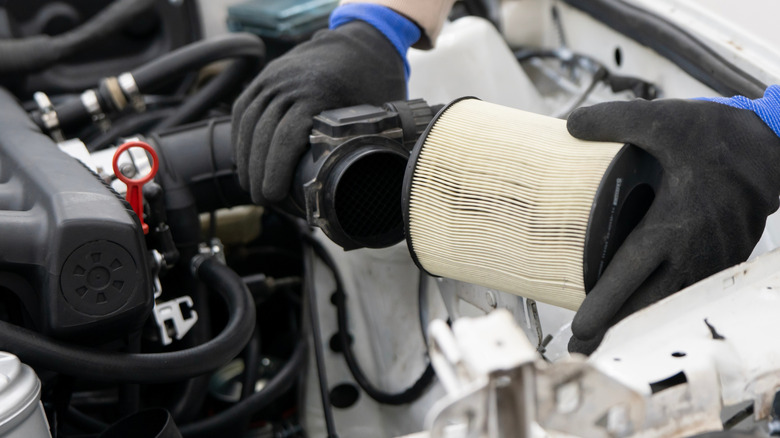
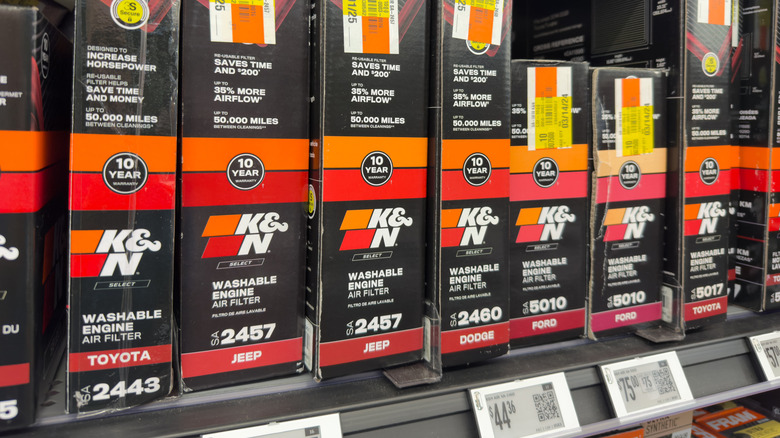
K&N's intake systems are available in California CARB-approved parts, so you don't have to worry about running afoul of emissions laws. You can install one by yourself in around 90 minutes. They come with a 10-year/1-million-mile warranty, and they're very low maintenance, requiring only a filter cleaning every 100,000 miles.
In some cases, they can even improve fuel economy. However, there are also additional benefits, including enhanced throttle response and a richer engine sound. Plus, if you plan to sell the car later, you can easily remove it, reinstall the stock air box, and sell the aftermarket intake separately.
Some tuning companies specialize in certain vehicles and may offer better performance than the K&N system, so it's worth shopping around if you're in the market. Try to avoid the bargain units, though, because they can just make your car slower. But K&N has also been around for a long time, offers a solid warranty, and provides peace of mind.
No matter which brand you go with, a cold-air intake can deliver real performance and improve your ride's sound. It's hard to argue with that.