

Why Did Ford Discontinue The Flex?
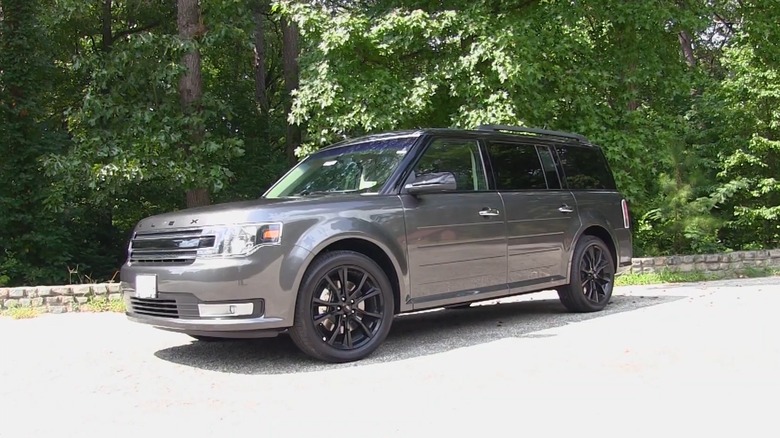
The Flex was a quirky model from automaker Ford, which launched in 2008 and was produced for just over a decade. It grew a crowd of admirers over the years who appreciated the retro elements of its design and the boxy esthetic. Some are already calling on the automaker to bring back the Flex as an EV, where perhaps it could find a stronger foothold in the market.
The first iteration offered an output of 262 horsepower (later models upped that to 287), but during the Flex's production run you could also opt for versions with an EcoBoost V6 engine, which bumped up performance to 355 horsepower (later 365). The cabin was roomy, with three rows of seating offering space for up to seven people. Ford also had some optional add-ons it teased in some of the advertisements, like ambient lighting effects, which gave the model a sense of fun and excitement.
Officially, the reason the Flex was discontinued in 2019 was explained in a statement from Ford, as reported by USA Today, where the brand pledged a "plan to strengthen its focus on products in the heart of the fastest-growing segments." However, speculation surrounding the vehicles departure suggests a few factors could've been responsible.
Customer confusion and lackluster sales
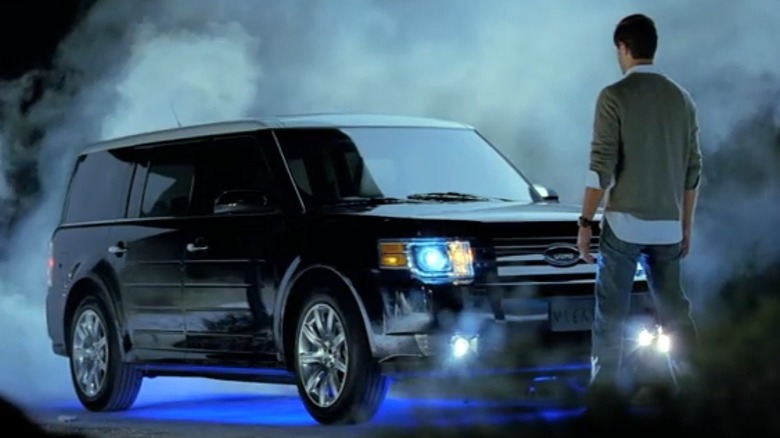
One of the issues with the Flex from the beginning was its lack of identity. It rode too low to be an SUV, it didn't have sliding doors like a minivan, and it was obviously not a car. So, what exactly was it? Ford called it a crossover, but others argued that Flex was a reimagined wagon, though it was never officially labeled as one. This put the vehicle is a strange category, which could have potentially been a factor in its inability to gain mainstream sales success.
You can't argue that Ford didn't give the Flex a chance. Some models, like Kia's Borrego, only lasted a single year in production, leaving little time to succeed. According to our readers, these discontinued cars deserve a second chance, and the list does include some wagons. However, when a business has a certain product that isn't moving off the shelf, or driving off the lot in this case, it must make some tough decisions. Failing to exceed 24,000 unit sales annually for several years and a further dip toward the end of its production run, according to Car and Driver, meant that the Flex was trending downward. Comparatively, Chevy's Traverse, often cited as a competitor to the Flex, was hitting numbers greater than 147,000 units sold in 2019, per GM Authority.
Fierce competition and Ford's pivot
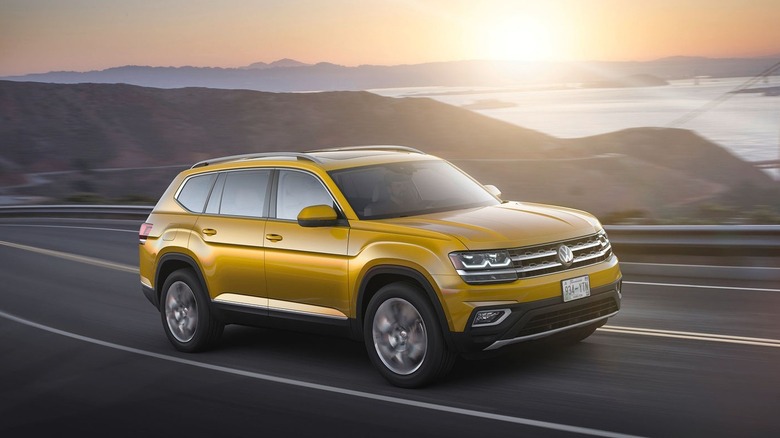
When other vehicle brands started releasing new models following the launch of the Flex, the field of crossovers became more crowded. With three-row models like the Chevy Traverse and Volkswagen Atlas vying for consumer dollars, side-by-side matchups didn't always favor the Flex. For instance, comparing the 2019 versions of the Traverse and Flex, the former offers better gas milage (18 mpg versus 16 mpg city), an option for an eighth passenger, more starting horsepower at 310 (unless you opt for the EcoBoost on the Flex), an extra 3 square feet of cargo capacity with all the seats upright, and a starting MSRP that was over $500 cheaper. It also didn't help that yet-to-be-released newcomers to the field, like the Hyundai Palisade and Kia Telluride, were just on the horizon, threatening the market position of the Flex even further.
Understanding that the Flex did resonate with some drivers, the automaker still acknowledges the discontinued model on its webpage and points fans toward Ford alternatives like the Expedition, Explorer, and Escape. These models have continued to bring in strong sales, with a recent Ford press release touting the strongest third quarter in two decades for the Expedition. Still, enthusiasts lament that we didn't appreciate the Ford Flex enough while we had it. And there is no word on whether the model will ever make a return.