

Why The B2 Stealth Bomber Had Trouble Flying In The Rain
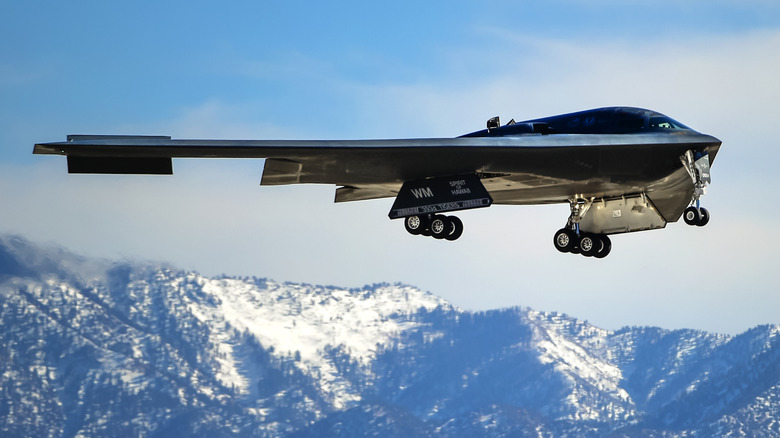
For a certain generation of aviation nerds, the Northrop Grumman B-2 Spirit bomber is an icon of bedroom-wall posters. A flying wing design with a price tag that makes a Pagani look like a drop in the bucket. In a 1997 report, the program's total cost per unit is listed at over $2 billion per aircraft. At that price, it seems like this thing would be able to do darn near anything. So how does a technological masterpiece like the Spirit get thwarted by some rain?
This plane hated water like a cat, and the problem was twofold. The first issue was the sturdiness of its radar-evading skin, which was designed to strategically absorb and deflect radar but was susceptible to environmental erosion — water being one of its biggest opponents. The second is a design that let water collect in various compartments, ducts, and valves. This led to the 2008 crash of the B-2 called The Spirit Of Kansas, which grimly highlighted the aircraft's aversion to the most abundant thing on Earth.
To give some perspective on how sensitive the B-2 was, a study by the U.S. General Accounting Office (GAO) showed that the B-2 would have been mission-capable 66% of the time but actually flew only 26% of the time due to issues with low-observable skin.
Stealth, tape, and a lot of caulk
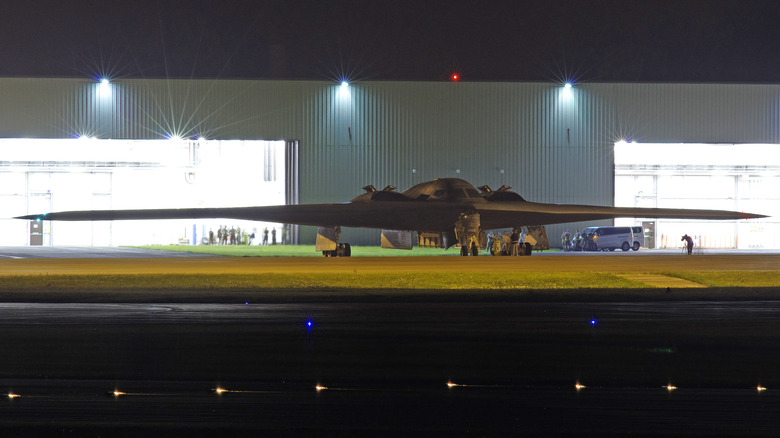
If you think a head-gasket job on a Subaru boxer is a headache, imagine doing surgery on a stealth bomber where the skin is critical to the success of the mission. Maintaining the B-2's stealthy exterior meant removing and then reapplying nearly 3,000 feet of special tapes and caulk by hand to seal panel gaps.
GAO's version is even less romantic — it says some low-observable materials required regular maintenance and took 30 to 80 hours to repair and cure, requiring a shelter with temperature and humidity control. On the plus side, the B-2 had a 6,000-nautical-mile range. Where the plane's faults slap you in the face, however, is that it's slow. With a top speed of 628 mph (less than a quarter as fast as an SR-71 Blackbird), it was not exactly the strategic bomber once thought. To spell it out, this stealthy bomber was a bit of a diva.
It ended up with the Air Force basically admitting it was unrealistic to deploy the B-2 as planned without shelters, because the aircraft needed them due to sensitivity and special care. And yes, those shelters got their own wonderfully governmental name: the Extra Large Deployable Aircraft Hangar Systems (XLDAHS).
Water also caused a crash
Rain didn't just mess with the stealth and maintenance — it played a role in destroying a plane. In 2008, the Air Force released an accident investigation summary on the B-2 crash at Andersen Air Force Base in Guam. The report stated that distorted air data led to the crash shortly after takeoff, specifically calling out "Moisture in the aircraft's Port Transducer Units during air data calibration." The bad data led to a stall and crash. Is now a good time to remind everyone that these cost over $2 billion apiece?
Here's where it seems like cutting-edge aviation meets greasy-garage-know-how mechanics. The crash report also notes ineffective communication about a suggested technique — turning on the heat to help remove moisture from the port transducers. That's right, tribal knowledge. The same way you know to heat a seized nut at the bolt-side, B-2 mechanics were doing the same for critical flight sensors.
After all this, they must have learned their lesson, right? Air & Space Forces Magazine notes that coatings were a persistent issue for the B-2 until Northrop developed machines to apply outer-layer tape and coatings more consistently. It also frames the newer B-21's coatings as a last-step application in production. Translation: the B-21 Raider stealth bomber is, at least on paper, the "we are not doing the tape-and-caulk rain dance again" successor.