

Carlos Ghosn Is Giving Management Advice On LinkedIn For Those Who Want To Lose Their Jobs And Get Smuggled Out Of The Country In A Box
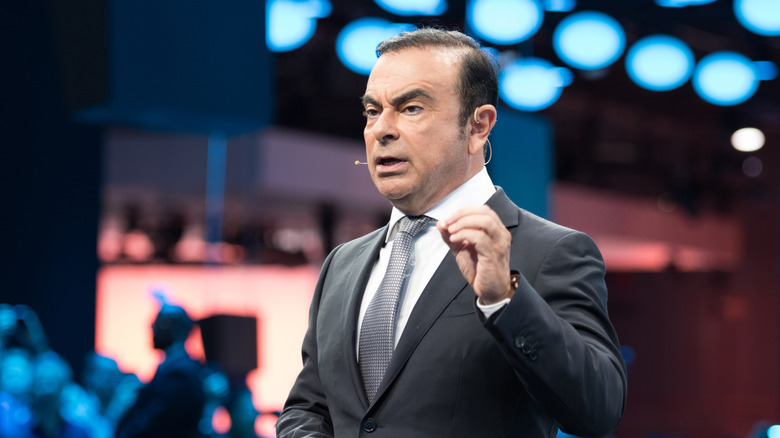
Would you take management advice from a former auto executive who was arrested for financial misconduct and then smuggled himself out of the country in a guitar case to avoid prosecution? Carlos Ghosn recently returned to LinkedIn after a seven-year absence to do exactly that. While he may seem an unlikely person to take business advice from, nearly a million followers seem interested in what he has to say, with thousands of reactions and hundreds of comments on some of his posts.
It's not like Ghosn doesn't know how to run a business. He saved Nissan from bankruptcy. Although it involved many plant closures and mass layoffs, the company survived, though the strong emphasis on cost-cutting may have contributed to Nissan's image as a bargain basement brand today. Ghosn was also the first person to run two Fortune 500 companies, Nissan and Renault, at the same time.
Still, the whistleblower accusations against him of using company funds for personal expenses and "other serious acts of misconduct," as well as his dramatic escape from Japan's justice system, tarnish his image a bit. Naturally, Ghosn maintains his innocence, insisting that he was set up to take the fall to prevent the merger of Renault and Nissan. He justifies his escape to Lebanon by claiming:
On December 29, 2019, I left Japan to exercise my fundamental right to speak freely and defend myself. In a hostage justice system with a 99.4% conviction rate based on forced confession, staying in Japan meant accepting a predetermined fate in a parody of justice.
...
To anyone facing injustice today: maintain your principles, and remember that the key is to keep writing your story.
Everyone is the hero of their own story.
What he has to say
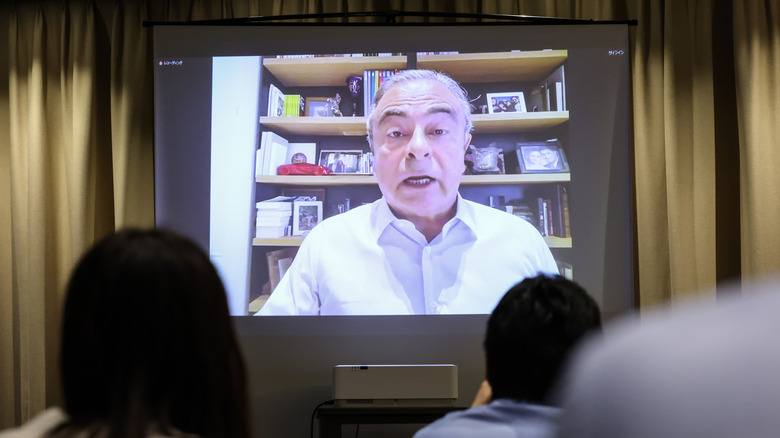
Ghosn is now effectively exiled to Lebanon, thanks to an Interpol Red Notice seeking his arrest. Lebanon has shown no interest in arresting him or cooperating with extradition back to Japan, but other countries may if he attempts to travel. However, the power of the internet still enables Ghosn to reach a worldwide audience. He has posted extensively on X about the injustices he feels he suffered at the hands of Japanese authorities, but except for a post on the anniversary of his arrest, Ghosn has more recently shared his thoughts and advice to the automotive industry. On the subject of EVs:
After 40 years in #automotive, I've never seen disruption at this scale and speed. Traditional #manufacturers are playing catch-up while Chinese EV makers rewrite the rules. The companies that dominated for a century risk becoming footnotes if they fail to move faster...
The original Nissan Leaf came out during Ghosn's tenure. On the subject of profitability, something he led Nissan back to:
Profitability Without Growth is Just Managed Decline.
Too many leaders celebrate cost cuts as victories. Cutting #costs to boost #margins can work for three years. Real #turnarounds need a ten-year vision where every saved dollar funds future expansion.
At Nissan, we reallocated resources from waste to innovation, from redundancy to R&D. That's how you build sustainable success.
On the subject of mergers, however, Ghosn seems to say one thing when he tried to do another:
I don't believe in mergers. The reason is simple.
Every #merger creates winners and losers, first-class and second-class citizens. One brand dominates, one culture prevails, one workforce feels defeated. You destroy the very pride that drives performance.
This certainly seemed to be the case with DaimlerChrysler, which was supposed to be a "merger of equals," but turned out to be anything but. Ghosn handled Nissan and Renault as an "alliance" rather than a merger for many years, but according to the Financial Times, he was behind the proposed merger of the two companies that gave the larger Nissan a significant disadvantage:
Mr Ghosn was the driving force behind the merger plans, which met with fierce resistance from Nissan's board, according to people familiar with the deliberations. Renault's 43 per cent stake in Nissan gives it unusual levels of control, with the ability to appoint senior executives. Nissan's 15 per cent stake in Renault comes with no voting rights and gives the business no control over its French counterpart.
"The board [of Nissan] always said they would fight very hard against any reorganisation that entrenched that second-tier status," said one person close to the board.
This is why some, particularly Ghosn himself, believe the charges against him were a way to get rid of him and prevent the planned merger. However, despite his strong feelings about what happened and his exile in Lebanon, he seems to be trying to maintain a positive outlook for the future:
This week remember that Regret is Pointless.
I've learned that life is about calculated decisions and risk. Looking back makes you miss out on future opportunities.
My #ethos is to focus on what CAN be, not what COULD have been.