

Is Driving Without Headlights In The Fog Illegal? It All Comes Down To Visibility
Some features — like video games in a Tesla or gesture controls in a BMW — aren't essential for on-road safety. Others, such as your lights, very much are. That's exactly why they are so regulated. For example, white and yellow are the only legal headlight colors in the U.S. Other features like turn signals, brake lights, hazards, and even wipers are also governed by laws because they directly affect safety.
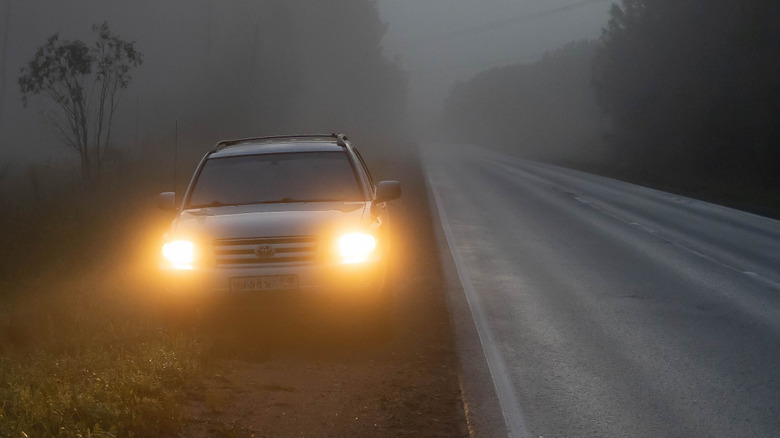
So, is driving without headlights in the fog illegal? In short, it all comes down to visibility. Federal laws dictate that cars must be equipped with standardized headlights. Fog lights aren't legally mandated on a federal level, but if installed, they must meet federal standards. And individual states impose additional rules. There are 31 states that require headlights when visibility is less than 1,000 feet, while 19 states require headlights when visibility is less than 500 feet.
For example, in Pennsylvania, headlights must be turned on whenever visibility is reduced to 1,000 feet or less. California has a similar requirement. In Virginia, headlights are required when visibility drops below 500 feet, and in North Carolina, the threshold is even lower — 400 feet. Across all states, laws dictate that if visibility is poor, headlights are mandatory. Therefore, since foggy conditions almost always translate to poor visibility, you're legally required to turn your headlights on.
A guide for driving in foggy conditions
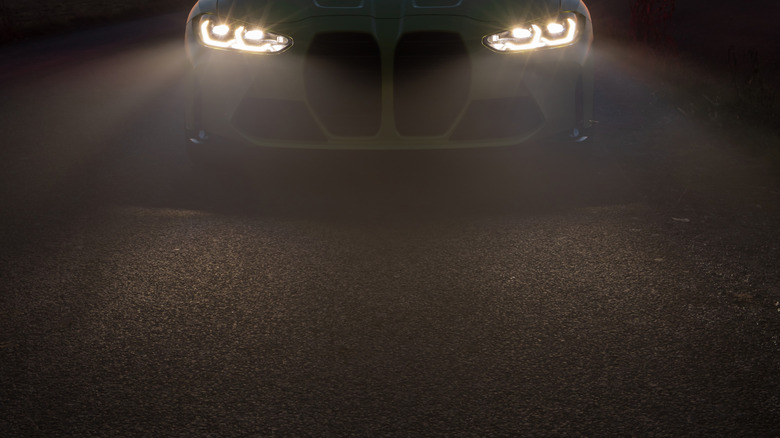
When visibility is poor, traffic crash risk increases. A study published in Accident Analysis & Prevention found that novice drivers' perceptions and reaction times worsened significantly while driving in fog, so much so that they ended up in crashes. This is why it's so important to make sure you know what to do when visibility is low. Although using your headlights is part of it, it's not everything.
First of all, slow down and take your time while driving in the fog. Since your visibility is reduced, you may not always be able to see everyone around you. This is why listening for traffic is a good idea. If the fog becomes really dense, turn on your hazard lights. You should also use low beams instead of high beams, since high beams can actually reduce your visibility even further. Rear fog lights are crucial for being seen from behind, but don't keep them on once it clears since they can easily dazzle other drivers.
Be wary of your surroundings and keep a safe distance from everyone around you. And don't rely on automatic lights that may not turn themselves on in foggy conditions. Although daytime running lights reduce risks of crashes by about 9%, you shouldn't rely on them in fog, either, since these only light up the front and are not legally recognized as headlight alternatives .
When headlights are always mandatory
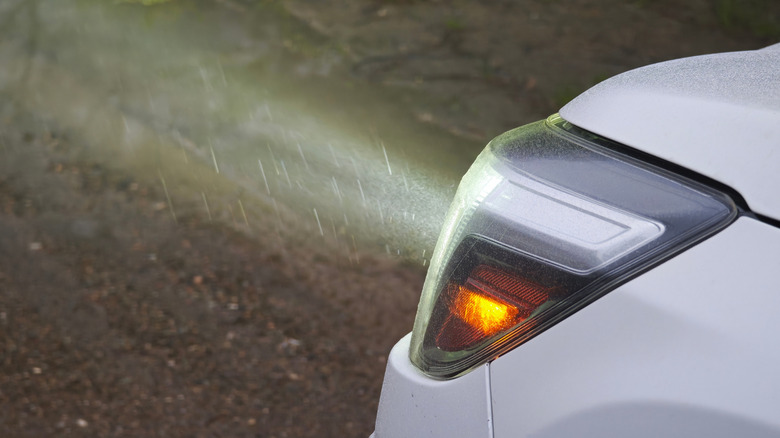
There are many legal requirements you must follow regarding headlights, and visibility is only part of the picture. For example, Virginia and most other states mandate that you must use your headlights whenever your windshield wipers are in continuous use. This means that whenever it's snowing, raining, sleeting, or foggy, you are legally required to turn them on. All U.S. states require you to keep your headlights turned on during certain times of day.
Many also mandate headlight use when driving through specific zones. This means turning on your headlights while driving through tunnels, mountain roads, shaded roads, or while driving through construction zones. Ohio says you must turn on your headlights from sunset to sunrise. If you don't, it's classed as a minor misdemeanor. Other states, such as Washington, require headlights to be turned on from 30 minutes after sunset until 30 minutes before sunrise. Failing to abide by this is treated as a traffic infraction.
Regardless, you can expect to pay a fine of a few hundred dollars, depending on the state. In California, if you're caught driving with your headlights off when it's dark, you can be fined $230 and receive one point on your DMV record. In Nevada, the fine is $205, but it also comes with two points on your DMV record. Worryingly, only half of vehicle headlights tested by IIHS received a good rating, so even with your headlights on, visibility can still be an issue.