

LA's White Painted Streets Actually Serve A Cool Purpose
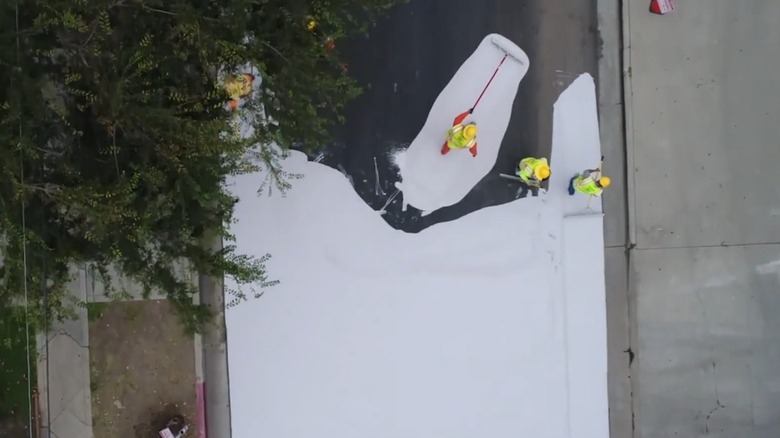
If you live in a major metropolitan area and have struggled with scorching temperatures in the summer, you're not alone. The heat reaches an average high of 84 degrees Fahrenheit in Los Angeles during its hottest month, which doesn't sound too uncomfortable. However, brick, concrete, and asphalt cover much of Southern California's urban jungle, and these materials soak in the sun's heat throughout the day, becoming hot to the touch in many cases. Often, you can even see the heat rising off the asphalt, giving off a strange visual effect and making roads look wet on hot days. This results in something referred to as the heat island effect, which can cause temperatures within a city to climb up to 7 degrees hotter than surrounding less populated areas.
To combat the heat island effect, city officials in Los Angeles have begun adding a special reflective coating on some of its roads, turning them from a dark shade into a white or gray color. Companies like CoolSeal, which is involved in the Cool Streets LA initiative, are set to add their unique sealcoat to 200 blocks within the city, promising to reduce street temperatures by as much as 20 degrees Fahrenheit in some instances. While the move may sound ambitious, there are more reasons besides just comfort that are moving this project forward.
The Sun deteriorates asphalt, pets can suffer burns, and air conditioners go into overdrive
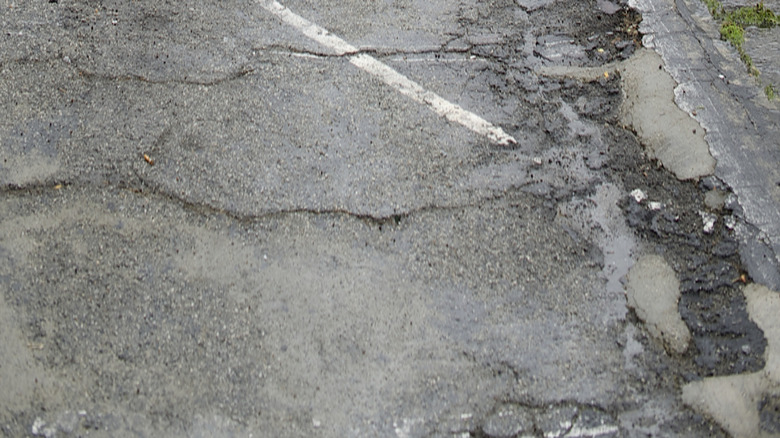
This massive project, which will reportedly come with a price tag of around $40,000 per lane mile, according to El Adelantado, is an extremely costly way to make residents more comfortable. However, it serves more purposes, one of which promises to help reduce road maintenance, slowing the rate at which asphalt breaks down from UV exposure. That means road crews wouldn't need to repair or repave as often.
Another benefit of this project is that it helps protect pets, whose paws are vulnerable to hot roads. According to Four Paws USA, a day measured at 87 degrees Fahrenheit can see asphalt temperatures up to 143 degrees Fahrenheit. Dog owners taking their four-legged friends for a walk can unknowingly expose them to serious burns. Lowering the amount of residual heat in the streets can help mitigate this issue.
In addition, when a city suffers the heat island effect, people crank up their air conditioners. While understandable, there are a few issues that crop up when a substantial number of people all set their HVAC systems to maximum cool. For one thing, while these machines can help lower the temperature inside of buildings and homes, they're also venting out hot air and putting a greater strain on the power grid. As power production needs to ramp up to account for all the AC use, it has a negative effect on the environment.
Painting the streets with reflective coating isn't the only way to reduce the heat island effect
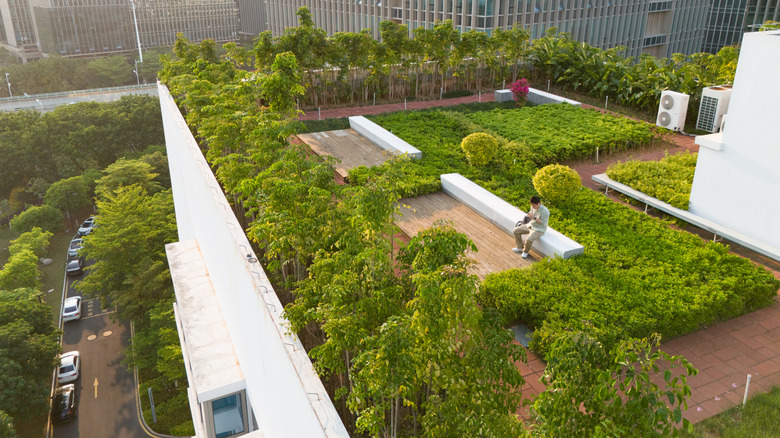
The City of Angels has more than 7,500 miles of roads, according to LADOT, and some LA streets are steep enough to launch Teslas into the air. If they are eventually completely covered in something like the CoolSeal top coat, it would certainly go a long toward reducing temperatures, but it's not the only option. There are several other methods that can tamp down this rising urban problem.
One of the easiest solutions is to simply plant more trees throughout the area and incorporate green spaces, helping to break up continuous stretches of concrete, brick, and asphalt. While space can be an issue, particularly in high density downtown districts, rooftop gardens can be employed to reduce the roof temperature by as much as 56 degrees Fahrenheit, according to the EPA.
In addition to street cooling treatments such as cooling sealcoats, there are also cooling pavement mixtures, which offer several advantages for new roads. In addition to lowering street surface temperatures, these cooling pavements can also provide better visibility for drivers at night, due to their lighter coloring and reflective properties.