

GM Wants To Bring Back The Two-Stroke Engine
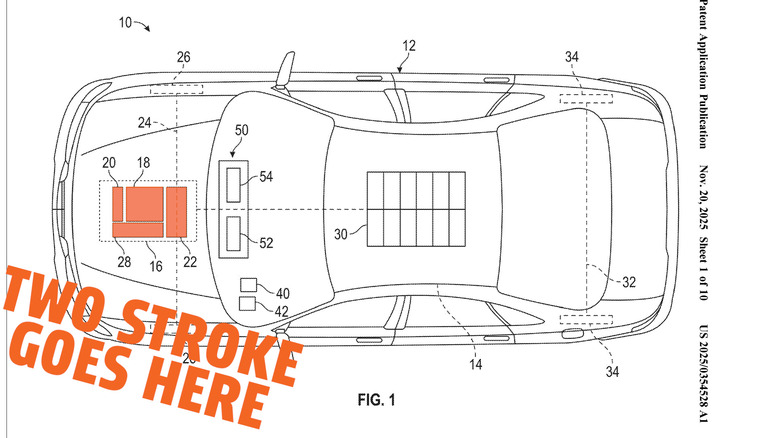
Unless you're really into dirt bikes, you probably haven't touched a two-stroke engine in decades — if you ever have. These mechanically simple motors combine the four strokes we all know and love into just two, so suck, squeeze, bang, blow becomes just suck/squeeze and bang/blow. Two-strokes have a detonation every time the cylinder reaches top dead center, twice as often as every modern roadgoing engine, yet we never use them anymore (it turns out all those extra ignitions result in extra emissions). But it seems General Motors, of all companies, wants to change that.
A recently-unveiled patent from the company focuses around new tech for two-stroke engines, with the specific callout of use in "hybrid electric vehicles." Yet GM's patent doesn't seem to fully address the emissions issues that took two-strokes off the road in the first place. Instead, the patent is for a new valve system that's designed to reduce wear on the piston rings, adding longevity to traditionally maintenance-heavy engines.
Not the first time two-strokes have had valves
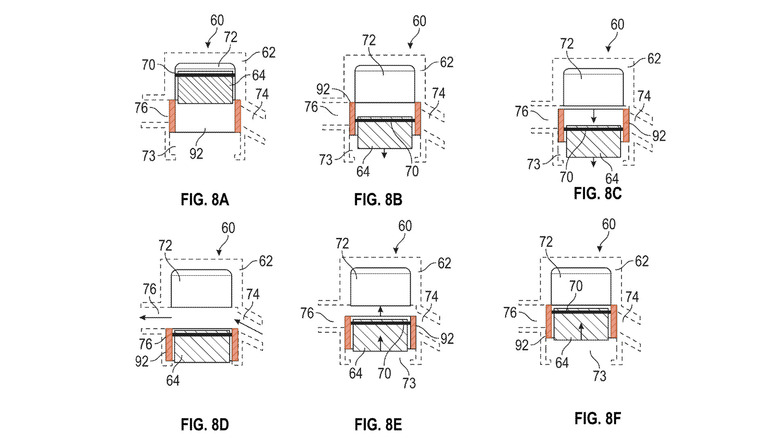
Traditionally, two-stroke engines don't have their intake and exhaust ports in the top of the cylinder the way that four-stroke mills do. Instead, those ports are carved into the sides of the cylinder, and the piston's movement opens and closes them (and even pumps fresh charge air into the combustion chamber). GM's design covers those ports with a linear valve system that moves along the inside of the cylinder, sitting flush with the walls of the combustion chamber so the piston rings never glide over any open holes that could reduce their life. GM claims this will improve efficiency, though that seems to refer more to improving the seals and compression on long-running engines than addressing efficiency of brand-new mills.
These linear valves likely add a bit more fine control over valve timing, since they can move at least somewhat out of sync with the piston, which isn't really adjustable in the simplest iterations of a two-stroke engine. Yet two-strokes have had valves before, from simple reed valves to the rotary valves of Rotax fame. The greater issue with two-strokes on the road is the sheer amount of unburnt hydrocarbons that they spew from their exhausts, and this new valve setup doesn't seem to address those — GM shows the valves moving simultaneously on the intake and exhaust side, a synchronization that enables cross-flow scavenging to maximize fresh charge but doesn't address the emissions elephant in that particular room. Maybe GM has more tricks up its sleeve, and has a plan to make two-strokes EPA compliant once more, but I wouldn't count on this singular patent bringing that ring-ding-ding sound to your local parking lot any time soon.