

4 Driving Rules In The US That Can Get You A Ticket In Mexico
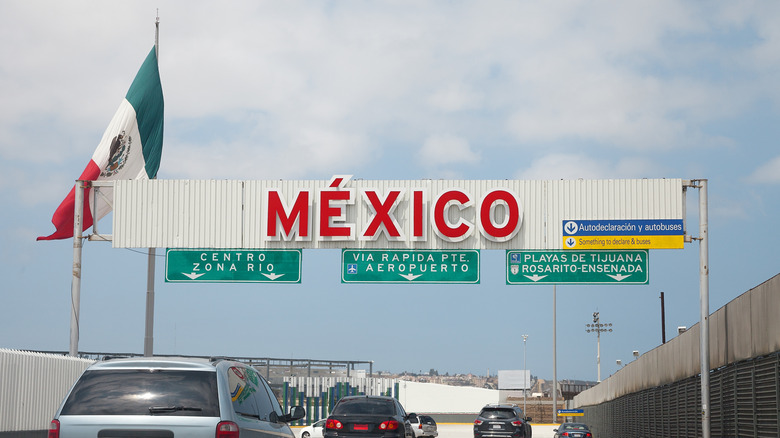
Beyond federal laws, each state in the nation establishes its own driving rules. For example, some states have strict seatbelt laws for all passengers. Others only require them for front-seat occupants. Speed limits can also vary on similar types of roads across different states, but in general, most day-to-day rules don't directly conflict with one another, as there are safeguards – such as federal frameworks, codes, and administrative oversight — to prevent this.
Hop on down to Mexico, where the legal system is completely different, and things change. Mexico, like the United States, has both federal and state-level rules. However, there is no authority to align U.S. and Mexican laws. What's legal with Uncle Sam can quickly land you in trouble in Mexico. It's a similar story with U.S. driving rules that could get you a ticket in Canada. So, if you are planning a trip down south, remember these four driving rules in the U.S. that can get you a ticket in Mexico.
In Mexico, turning right on red is often illegal
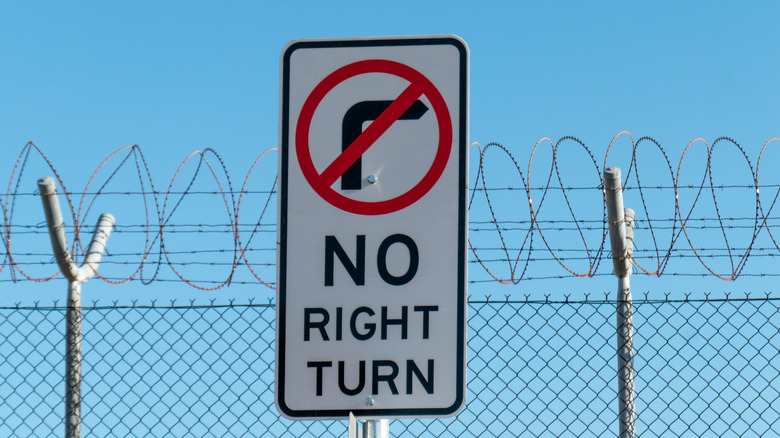
For most drivers in the U.S., the right turn on red (RTOR) regulation means being able to freely turn right through a red light after coming to a complete stop, but only if the turn is clear of pedestrians and any oncoming traffic. Although RTOR is somewhat restricted in places like New York City, Seattle, and Washington, D.C., most states allow it.
In Mexico, it's not as clear whether you can make a right turn on red. Some states allow it, but it's not common practice in the same way it is in the U.S. For example, in Sinaloa, RTOR is treated the same as in the U.S. In the state of Tamaulipas, RTOR is permitted only if there is a clear sign indicating it.
In Durango — the state, not the Dodge Durango that was recalled over a rear spoiler that can fly off — right turns on red are strictly prohibited. Since clear guidance on right turns on red in Mexican states is hard to find, the safest thing to do would be to just wait for a green light.
Mexico has harsher penalties for drinking and driving
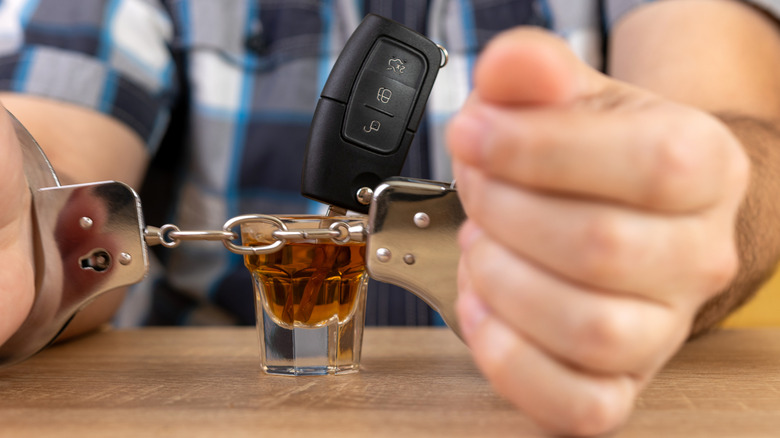
Blood Alcohol Content (BAC) legal limits in the U.S. and Mexico are also different. Granted, there are notable differences across U.S. states as well, but the 0.08% limit is the recognized federal standard. Some states take this a step further and impose stricter penalties for enhanced BAC values.
For instance, New Jersey begins enhanced penalties at just 0.10%, Washington, D.C. has upper tiers at 0.20% and 0.25%, while several states are considering lowering the blood alcohol limit altogether. In Mexico, although it also varies state-by-state, these numbers can be even lower, sometimes at 0.04 or 0.05%. The difference between the U.S. and Mexico comes with the treatment of open alcohol containers inside a vehicle.
In Mexico, open container rules can be much stricter. It all depends on the state in question and common police procedures. According to the U.S. Embassy in Mexico, it is illegal to possess open alcohol containers in moving vehicles, and violating this can even result in an arrest. Getting arrested only for having an open container inside a car in the U.S. is unlikely since many states treat it as in infraction, not a misdemeanor or a criminal offense.
Everyone in the car must buckle up in Mexico
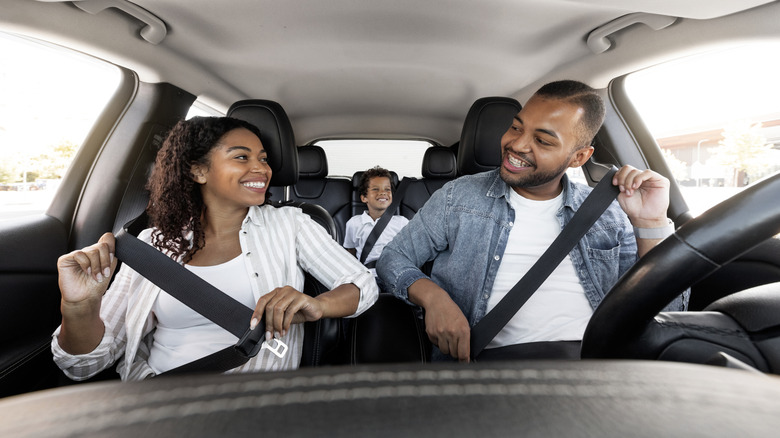
According to estimates by the Centers for Disease Control and Prevention (CDC), only 76% of adults riding in the rear seat use seatbelts, compared with 92% in the front seat. This is partly because enforcing rear seat seatbelt rules is considered a so-called "secondary enforcement" in certain states.
This essentially means that police officers can only issue a citation for a second-row seatbelt violation if the driver has been pulled over for something else. In other words, an officer can't pull over a vehicle because passengers in the rear seat are not belted in. Moreover, these rules also differ a lot across state borders — this is one of the reasons why the National Highway Traffic Safety Administration (NHTSA) wants seatbelt warnings for all passengers.
In Mexico, everyone inside the car needs to wear seatbelts while the car is in motion. So, if you come from a U.S. state where rear seatbelt rules are particularly lenient, keep in mind that it could lead to a fine in Mexico. Once again, if you want to avoid getting a ticket, make sure everyone is wearing seatbelts whenever the car is on the move.
In Mexico, you need Mexican car insurance
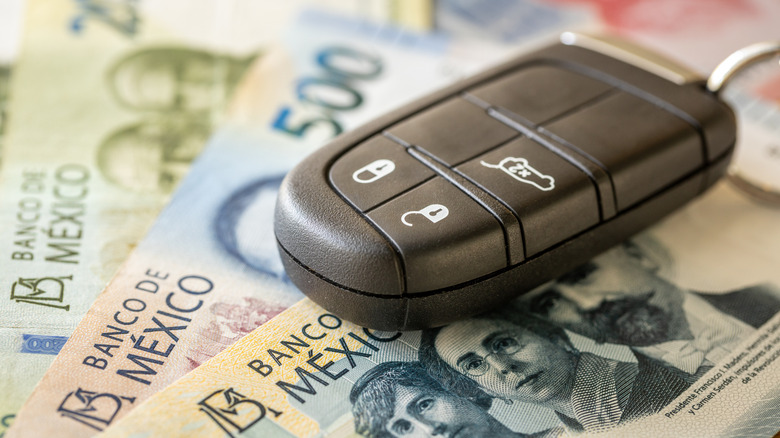
If you're planning a car trip to Canada but are concerned about whether your U.S. auto insurance will cover you, you can rest easy — most U.S. car insurance policies do provide coverage while driving in Canada. However, if you are planning a car trip to Mexico, you need an insurance policy from a Mexican provider as a U.S. one usually won't cut it.
In practical terms, this means that if you are involved in an accident without Mexican insurance, the authorities may even detain you. Besides getting a Mexican insurance policy, it is also highly recommended to get bail coverage.
It's also worth noting that Mexican authorities may not be as lenient to disorganized or missing documents as your local English-speaking officer. Therefore, make sure all your insurance paperwork is neatly organized and ready to present at all times — this includes digital versions.