

Is It Legal To Have Two Driver's Licenses From Two Different States?
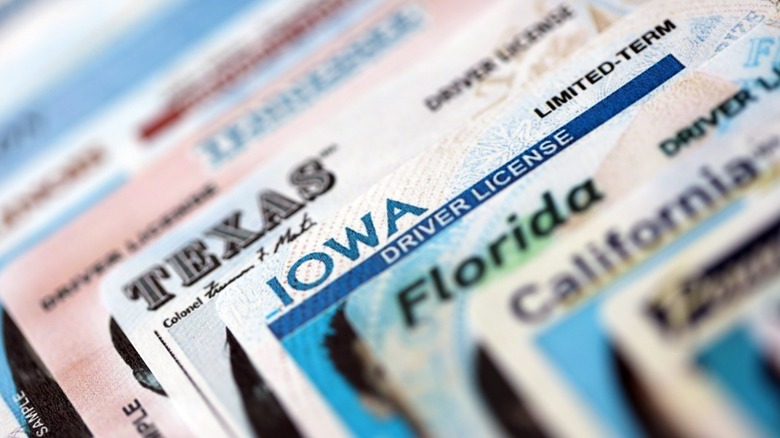
We can't think of a non-shady reason to have multiple driver's licenses from different states, other than the occasional confused snowbird who mistakenly believes they are supposed to maintain licenses simultaneously in Florida and the other state they live in the rest of the year. On the other hand, there have been drivers who used to acquire multiple licenses to spread around traffic violations and points to avoid raising their insurance premiums. We think a simpler solution would have been to stop speeding. But what do we know?
Of course, not everyone who wonders about the legality of having driver's licenses from different states is trying to break the law. Like the aforementioned snowbirds, some move back and forth between two different states and just want to know what the law requires of them. However, many in the past accrued licenses from different states to commit offenses like identity fraud or to evade legal trouble. It may seem like a tempting way to avoid high taxes and car registration fees in one's own state by claiming residency in another (some are avoiding high car registration and taxes by forming an LLC in Montana). And imagine if someone were able to get around a license suspension from multiple DUIs simply by using a license they're holding from another state.
It's no wonder, then, that states have laws against holding more than one driver's license. And now, with shared databases, states have the means to check with other states before they issue you a driver's license. The federal government has stepped in as well with the REAL ID act, which specifically prevents compliant states from issuing a driver's license to someone who already has one in another state.
It's illegal in just about every state

Gone are the days of pulling a fast one and getting a driver's license in one state while keeping one in another. That's because, just like your exes, the states talk to each other, and sometimes it's about you. No state in the Union will issue you a driver's license if they know you have one in another state, unless you surrender that license.
For example, Washington law says you "may not have more than one valid driver's license at any time." Pennsylvania is pretty explicit, as its law states that, "No person shall be permitted to have more than one valid driver's license issued by this or any other state at any time." California's Vehicle Code clearly states that, "A person shall not have in their possession ... more than one driver's license." Similarly, Georgia state law strictly prohibits "more than one valid driver's license at any time." West Virginia requires drivers to surrender any licenses issued by other states before they can get a WV license. Texas will not only refuse to issue a license to someone who already has one, but it won't issue an ID card either. The Lone Star State allows you to have either a license or an ID card, but not both.
Penalties for having more than one driver's license can be pretty strict as well, including suspension of your license and stiff fees. For instance, in Florida, possession of two driver's licenses is a first-degree misdemeanor. According to Florida Statute 775.083(d), misdemeanors in the first degree are punishable by fines up to $1,000. That should make anyone think twice about trying to have licenses in multiple states.
The feds don't like it either
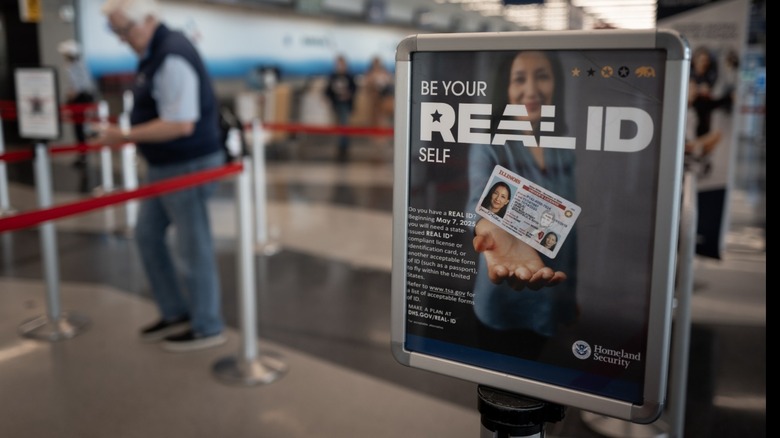
At some point, Big Brother decided it wasn't easy enough to keep track of us all, so the REAL ID Act was passed in 2005. Basically, the new law stated that regular old driver's licenses would no longer be good enough to serve as identification for air travel or accessing certain federal facilities. New licenses and IDs compliant with the act would need to be issued.
Originally, the date to start enforcing this law was set for 2008. But, for this law to work, it needed the cooperation of individual states, since states issue IDs and drivers licenses, not the federal government. It took time for states to sign on and to be compliant, so that enforcement date kept being delayed. It only took 2 decades for REAL ID to become enforceable, but all 50 states finally signed on and became compliant, with the firm enforcement date set for May 7, 2025. Since then, a REAL ID compliant license or ID is required to board a plane (bad news for sovereign citizens, who don't even think you need a license to drive).
What does all of this have to do with whether you can have licenses from different states? Well, in order to be compliant with the REAL ID law, states must refuse to issue a driver's license to anyone who already has a license in another state, unless that person surrenders that license or terminates it. Okay, so just don't tell the DMV clerk that you have a license in another state, right? Like we said, states talk. They share information and will often know right away if you already have a license in another state. In other words, you're not getting a second license in another state, at least not legally.