

Why X-Taping Race Car Headlights Used To Matter — And What Changed
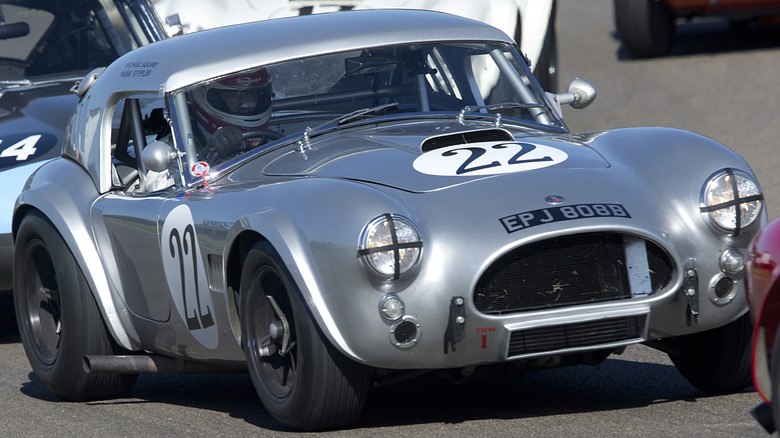
An "X" taped to the headlight of a car does not foreshadow someone's death, like in "The Departed." But it does look tough. It looks purposeful. It looks like you don't care about the actual brightness of your lamps. You have ulterior motives.
Taping over headlamp lenses goes back to old-school motor racing, and no, it was not a fashion statement — though it seems to be among the cars-and-coffee crowd. Yeah, Steve, your Miata certainly needs its headlights protected from shattering. The irony, Steve, is they are pop-up headlamps. (Just wait until Steve hears about the actual practical reason French cars had yellow headlamps.)
Back in the day, racers taped over their lamps for a simple reason — glass. Until the late 1980s and the widespread use of composites, cars and motorcycles used sealed-beam headlights made of glass. As you've probably noticed if you've ever dropped a pint at a bar, glass is brittle. On a racetrack, an errant rock or a little "whoopsie" with a leading car — or worse, a barrier — would cause these sealed beams to shatter. Showering the asphalt with glass shards might not sound like the end of the world, but those shards could cut up tires, leading to something much worse. The tape was a mandatory safety protocol — a crude mechanism designed to hold the broken pieces together just long enough.
Part armor, part safety net — all practicality
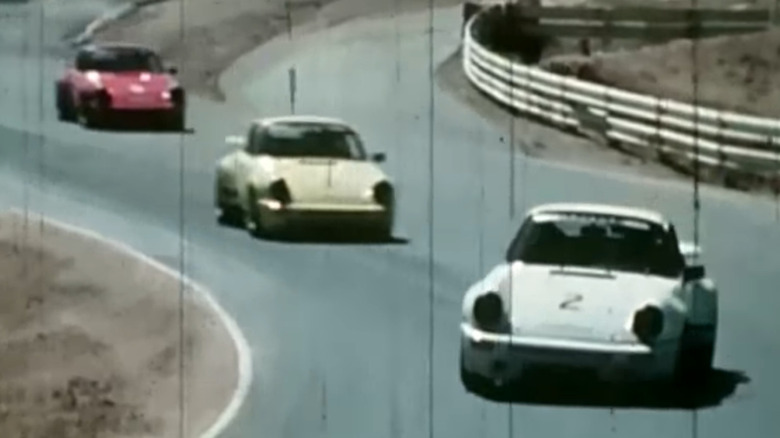
If you think a strip of vinyl tape is going to stop a rock traveling at terminal velocity, we have a bridge to sell you. The tape offered minimal, if any, impact protection. Its job, at least initially, was purely retentive. The International Motor Sports Association (IMSA)and the Sports Car Club of America (SCCA) didn't leave this up to choice, either. Their rule books explicitly stated that exposed glass headlamps must be taped.
In endurance racing, teams took this a step further with a full blackout. During the 24 Hours of Daytona, crews would cover the lens with heavy-duty tape, or even foam, during daylight running. This was part safety, part strategy. As you could imagine, 12 hours of running at race pace makes track grit cosplay as a sandblaster — not to mention the monstrous bugs in that area. This would pit and splatter the lens — affect the lamps' lighting performance. By taping them during the day, teams protected them for when they needed them most.
When the sun went down, crews would rip off the coverings and the night-shift drivers had full lumens going down track. It was a smart low-tech hack for a high-stakes purpose.
Why you should definitely stop doing this to your Honda Civic
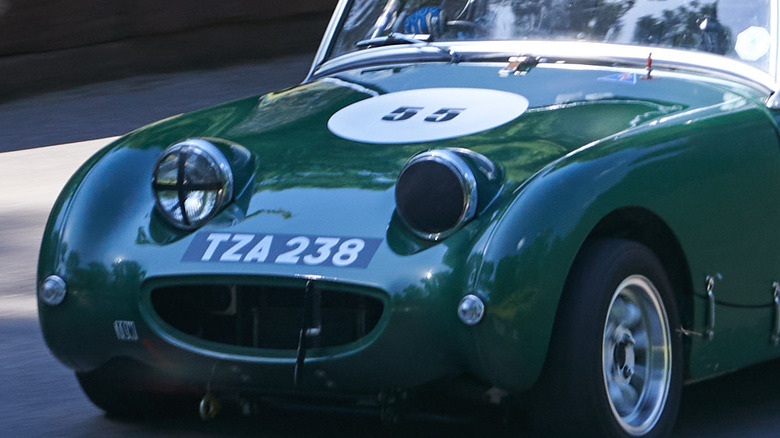
So if the "X" was such a crucial piece of safety protocol, why don't we see it on the grid of a modern IMSA race? Well, we stopped making headlights out of glass and started to use polycarbonate. Not only was polycarbonate cheaper, it was eons more durable and impact-resistant. When a polycarbonate lens takes a hit, it might chip, deform, or even crack — but it doesn't shatter. Because there are no shards to worry about, the regulatory bodies updated the rules, making the tape mandate obsolete for modern vehicles.
In fact, if you're taping up the plastic headlights on your modern car because you think it looks race-ready, not only may you look like an idiot, you may be ruining your lights. Plastic lenses dissipate heat differently than glass. Trapping that heat behind a layer of tape can localize the heat and lead to overheating or melting.
Going back to the endurance racing example, modern race teams still protect their lights. Now they use clear or yellowed tear-offs — think of these as phone-screen protectors for the headlights. A taped "X" on a lamp is now just a ghost, a skeuomorph that lingers in car culture well after the function died. It looks cool, absolutely. But unless you're driving a period car, leave the electrical tape in the toolbox.