

Why Did Cars Switch From V-Belts To A Serpentine Belt?
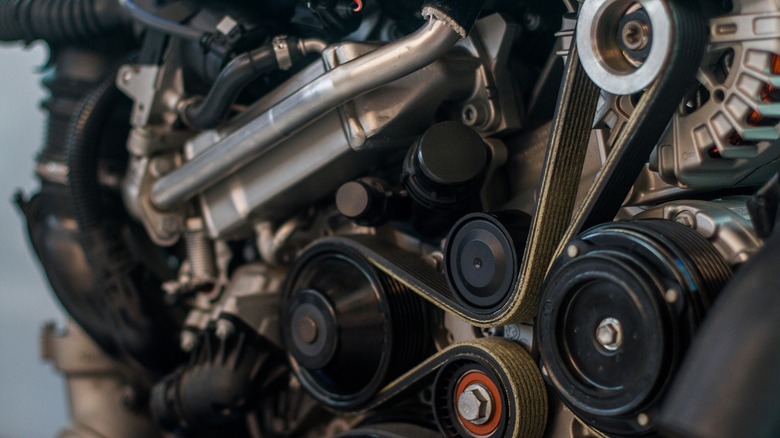
An engine is a complex series of components working together to get your vehicle moving. While combustion works via the pistons and piston rods to create mechanical twisting energy that gets the crankshaft rotating, other systems need a way to tap into that force. That's why components including power steering, the alternator, and the water pump use pulleys and a belt or belts to get what the crankshaft generates.
While modern vehicles use a single serpentine belt, older models relied on tried-and-true V-belts, named for their V-shaped wedge appearance. V-belt setups often required multiple belts that would stem from the crankshaft pulley and connect one system to another.
Serpentine belts have that name because they wrap and weave their way around the engine like a snake coiled around an object. The automotive industry transitioned to them because they offered some benefits over V-belts. A serpentine belt includes several ridges, producing a more reliable connection between belt and pulley. In addition, V-belts needed proper periodic manual tensioning or they could twist over. Modern engines typically employ an automatic tensioner system, though this isn't a guarantee of problem-free operation, as serpentine belt tension might matter more than you think.
V-belts can reduce horsepower if not installed or fitted properly
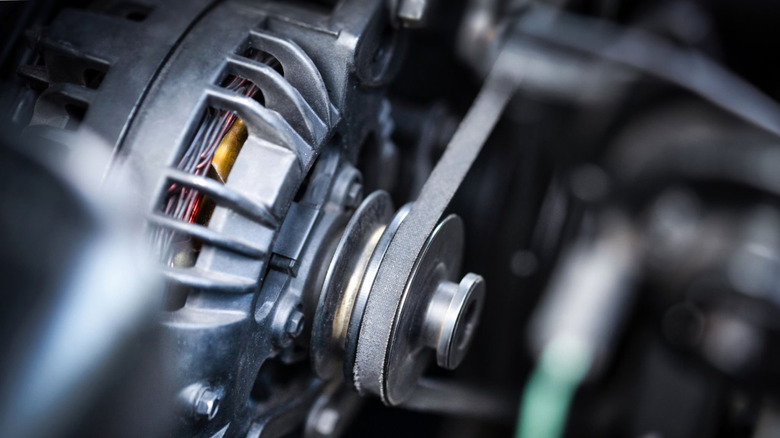
On some vintage builds, if you decide to include a modern component like an air conditioner, you'll need to add an additional belt to the V-belt setup. Running too many belts can end up reducing engine output, since these classic motors weren't made with modern extras in mind. However, sticking with V-belts does stay true to the engine's original form.
V-belts also can experience some efficiency problems if they're under- or over-tensioned. Adjusting tension on some older V-belt configurations was done by manually tightening or loosening a specific bolt, making the process a more an art than a science. If the belt isn't tight enough, it can start losing its grip on the pulleys, causing thermal stress due to friction. But you'll also place too great a burden on the system when you overtighten a V-belt, including extra stress on the bearings and the belt itself.
Despite this somewhat delicate balance, V-belts appeared in the some of the most iconic power plants. They included Chevy's 302 small block engine, which was meant to break the rules.