

Why Did Cars Stop Using Bench Seats, And Could They Come Back?
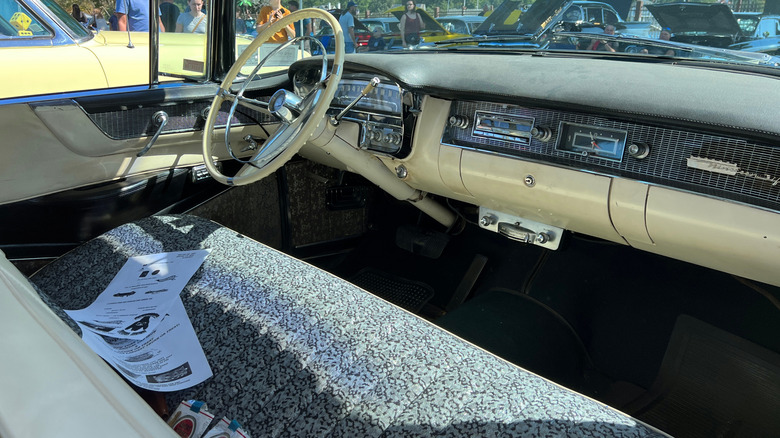
There is a tremendous abundance of nostalgia within the automotive community, with fans of various eras echoing a familiar sentiment: Vehicle manufacturers don't make them like they used to. Enthusiasts aren't wrong for wishing back some of those vintage features you can't find anymore. These are your favorite dead car trends, and the list wouldn't be complete without the fondly-remembered bench seat.
Horse-drawn carriages featured bench seats, so naturally, they made their way into the first automobiles as well. Synonymous with long-gone pastimes, such as drive-in movies and car cruising, you could pack a sedan with your six closest friends very comfortably back in the day. So, what happened to them? There are a few culprits responsible for the demise and disappearance of the iconic bench seat, including bucket seats, safety regulations, and center consoles.
Fortunately, the front bench seat isn't completely gone, as there are still a few examples of it today. The 2025 Chevy Tahoe LS 4WD and 2025 Chevy Suburban LS 4WD SUVs can optionally be equipped with a front bench seat. Land Rover is also working to reignite the classic feature as an option in models like the Defender. If automakers begin selling a significant number of vehicles with front bench seats, it's possible they could make a mainstream return, but only time will tell.
Bucket seats are associated with performance and people like center consoles
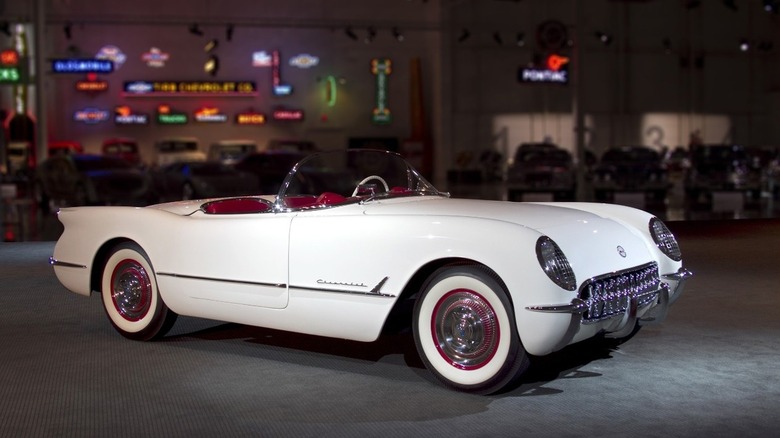
European influence pushed U.S. automakers away from bench seats and towards the bucket design, which began to surface in the '50's. With stylish sports car legends — like the inaugural 1953 Chevrolet Corvette and the 1964 Ford Mustang — coming with racing-inspired bucket seats, the front bench configuration started to lose its luster. Clay Dean, the General Motors director of design at one time, once told Forbes, "A lot of people prefer bucket seats because they're sporty, even in models that aren't sports cars."
In addition to a more performance-styled interior, bucket seats also afforded some extra space in the middle, between the driver and front passenger. To fill this void, car makers started including a center console that would grow in functionality over the years. With many of today's vehicle models including climate controls, USB ports, and hidden storage compartments within that console, drivers might not want to abandon it for the sake of a front bench seat.
However, a compromise of sorts may be in the works. At least one example includes the 2026 Hyundai Palisade that looks awesome and has a front bench seat, which can actually fold down into a center console. It's not clear if that version will hit U.S. shores or not, though.
Bench seats made airbags and seat belts more challenging
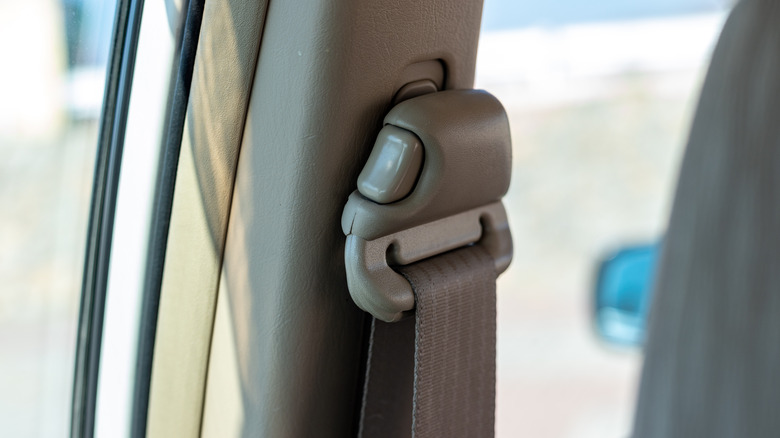
It's no secret that classic cars are no where near as safe as modern automobiles due to a lack of enhanced technology. Those who grew up in the front bench seat era may remember sliding or climbing around those massive seats before seat belts were required. With the adoption of seat belt use and the inclusion of airbag systems, front bucket seats were much easier to configure with these safety technologies. For instance, a bucket seat allows for a greater amount of adjustment options, such as shoulder strap height, which would be challenging to engineer for a bench seat.
While airbags have evolved over the years with updates like side curtains and knee protection systems, at their core is the frontal impact bags. One comes from the steering wheel, and the other from the passenger dashboard. In terms of a front bench seat, the passenger in the middle wouldn't get much to work with. The center dashboard is full of vehicle controls and often a media touchscreen display, limiting an airbag's placement. The death of the bench seat might be a sad thing for car lovers, but it's something safety-conscious drivers can probably live without.