

Is It Legal To Use Your Phone At A Red Light? What US State Laws Say
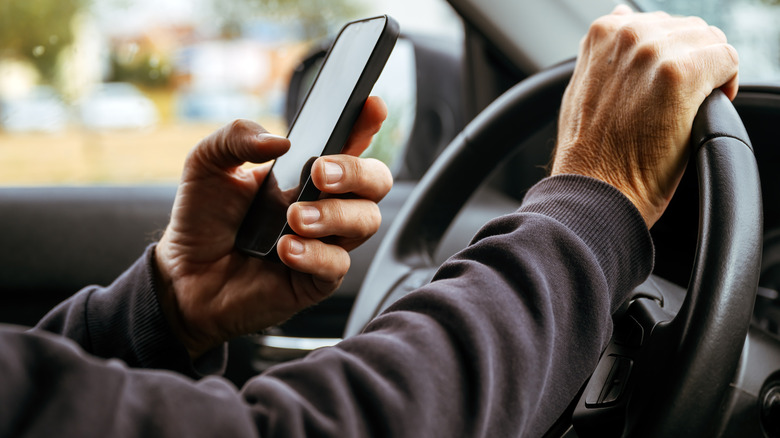
While smartphones have dramatically transformed how people communicate, they've also contributed to distracted driving. In fact, authorities are working on systems that include cell phone tracking and cameras to help cops issue distracted-driver tickets. And most folks will probably welcome this: According to the 2022 AAA Traffic Safety Culture Index, around 93% of drivers consider reading, emailing, and texting on a cell phone either very or extremely dangerous.
While using your smartphone in hands-free mode is generally allowed everywhere (with some exceptions), physically handling a cellphone behind the wheel is banned in 31 states, including California, Maine, Idaho, and Tennessee, per the National Conference of State Legislatures. This includes touching your phone, such as typing, scrolling, or tapping, regardless of which applications or functions you're using.
Manually reading and typing text on your phone while driving is illegal in 49 states. The exception is Montana, where there's no statewide ban on texting while driving, but some counties have rules in place. Stricter measures were proposed in Montana Senate Bill 359 in 2025, but it didn't make it through the legislature. So essentially, when stopped at a red light in the majority of U.S. states, it's illegal to physically handle your cell phone. But the legality of using your smartphone hands-free remains ambiguous in some areas of the country.
Lawful hands-free use can be unclear and texting while driving may have exceptions
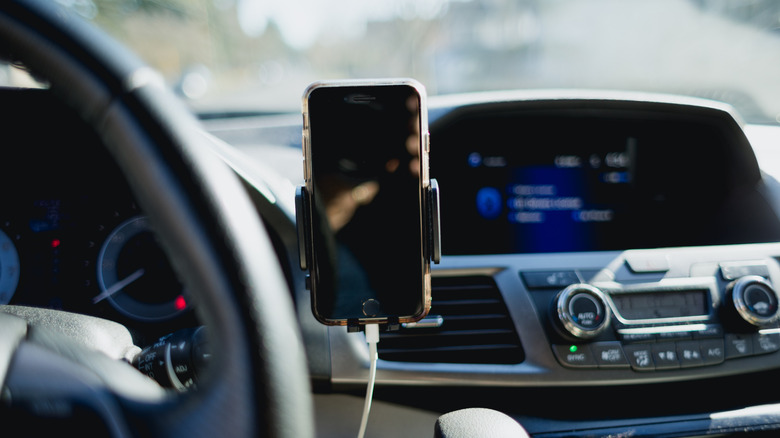
Many areas of the U.S. legally acknowledge the use of spoken commands while driving as a permitted hands-free alternative. However, other states fail to fully clarify the matter. While physical texting is banned, what about speech-to-text options like Gboard, an app developed by Google that lets you convert your spoken words into text for things like emails and social media? While you won't be touching your phone to text, you'll may still need to manually select the microphone icon in some instances to have the app begin typing for you. Does this violate distracted-driver laws?
Some places like Alaska make additional distinctions as to when it's illegal to text, but the law still fails to cover every scenario. It's against Alaska law to physically interact with texts while driving, but only while the vehicle is moving. Does this mean you could be cited while stopped at a red light if you were typing a text and slightly lifted off the brake pedal, allowing your vehicle to roll forward a foot?
Kentucky has a similar ban on texting when in motion, but includes exceptions. You can touch your phone if using GPS, type in a telephone number or contact name to make a call. But whether you're typing a short message or keying in a phone number, isn't your attention diverted from the road either way?
Why phone use behind the wheel is a big deal, and why distracted-driver laws are difficult to enforce
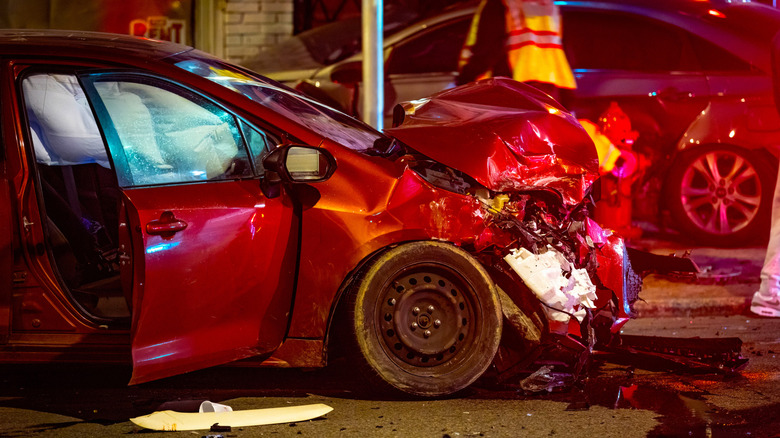
It can be tempting to reach for your smartphone on the road, especially if you've clocked decades behind the wheel. However, according to the National Highway Traffic Safety Administration, in 2023 alone there were 3,275 lives lost in traffic accidents involving distracted drivers.
This danger can be exacerbated when engaging with text messages, which is why 49 states and the District of Columbia have banned them for motor vehicle operators. Per the Governors Highway Safety Association, simply looking away from the road and reading a text message for around five seconds when traveling at 55 mph is akin to traveling a distance equal to a football field with your eyes covered. What can happen in just a few seconds? Take for instance this totally avoidable nine-car pileup, which is a great example of why you need to put your phone down while driving.
Even more troubling, it can be difficult for police to enforce distracted-driving laws, especially in states that don't have hands-free requirements. For places with exceptions, for example, law enforcement can't be sure what you're doing on your smartphone. In states like Iowa, it's illegal to text and drive, but holding your phone when getting directions or calling someone is perfectly legal, giving even eagle-eyed officers a potential dilemma.