

Is WD-40 Safe On Car Paint?
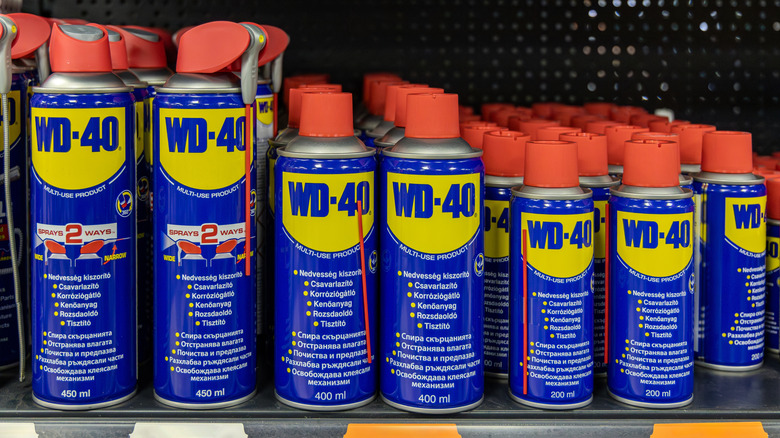
Although initially conceived to shield intercontinental ballistic missiles from rust, WD-40 has a ton of uses both inside and around your car, such as temporarily making your foggy headlights clearer again. It's also the go-to solution of mechanics and enthusiasts for cleaning and lubricating door hinges, latches, and chrome surfaces. As it turns out, WD-40 is even safe to use on car paint, and it might save you an expensive trip to the paint shop. In a pinch, you can use it to erase paint transfer from your precious bumpers, but it won't get rid of deep scratches that you can nick with a fingernail. The company behind WD-40 even recommends its multi-use product for loosening dried-on grease and grime on car paint without scratching it.
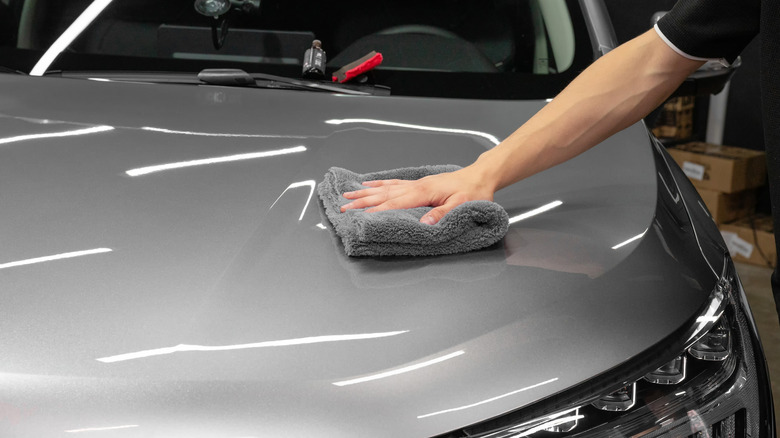
The trick to using WD-40 is to douse affected areas liberally with the product and let them dwell for a minute or two. Next, grab a microfiber towel and wipe them down. Spray more if you need to, and repeat as necessary. For removing paint transfer, you might have to get down-and-dirty to scrub off the damage. If done right, the lubricating properties of WD-40 will lift off dirt and contaminants from paint with minimal friction to reduce scratching.
However, WD-40 is not a detailing product that can treat deep scratches, remove swirl marks, or polish the paint to a concours-level finish. It may even cause more surface-level scratching. Using it frequently on your car's paint will attract more dust and dirt that will definitely leave scratches if you keep needing to wipe it off.
Polish and wax the area after using WD-40
There are some scratches that you can erase using WD-40, but it can only do so much. After a certain point, you might need some extra DIY scratch removal tips and tricks alongside something with more teeth to further refine the scratched area. It may not seem like it when viewed directly, but scratches leave microscopic peaks and valleys on the clear coat, creating jagged edges that obscure light; hence, those scratches are only visible when viewed at certain angles.
Spraying WD-40 on paint scratches will only fill those jagged edges temporarily, making them somewhat less noticeable. It can remove paint transfer, yes, but it doesn't have the same fine abrasives as a polish to fix up the surface and make it look new. Polish is great for removing deeper scratches, swirl marks, light oxidation, and even water spots. Applying polish after treating the affected surface with WD-40 yields better results and can remove some leftover scratches and swirls.
However, polish should never be left to dry on paint and should instead be applied like putting lotion on your skin. Pour two or three pea-sized drops of polish on an applicator pad, rub it gently using small, circular motions, and buff it off immediately with a microfiber towel. The final step is to apply wax and leave it to dry for two to five minutes before buffing off the excess. Combining WD-40 with good old polishing and waxing yields better results, helping protect the paint from further weathering and contaminants.