

What Are Staggered Wheels And What Do They Do?

Staggered wheels simply mean the rear tires are wider than the fronts, and there's a good reason you see them on serious performance cars. A wider rear tire gives more surface area grip and traction where power hits the road. It also provides stability, especially during hard acceleration or cornering. The setup helps cars feel more planted, reducing that twitchy oversteer feeling you sometimes get when a high-horsepower car breaks traction.
On rear-wheel-drive cars, staggered wheels make perfect sense. The rear tires do most of the work. They're pushing the car forward and handling lateral loads through corners. Wider rears help manage that stress, improving control without making the steering too heavy up front. However, it's not just functional – a car with a staggered stance takes on a muscular, balanced, and confident aesthetic.
One of the handicaps of having a staggered setup is that you can no longer rotate tires from front to back. Having a different set of tires on either end limits rotation to side to side. Another is the cost. Having wider tires is a tad more expensive and due to uneven tire wear, maintenance costs often go up.
Manufacturers like BMW, Ferrari, and Chevrolet use this approach to fine-tune handling dynamics. So yes, staggered wheels look great. However, they're also an elegant bit of engineering that blends physics and flair in a way only cars can.
Who uses staggered wheels?
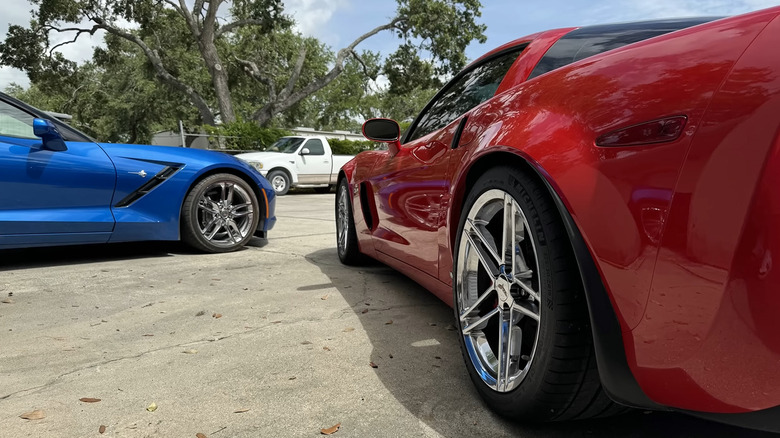
Staggered wheels are regularly seen on rear-wheel-drive cars from Lexus, Mercedes, and BMW. However, as all-wheel-drive systems have evolved, automakers are starting to get creative. Today, some AWD cars come from the factory with staggered setups. The Nissan GT-R and Lamborghini Huracán are examples of AWD (all-wheel drive) machines that run wider tires in the back without breaking the driveline or confusing traction control.
The car's computers can handle the difference in wheel sizes without issue. For non-factory built-in variance, the rule of thumb is less than 1% variation of the tire diameters. So while staggered setups aren't bad for AWD by default, they're something you don't add casually. When built into the AWD system, they help balance handling, traction, and looks in one tidy package.
For the right setup, it's the perfect balance of performance and presence. Staggered wheels let designers tune for rear traction while keeping the front agile. Beyond that, they just look darn incredible. In an era where even economy cars chase sporty aesthetics, staggered wheels remind us that performance and beauty can still be partners.