

Why Ford Still Puts Keypads On The Door, Even On 2026 Models

Since the 1980s, many vehicles produced in the Ford family have come with a five-button keypad that can be used for unlocking them in place of the physical key. Other automakers have implemented the feature here and there, but over time it's become synonymous with Ford vehicles — especially Ford trucks. Ford even has its own name for the keypad: SecuriCode.
Originally called Keyless Entry, the feature was introduced on the Lincoln Continental to provide an alternative to manually locking and unlocking the car and trunk with a metal key. Since its inception, SecuriCode has come both standard and optional for a variety of vehicles in the Ford lineup, and digital buttons are now available on some models in place of the physical buttons. SecuriCode prevents lockouts while providing the option to deliberately lock your keys in your car — particularly useful for those who like to engage in outdoor activities without having to lug around that pesky key. For these reasons and more, it's been a desired tech feature among Ford customers for a long time.
But in a world with technology that lets us unlock our cars from our phones, why keep Securicode around on new Fords? Well, the answer seems to be that it's simple, convenient, and just plain useful.
SecuriCode is simple, but effective
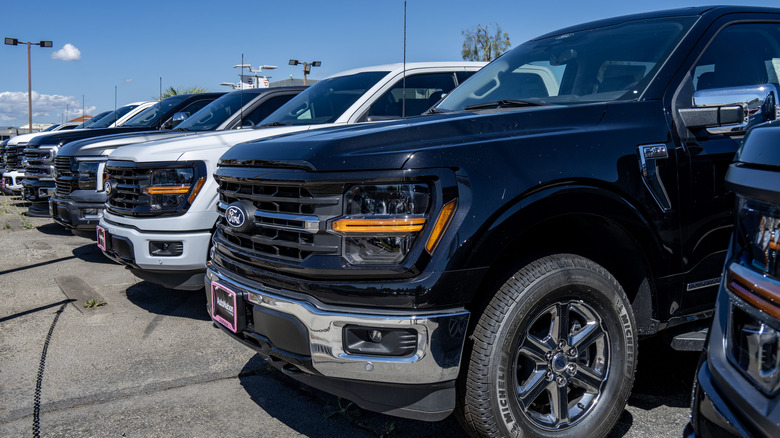
SecuriCode offers a few benefits of keyless entry that our digital devices can't. For one, what if you want to lock your phone in the car along with your key so you don't lose it on your kayaking trip? SecuriCode provides that extra utility. If you're at a barbecue and want to send someone back to the truck to grab the snacks you forgot, SecuriCode is the perfect solution — they can get in, but they can't go. It can be useful in commercial settings just as much as personal; for example, keyless entry can make it so that fleet vehicles can be accessed by any one of a company's drivers.
It should be noted that concerns about Securicode's safety have emerged over the last few years (could someone feasibly guess your code, or hack the locking mechanism?). Some people just aren't interested in the decades-old technology. Even Ford has, at times, seemed unsure about SecuriCode's future; for example, as it's done with other models in the past, Ford removed SecuriCode on the 2025 Super Duty, making it an option rather than standard.
But Ford has already brought SecuriCode back as a standard feature for the 2026 Super Duty, and for most other models where it's no longer standard, customers can typically still get it as a dealer option. It seems that SecuriCode's tried-and-true benefits and customers' love for it have won out, and Ford will be keeping it around.