

These Car Brands Died, But Got A Second Chance At Life
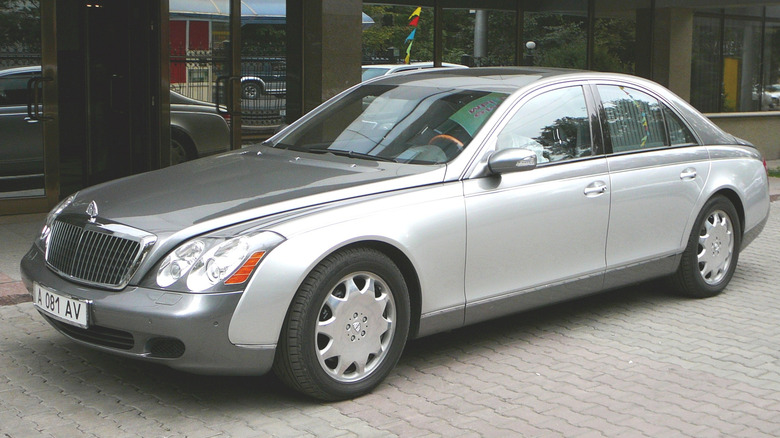
If there were a graveyard for car brands like there is for discontinued Ben and Jerry's flavors, it would stretch far into the distance. Some brands left us fairly recently and still crop up on the road or in used car listings with some regularity: Pontiac, Saturn, Oldsmobile, Saab, and Plymouth come to mind. Others loom large in the annals of automotive legend, like Packard, Studebaker, or the Indiana-based trio of Auburn, Duesenberg, and Cord.
Most lost brands stay dead and buried, but there's a powerful allure to ghostly car brands that makes people want to bring them back. Sometimes the brand comes back as a model rather than a brand, such as the GMC Hummer EV pickup and SUV. Sometimes brand revivals never quite get past the dreaming stage, although perhaps not before millions of dollars are spent.
Yet other brands enjoy successful reanimations, to a greater or lesser extent. Many of these are among the great marques of the past, and it can be a pleasure for enthusiasts to see them rise again. Combining heritage with modern technology occasionally works out far better than we might have expected. Here are several brands that got a new lease on life.
Bugatti
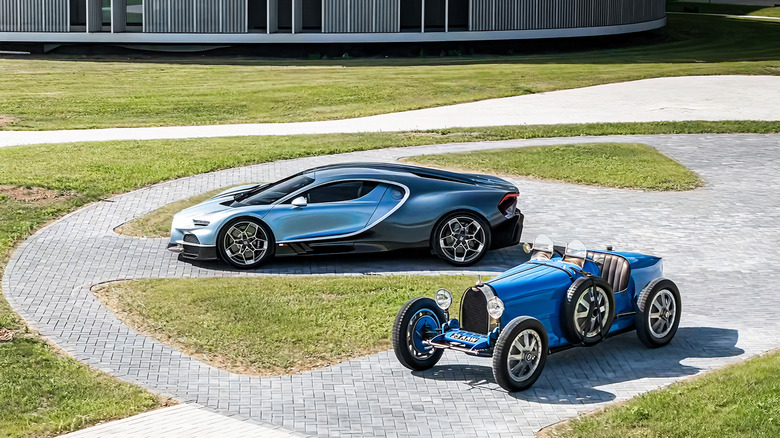
Bugatti has long been a revered name. From 1909 through 1956, Ettore Bugatti's hand-built creations were often viewed as more than cars, instead they transcended into the realm of art. This explains why Ralph Lauren paid $40 million for a Bugatti Type 57SC Atlantic. Sadly, the original Bugatti company died with its creator, becoming a legend mainly found in museums and at concours events. Then, in the 1990s, the marque was reborn. You could even argue that it was brought back to life twice.
The first rebirth came at the hands of Romano Artioli, an Italian Bugatti enthusiast who purchased the rights to the name in 1987. He opened a new factory in Italy — the original Bugatti factory had been in France — and in 1991, the reborn company launched the EB110, named for Ettore Bugatti. This all-wheel drive supercar featured a 550-horsepower V12 and carbon fiber construction, vaulting the storied brand right into the modern era. Unfortunately, the company went into receivership just a few years later.
This led to Bugatti's second rebirth, this time thanks to the Volkswagen Group and its then-chair, Ferdinand Piëch. The German mega-corporation purchased the rights to Bugatti in 1998, allowing Piëch to live out his dream of building an 18-cylinder hypercar. While the company displayed two prototypes at car shows with W18 engines, production realities knocked it down by two cylinders. In 2005, the 987-horsepower, quad-turbocharged, W16-powered Bugatti Veyron debuted. Since then, the company has released several models, including the 282 mph W16 Bugatti Mistral.
Maybach
From its first production model in 1921 until World War II, Maybach produced some of the world's most prestigious luxury cars. The company's first car, the Maybach 22/70 HP, also known as the Type W3, advanced the state of the art for German car building. It offered four-wheel braking and a two-speed transmission that drivers shifted with a foot-operated lever rather than a stick shift. This set Maybach's course as a purveyor of superbly engineered driver's cars.
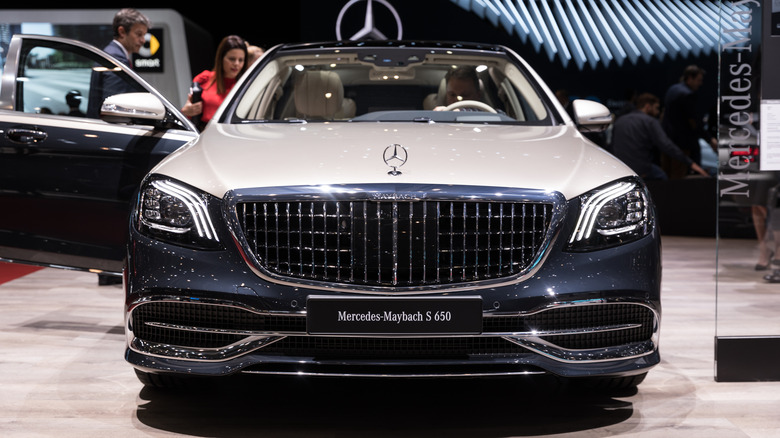
Unfortunately, by the early 1940s, Germany's industrial capacity was being used for, ahem, other purposes. Maybach production ceased during the war, and like Bugatti, its name faded into legend. That is, until Mercedes-Benz sought an ultra-luxury brand of its own following Volkswagen's purchase of Bentley and BMW's acquisition of Rolls-Royce. So, in 2002, some 60 years after Maybach production ceased, Mercedes-Benz relaunched the brand to initially mixed success.
Mercedes' Maybach revival had one of the most extravagant car reveals ever, lifting the new Maybach 62 off the deck of the Queen Elizabeth 2 ocean liner using a cargo helicopter. Unfortunately, well-heeled buyers didn't exactly swoon over the new-old brand. It was difficult for Mercedes to convince its target market to put a $350,000 sedan on their Amex Black Cards when the Maybach name had little of the cachet attached to Rolls-Royce or Bentley.
Still, the sages of Stuttgart refused to give up on their ultra-luxe dreams, introducing the Mercedes-Maybach sub-brand in 2014. Today, it produces cars like the Mercedes-Maybach SL680 Monogram Series.
Duesenberg
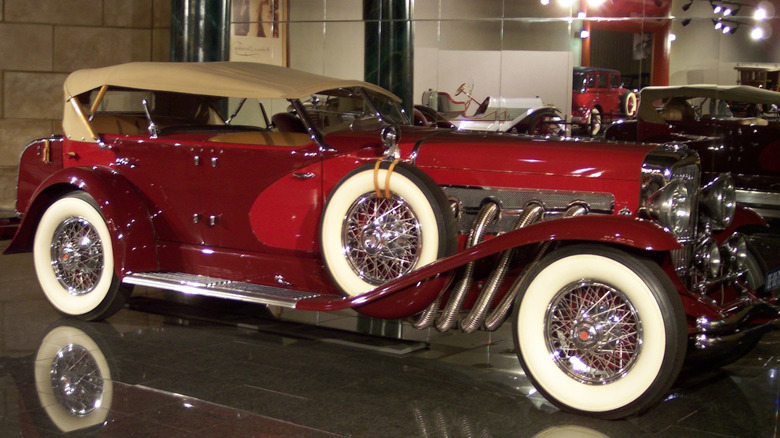
Describing this next brand as revived might seem like stealing a base, given that the reborn company's production run consisted of exactly one car. However, when the brand has a history as glorious as Duesenberg, any attempt to bring it back is worthy of attention. Plus, this revival has close family ties to the original company's founder, as well as contributions from a famous car designer.
First, the backstory. To this day, some claim that Duesenberg built the best American cars in history. Vehicles like the Duesenberg Model J of the 1930s were fast, luxurious, beautiful, and renowned for their quality. Legend has it that the superlative "doozy" is a contraction of "Duesenberg," although Merriam-Webster says the word predates the company's founding by at least four years. Still, the fact that people could believe it to be true is a testament to the brand's reputation. The Depression eventually claimed the company, completing the rise and fall of Duesenberg.
In 1966, Fred "Fritz" Duesenberg, the son of the company's founder, attempted to revive his father's work. A wealthy backer promised him the cash he'd need, and he hired the famous car designer Virgil Exner to pen his new Duesey. The result was a long, luxurious sedan built on a 1966 Imperial chassis, wearing styling that somewhat awkwardly combined classical design cues with a modern profile. Unfortunately, funding fell through, and today the car resides in the Bortz Auto Collection with other concept cars.
Lagonda
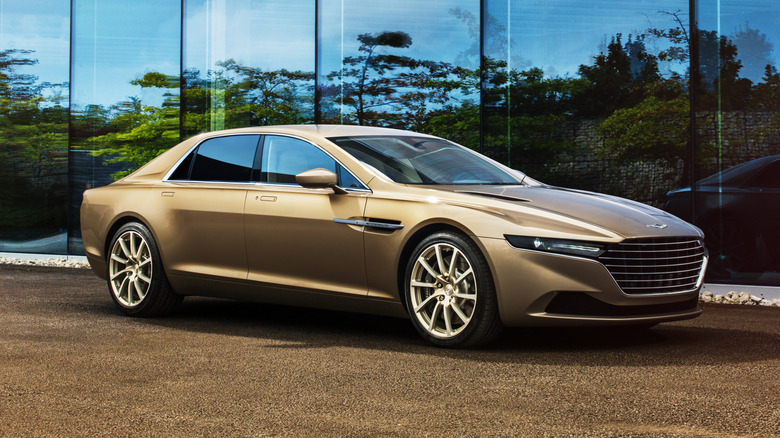
Lagonda is another storied name from the dawn of the automotive age. An American-born Brit named Wilbur Gunn built his first car in 1907 and raced it to victory in the Moscow to St. Petersburg Trial a few years later, resulting in orders from prospective customers. He named his company Lagonda after a Shawnee settlement in his native Ohio. During the years between the world wars, Lagonda became known for building fast and beautiful cars.
In 1947, it was bought by David Brown, who had previously purchased Aston Martin. Brown's focus was mainly on the Aston Martin brand, although the subsequent decades did produce some classics like the Lagonda Rapide saloon. Lagonda became more or less of a sub-brand specializing in four-door cars, while Aston Martin produced two-door sports cars. Occasionally, however, both names graced the same car, as in the wild and wedge-shaped Aston Martin Lagonda sedan. Lagonda, as a separate marque, faded into obscurity.
Then the brand came back in the form of the Lagonda Taraf. While some buff books insisted on referring to this million-dollar super-sedan as an Aston Martin, the company's press materials clearly showed it wearing a Lagonda badge. This model was produced from 2014 to 2016, and while Aston Martin has made some Lagonda concept cars since then, in 2024, the company has ruled out reviving the Lagonda brand for the foreseeable future.
MG
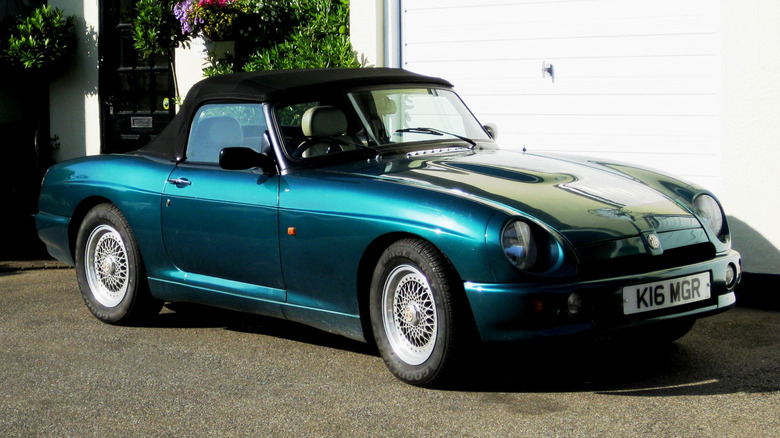
Strictly speaking, the MG brand continued to exist after its Abingdon, U.K. factory closed in October of 1980, but it was strictly used to badge-engineer Rover cars that were nothing like the storied MGB roadster produced at the shuttered plant. The MG brand (which stands for Morris Garages) dates back just over a century, and by the 1960s, it had become famous for classically British sports cars like the beloved MGB, which was also available as a GT hardtop.
In 1992, the first real MG in a dozen years was launched: the MG RV8. The new roadster was based on MGB, whose original tooling was still around. Final assembly took place at a Rover factory in Oxford, performed by a small team of specialists. The RV8 featured revised bodywork with flared fenders, a new hood, color-matched bumpers, and Porsche 911-style headlights, among other changes from the MGB. Under the hood was a Rover-sourced 190-horsepower, 3.9-liter V8 that was good for a 0 to 60 run in just under 6 seconds.
The RV8's production run lasted only until 1995, but its success paved the way for the mid-engined MGF roadster, which was sold by various corporate owners from 1995 all the way until 2011. In 2006, MG was bought by the Chinese firm Nanjing, which was in turn acquired by another Chinese company called SAIC. MG would experience another revival under SAIC, which gave the brand a worldwide model lineup that includes EVs, hatchbacks, sedans, crossovers, and a new EV sports car called the Cyberster.
TVR
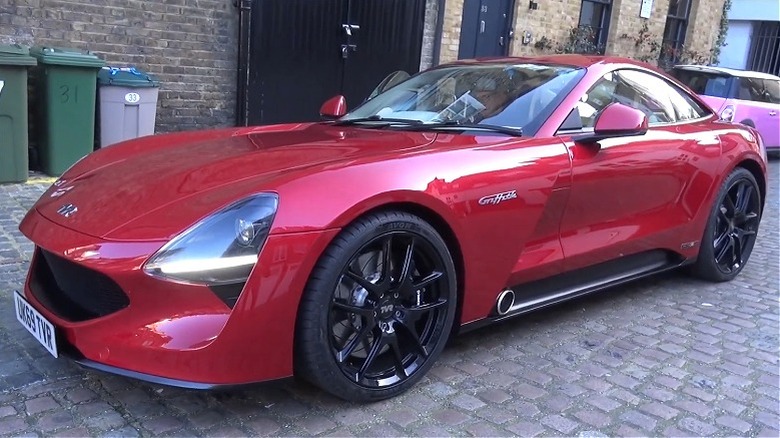
Sadly, this revival may ultimately prove to be more aspirational than real. The U.K.-based evo magazine reports that TVR's financials for 2024 were still overdue as of the spring of 2025, and its CEO Jim Berriman had recently resigned. These don't sound like the signs of a company in good health, to say the least. That's unfortunate, both because TVR's heritage stretches back to 1947, and because the proposed TVR Griffith is a gorgeous machine.
TVR was founded by Trevor Wilkinson in the post-war years. By the 1990s, it was renowned for building powerful sports cars in its former factory in Blackpool. Cars like the Chimera and the wild Cerbera Speed 12 sported a range of I6 and V8 engines nestled in sinuous glass-fiber bodies. There was even a single-make racing series in the 1990s called the TVR Tuscan Challenge. Things were going great, until its then-owner Peter Wheeler sold it to a Russian named Nikolai Smolenski in 2004. Under Smolenski's ownership, TVR effectively disappeared.
Two British automotive entrepreneurs, Les Edgar and McLaren's Gordon Murray, bought TVR from Smolenski in 2013, then received money from the Welsh government to build a factory in Wales, and set about creating the new TVR Griffith. The proposed new car would be everything TVR used to be: voluptuous, wild, and blazing fast. Unfortunately, a dozen years on, things aren't looking so great for TVR's future. Still, the marque's fans can hope for a miracle.
De Tomaso
Alejandro De Tomaso, an Argentine of Italian descent, and his American wife Isabelle Haskell, founded De Tomaso Automobili after they both enjoyed successful careers as race car drivers in Italy. Alejandro De Tomaso focused on building mid-engined race cars at first, while his industrial empire grew through acquisitions. These included Maserati, which he owned from 1975 through 1993. However, his most famous automotive legacy is the cars that bore his own name.
And the most famous of those cars is the glorious De Tomaso Pantera yet hard to drive, which could compete with much more expensive Italian exotics like Ferrari and Lamborghini thanks to its American-built Ford 5.8-liter Cleveland V8. In the mid-engined Pantera, this 296-horsepower motor was good for a 0-60 time of 5.5 seconds. Production of the Pantera ran from 1971 through 1992. De Tomaso continued to own his eponymous company until his death in 2003, when it seemed like the company would die with him.
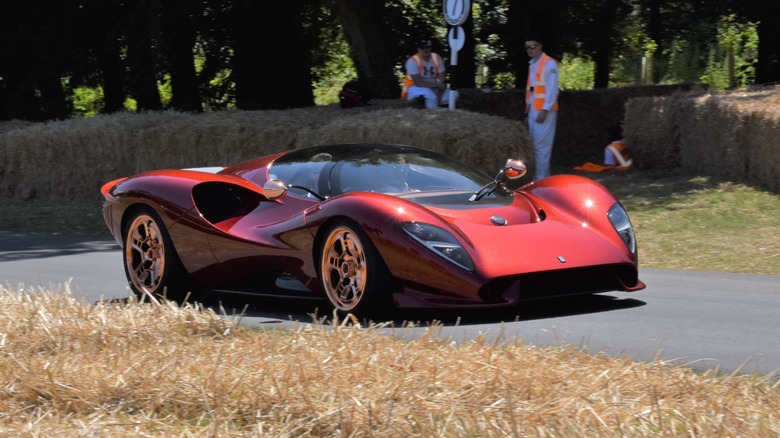
But then, in 2014, De Tomaso was reborn after the brand was bought by Hong Kong businessman Norman Choi. Not long after, the reborn company revealed the stunning P72 supercar, a retro wonder inspired by the De Tomaso P70 race car. The car has been overshadowed since then — former Chief Executive Officer and Chief Marketing Officer Ryan Berris was forced out of the company and filed a lawsuit against Choi that is still ongoing — but, as of mid-2025, all 72 units of the P72 had reportedly been pre-sold at $1.78 million each, with deliveries slated for later in the year.
Alpine
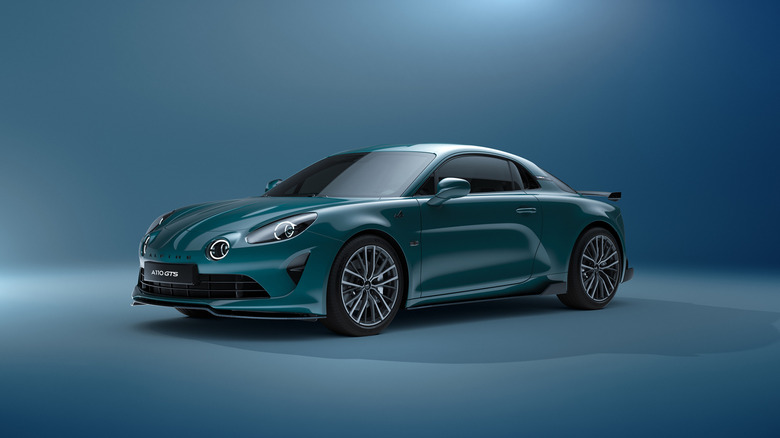
Jean Rédélé founded Alpine in 1955, and just seven short years later, the company had a hit with its A110 sports coupe. The A110's legend grew with its success as a rally racer, dominating the Monte Carlo Rally for several years in the 1960s and 1970s. The company also enjoyed success in endurance racing, winning the 1978 24 Hours of Le Mans with its A442B race car. The name Alpine soon became synonymous with auto racing victory in France.
Alpine used Renault engines from the start, and in 1967, Alpine became Renault's motorsports division. In 1973, Renault acquired a majority stake in Alpine, making it officially a Renault brand. Alpine flourished in racing for almost two more decades, but after Renault continuously lost money on the brand, it essentially discontinued it in 1995. Then, in 2016, Renault-Nissan CEO Carlos Ghosn announced that Alpine would return as a standalone brand.
The first new Alpine, fittingly, was named the A110. The reborn 2018 A110 was a nimble little coupe with a 4.5-second 0 to 60 time and a distinctively French character. Alpine has continued to evolve the A110, leading Motor Trend to declare the 2025 version to be "the most enchanting affordable sports car on the planet." What's more, there are plans to bring the brand to America in 2027, although internal combustion enthusiasts may be disappointed to learn that the proposed model lineup consists of performance EVs. Maybe Alpine shouldn't come to the U.S. after all.
Imperial
Some long-cancelled luxury car brands still echo through the generations, for good or for ill. Cadillac's long-vanished sub-brand, LaSalle, achieved a slice of immortality via a line from the theme song of the TV show "All in the Family," — "Gee, our old LaSalle ran great." Packard's colossal, 3.5-million-square-foot factory stood in an increasing state of disrepair for decades, becoming a symbol of Detroit's lost heyday. Continental was briefly a luxury division of Ford, but its name lived on in multiple versions of the Lincoln Continental.
Chrysler's Imperial brand, on the other hand, never quite caught on as a premier luxury brand, either in the showroom or in legend. There had been Chrysler Imperials since 1926, but the Chrysler corporation decided it needed a dedicated luxury brand to be launched in 1955, and it chose the Imperial name. Intended to compete with Cadillac and Lincoln, perhaps the Imperial brand just arrived too late in our cultural history and carried none of the cachet or nostalgia of those other brands. Chrysler discontinued the brand in 1975.
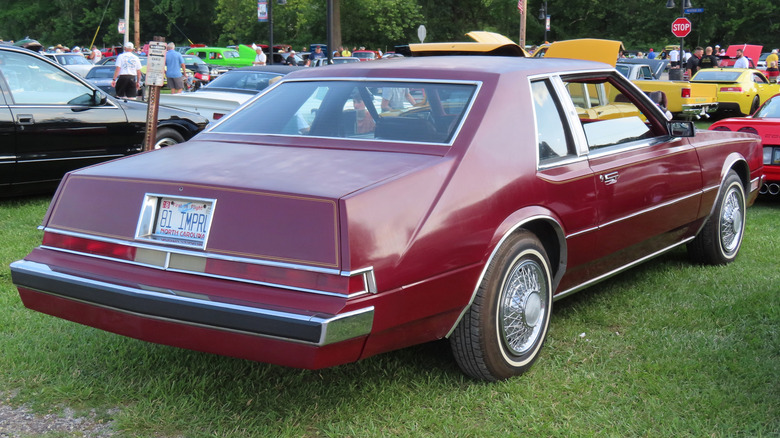
However, in 1981, the Imperial brand enjoyed a brief three-year revival with the endorsement of Ol' Blue Eye himself, Frank Sinatra. The bustle-backed car was built on Chrysler's J-body platform, making it a gussied-up Cordoba at an eye-popping price of more than $18,000. For a bit more, buyers could drive home in the Frank Sinatra Edition, or FS. The car was blue, with matching blue velour or Corinthian leather — naturally — and came with 16 cassette tapes of Frank's music in its center console. Unfortunately, quality issues sank the brand's relaunch before it ever got up a head of steam.