

Do Modern Cars Backfire? (And What Causes Backfiring Anyway?)
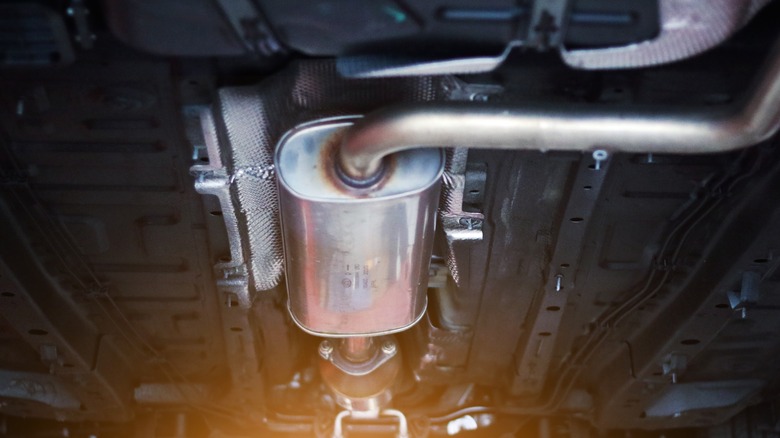
If you've ever heard what sounds like a single firecracker exploding somewhere out in traffic, it was likely a backfire. These sounds used to be much more common, but thanks to modern engine technology and advanced computer systems, newer cars rarely backfire — although it is still possible. Regardless, just like white smoke coming from your exhaust, backfires can be a vehicle's cry for help, indicating something isn't right.
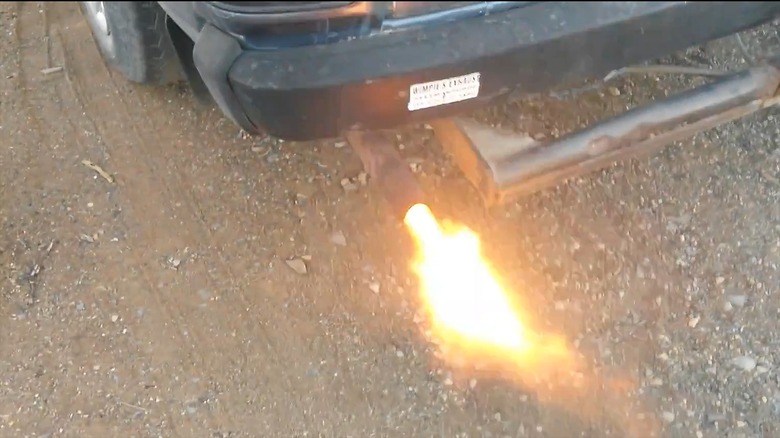
Put simply, a backfire is when combustion occurs outside of the cylinders in the exhaust system. Backfires often produce an ear-shattering pop and can potentially shoot flames out of the tail pipe. In newer fuel-injected cars, an improper oxygen-to-fuel mixture can cause backfires. This issue can be due to a variety of problems, like vacuum leaks, clogged injectors, and a faulty engine air filter.
In older vehicles, backfires can be caused by a damaged distributor cap, which is designed to route electrical current to the spark plugs. If physically damaged, this part can allow moisture into the system, de-synching the timing of combustion within the cylinders. These classic distributor caps can also accumulate carbon, which can eventually become conductive and cause arcing between terminals. In the same vein, if your spark plugs aren't functioning properly, it can throw off the combustion process and result in a loud emanation from your car's tailpipe. Replacing these parts can often solve the problem and save you some headache down the line.
What happens if you don't address the backfiring issue on your car?
A newer vehicle won't have a distributor cap, and the air-to-fuel ratio is handled by the engine control module (ECM), thanks to a network of several sensors. Sometimes, these parts themselves can be the source of the problem, as malfunctioning oxygen can sensors throw off the air/fuel mixture. In some cases, the problem could be as simple as a dirty air filter.
But what if you don't fix the problem and just keep driving as if nothing is wrong? Let's say, for example, that your car is backfiring due to running rich (too much fuel and not enough air) — there are some immediate consequences and some major ones down the road.
First, your car's performance will suffer, as this improper ratio won't allow the engine to run optimally. So, you may experience sluggish acceleration and lethargic behavior that could cause a noticeable departure from your car's typical output. Miles per gallon will also suffer, especially if you're driving one of the new cars with the worst fuel economy. Eventually, if this continues, expensive components like your catalytic converter can wear prematurely, as the extra fuel causes added levels of buildup within the part. According to Repair Pal, a replacement cat can run you well over $2,000, with the vast majority of the price being due to the part itself.