

Who Invented The Inline 6 Engine? (It Wasn't BMW)
Silky smooth and impressively powerful, inline-six engines, with all cylinders in a single row, are praised by drivers for their sophisticated performance and distinctive engine note. As a result, they've been the powerplant of choice for rides like the Jaguar E-Type, key generations of Japan's Nissan Skyline GT-R, the A80 Toyota Supra, the XJ Jeep Cherokee, and, of course, multiple BMWs, starting with the M1.
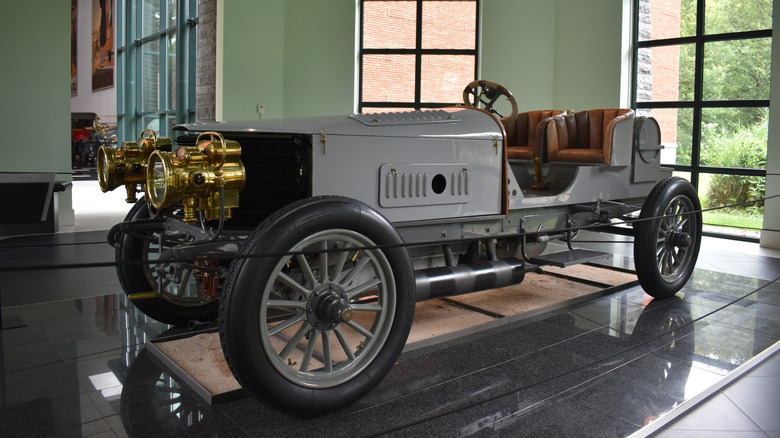
In fact, the German brand has developed a long-standing and legendary reputation for its I6 motors. Just ask Jalopnik's Amber DaSilva, who picked BMW's B58 mill as the best six-cylinder engine in the industry. However, BMW didn't invent the inline-six engine — the Dutch company Spyker introduced what's considered the first automobile with an I6 engine in 1903, although it was a unique mill used in a specific race car. That's why some gearheads give precedence to Napier, which, in 1904, debuted the first car with a mass-produced inline-six.
BMW didn't produce its first inline-six engine until 1917, the year it was founded, and it wasn't meant for a car, but rather an airplane. Its first I6, a massive 19-liter, naturally aspirated engine — the IIIA Flugmotor — provided 226 horsepower worth of motivation to the Fokker D VII fighter plane. That's the real clue to the company's I6 story, as it was able to eventually translate its wartime engine expertise into on-the-road success with the 1933 BMW 303, the first car from the automaker with a six-cylinder.
Spyker's contributions to the I6 engine
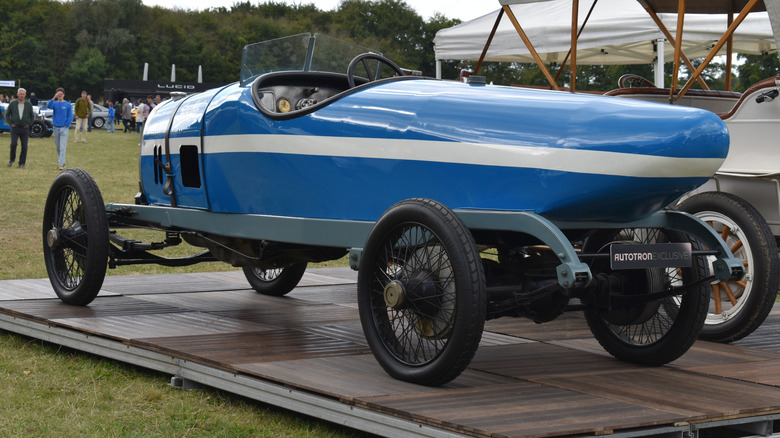
Like many early automakers, Spyker began life in the horse industry. It originated as a carriage-making concern run by the Spijker brothers, Jacobus and Hendrik-Jan. They initially began building cars under a license from Benz, but had developed their own motor-powered vehicle around the turn of the 20th century. The Spyker name debuted in 1903, and, again like many early automakers, the company turned to racing to promote its business. That's where Joseph Valentin Laviolette comes into the picture.
Laviolette was a Belgian engineer who had his own ideas about I6 engines, and when he was hired by Spyker to spearhead its racing efforts, he naturally brought his ideas with him. The Spyker 60 HP, named for its peak output and premiering in 1903 as well, leveraged what was also the first all-wheel-drive system for a gas-engined car to win the 1906 Birmingham Hill Climb. A year later, another Spyker, this one with a four-cylinder, finished second in the 15,000-kilometer Peking to Paris endurance trial. Unfortunately, 1907 also was the year that Hendrijk died in a ferry accident, sending the automaker into its first bout with bankruptcy.
Spyker merged with the Dutch Aircraft Co. in 1914, eventually building planes for World War II while still manufacturing a limited number of automobiles. Spyker then spent about 75 years, from 1925 to 2000, in limbo, to which it returned after trying yet again to build sports cars multiple times in the 21st century.
Napier's contributions to the I6
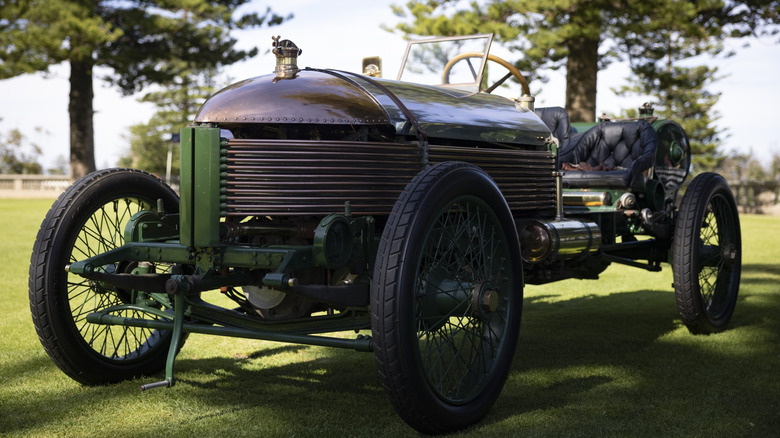
At about the same time the Spijkers renamed their company Spyker, S.F. Edge announced a new six-cylinder engine from the company he was associated with, Napier. Founded as D. Napier & Son, Limited, in 1808, the engineering company manufactured its first car in 1900 and went on to become a major force in the early English auto scene under the founder's grandson, Montague Napier. Napier may be the answer to where did British Racing Green come from, too.
S.F. Edge became to Napier sort of what Laviolette was for Spyker. Edge never literally worked for the Napier company, but he apparently had a close friendship, based on a shared love of cars, with Montague Napier. In fact, Edge liked what he saw from Napier's early engineering efforts so much, he formed a company specifically to sell Napier's first run of cars.
Becoming a racecar driver, promoter, and all-around inspiration for Napier, Edge also pushed Montague to develop a six-cylinder engine that, in 1904, became the first to enter mass production. A decade later, however, the War to End All Wars effectively ended Napier as an automaker. After building aircraft engines and ambulances during the war, Napier was unable to recapture its momentum and ceased operations in 1925.
Why did so many I6 engines end up in the air? They were particularly well-suited to early aircraft since their smooth operation put less stress on the early planes' relatively fragile wooden frames and fabric surfaces.