

How To Keep Your Car's Windows Fog Free
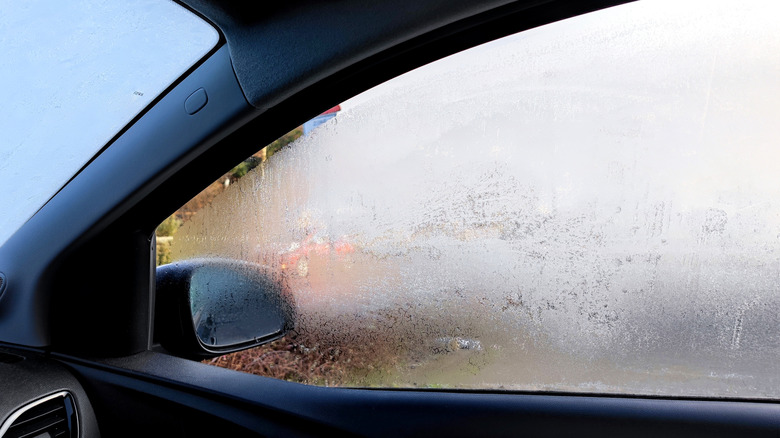
Fog can block the view on your car's windows and windscreen in both hot and cold weather. Fogging on the outside of the glass usually occurs in warmer climates when cool air from the AC strikes the hot windows of your car. Meanwhile, interior condensation occurs when warmer air from the inside clashes with icy air from the outside, such as when turning on the heater on a winter morning. No matter the case, it's not safe to cruise around with foggy windows. Impaired vision is the last thing you need when the entire town is blanketed in snow and ice.
There are a couple of DIY hacks that can keep your car's windows fog-free. Placing a few packets of silica gel on the dashboard and under the seats can help absorb excess moisture and prevent condensation on the glass. If you don't have silica gel, place a few handfuls of kitty litter in a clean sock, tie off the end, and use it to wipe fog off the windshield. Believe it or not, the desiccants in kitty litter work in masking the smell of cat poop just as well as absorbing water vapor.
If you don't like cats (you animal), mixing a teaspoon or two of plain, white vinegar with water in a spray bottle is a fantastic anti-fog and anti-haze solution. Shaving foam — our favorite fog solution — works similarly to vinegar. Smear shaving foam (stay away from the gel variety) on the glass using a clean microfiber towel and let it sit for two minutes. The final step is to wipe away the excess with a separate towel, and voila.
Condensation starts from within

Without sounding like a bespectacled lab rat, the humidity of the air inside your car is the culprit behind foggy windows during winter. Since humidity is the measurement of water droplets, water vapor, or moisture in the air, keeping the interior dry will keep humidity in check and reduce the likelihood of fog obstructing your vision. Ice or snow on the carpets and seats from your boots, clothes, and umbrella will evaporate soon enough, and guess where all that moisture goes?
It evaporates into the air, and the temperature difference between your car's humid interior and the colder outside air produces fog on the windows and windshield. Meanwhile, older vehicles with dilapidated rubber seals are not as watertight as they used to be, and this allows rainwater or moisture to enter the cabin and cause fogging. On the flip side, newer vehicles have optimized seals and better insulation, but it also means they're prone to condensation. Why? The air-tight seals make it harder for humid inside air to escape to the outside, and the water droplets have no choice but to fog up the windows when the mercury drops.
What's the fastest way to remove windshield fog?
It may sound counterintuitive in the dead of winter, but turning on the AC can significantly lower the air humidity and remove fogging. Switching the climate control to "outside" or "fresh air" from "recirculate" will speed things up, as this helps cooler outside air to enter the cabin, drop the humidity level, and remove condensation. If your car has a demister, turn it on and keep it on to help clear the windscreen and windows of fog.
However, the quickest way to defog your car's windshield in cold weather is to turn the heater to max, turn the AC on, switch from "recirculate" to "outside," and crack open the windows (only when possible) to expedite the dehumidification. There's science behind the technique but thank goodness we're a car site. As a final word, keeping the windows and windshield clean from the inside and outside will help ward off fog on the glass. Avoid using ammonia-based glass cleaners to prevent streaks.