

Trump's Big American Automaking Investments Aren't Happening
Happy Monday! It's September 29, 2025, and this is The Morning Shift — your daily roundup of the top automotive headlines from around the world, in one place. This is where you'll find the most important stories that are shaping the way Americans drive and get around.
In this morning's edition, we're looking at foreign investment in U.S. auto manufacturing — or a lack thereof — and the future of the auto market in the States. We'll also look at the latest from Jaguar Land Rover, and a shakeup at Stellantis.
1st Gear: Trump is bragging about new auto plants in the U.S., but they're not really being built
The Trump administration has decided that auto manufacturing needs to come back to the United States, and that tariffs are the best way to make that happen. Unfortunately for the administration, while it's instituted tariffs, the predicted manufacturing boom doesn't really seem to be panning out. Instead, automakers are just reallocating their existing factories. From Reuters:
President Donald Trump frequently describes a booming U.S. auto industry, fueled by new factories from Canada, Mexico and Europe that he says will soon be producing American-made vehicles for global markets – from Tokyo to Paris.
"We have so many car company factories under construction or being designed right now. And they're coming from China. They're coming from Mexico," Trump said at a White House event earlier this month. A few days later, he lamented the loss of U.S. car production over the years, and proclaimed: "Car factories are coming back."
But there is little evidence of a construction binge of new U.S. car factories. Instead, auto companies are making tactical moves at existing plants as they adapt to the two pillars of Trump's second-term business agenda: tariffs, and policies hostile toward electric vehicles.
To sidestep tariffs, some automakers are retooling existing, idle factory space in the U.S. to build vehicles that they have been importing, and which now face levies.
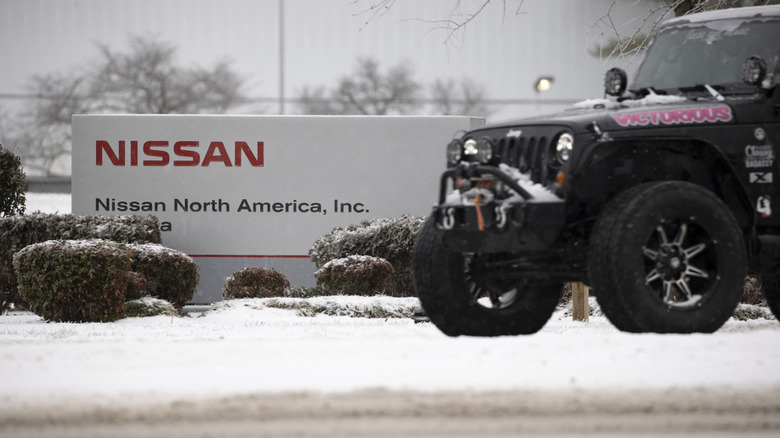
For example, Nissan has said it plans to make more Rogue SUVs and other vehicles at its plants in Tennessee and Mississippi, while reducing imports from Japan. Japanese vehicles face levies of 15% under a tentative deal with the Trump administration.
Ah well, at least this lack of development in the U.S. only came at the cost of access to international goods. Have you tried buying something from abroad recently? It's getting very complicated.
2nd Gear: Get ready for the car market to tank
Analysts predicted that car sales would tank this year, and so far those predictions haven't been borne out. That has less to do with the analysts being wrong, though, and more to do with the endless delays on the Trump administration's goals — people have been panic-buying cars before the prices climb. Now that EVs are set to lose their tax credit, though, expect the crash. From Automotive News:
U.S. consumers spent the summer buying more new vehicles than expected, bucking projections from earlier in the year that tariffs would push up prices and stall sales.
Instead, demand for new cars and light trucks has been robust and resilient so far this year, as buyers seek to get ahead of any price hikes tied to President Donald Trump's tariffs on imported vehicles and parts.
The third quarter, in particular, has benefited from a surge of interest in electric vehicles before the Sept. 30 expiration of a $7,500 federal tax credit. Analysts expect that to result in record market share for EVs, and Edmunds predicts the overall industry will have its best third quarter since 2019.
The market's momentum may be about to fade, however.
After reaching about 16.2 million in September, the seasonally adjusted, annualized rate of sales is likely to sputter in the fourth quarter, analysts said, citing inflation, tighter inventory and the loss of the EV incentives.
Is it good when no one in your country can afford to buy anything, right?
3rd Gear: Jaguar Land Rover is slowly spinning its factories back up
Jaguar Land Rover has spent 2025, to use a technical term, going through it. Now, the company is finally starting to spin some of its factories back up, but it'll take some time before things are back to normal. From Reuters:
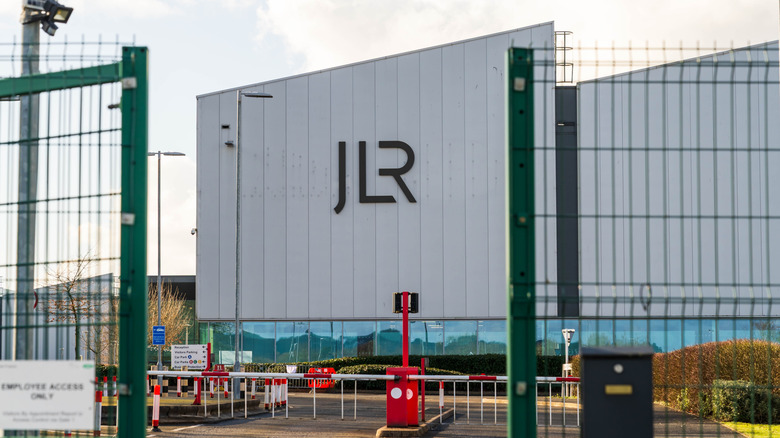
Jaguar Land Rover (JLR), owned by India's Tata Motors, said on Monday it will resume some of its manufacturing operations in the coming days, as the luxury carmaker begins a phased recovery following a cyber attack earlier this month.
This comes a day after Britain said it will back JLR with a $2 billion loan guarantee to help support its supply chain in the wake of the production shutdown after the attack.
...
JLR has already struggled this year, reporting a near 11% quarterly sales drop in July, due, in part, to a temporary pause in shipments to the United States after the Donald Trump administration imposed tariffs on all car imports.
While the automaker resumed exports to the U.S. in May, it slashed its fiscal 2026 profit margin target to 5%-7% from 10% amid continuing uncertainty around U.S. tariff policies.
The company has three factories in Britain that manufacture a total of about 1,000 cars per day. According to the BBC, it is losing at least 50 million pounds ($68 million) a week after the shutdown of its factories, with many of its 33,000 staff told to stay at home.
Don't forget the cyberattack and shutdown when JLR eventually reports its 2025 fiscal year, and the world's loudest morons start saying that the company went woke and accordingly broke because it had models in an ad once. They will blame JLR's finances on that one concept launch, which is apparently woke for some reason, and you need to remember this context.
4th Gear: Man leaves job
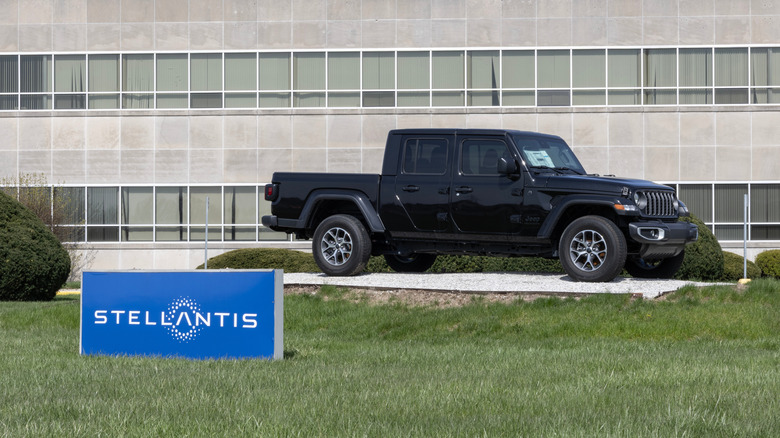
A few weeks back, now-former senior vice president and head of global Jeep sales Mike Koval left Stellantis. Now, the company's chief financial officer is also out, to be replaced by the head of North American finances. From Bloomberg:
Stellantis NV Chief Financial Officer Doug Ostermann is stepping down, another change at the top of the automaker that's under pressure to engineer a turnaround.
Ostermann, who was appointed CFO in October 2024, will be replaced immediately by Joao Laranjo, a veteran from Stellantis predecessor company Fiat Chrysler Automobiles who rejoined this year as its North America finance chief. Ostermann resigned for personal reasons, the company said Monday.
Ostermann's departure is surprising, compounding the "general management instability and may add to worries about the extent of the efforts required to turn around the company," Oddo BHF analyst Michael Foundoukidis wrote in a note to clients.
One might guess that a shuffling of upper staff like this would be to get fresh blood in management, but this seems to be swapping longtime Stellantis employees for other longterm Stellantis employees. I'm inclined to believe the reasoning that Ostermann left of his own accord, simply because this doesn't seem to mean much for the direction of the company.
Reverse: Good thing that could never happen again
I'm so glad that was a one-time thing, never to be replicated. Anyway, time to take a big sip of coffee and look at how much of our economy is tied up in the AI bubble.
On The Radio: Gorillaz - 'The Happy Dictator' ft. Sparks
New Gorillaz time baby!