

Can Carbon Fiber Wheels Be Repaired?
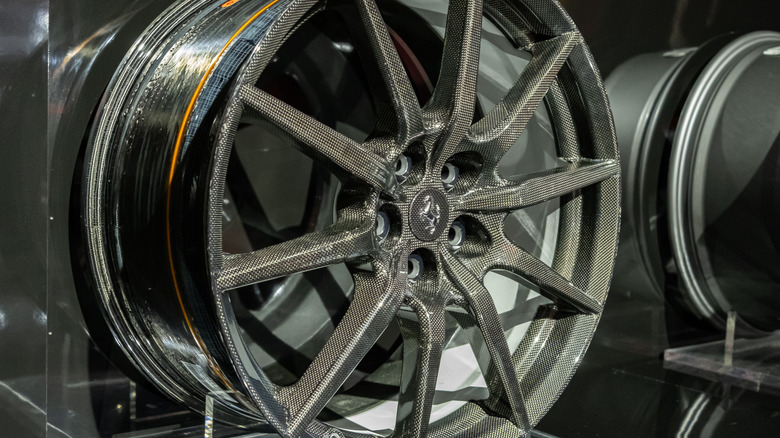
Carbon fiber wheels exist because, for the right kind of driver — or automaker — they solve problems aluminum never could. They're light but made of sturdy and durable carbon fibers tightly interlaced and secured with resin (epoxy), forming a robust structure without excess weight. That means less unsprung mass fighting against suspension. It also translates to sharper handling and faster acceleration. Carbon fiber wheels are stiff, resisting flex where alloys might give way, and that stiffness improves cornering grip. On EVs, shaving pounds at the wheels helps extend range. Ford bragged about weight savings on the Mustang GT350R since 2015, even offering carbon fiber wheels as an option for the 2024 Mustang Dark Horse. Other players are trying out diverse methods, like Hyundai and its semi-carbon wheel.
As carbon fiber wheels grow in popularity, many drivers find themselves wondering whether they can be repaired if damaged. The short answer is that it depends on the type of damage. Light curb rash or a chipped clear coat? That's cosmetic and fixable with sanding, resin work, and repainting. However, cracks, delamination, and structural fractures are another story. Carbon fiber doesn't bend like metal. And when it fails, repairs aren't as simple as welding or reshaping. Many cases require advanced processes to even attempt a fix, and the line between "repairable" and "trash" is razor thin.
That's the paradox — carbon wheels are advanced, high-performance upgrades, but they're also delicate in ways that aluminum isn't. Yes, they can be repaired. And in many cases, repairs are absolutely worth it, considering the fact that a set of carbon fiber wheels can cost thousands of dollars, but only if the damage lives in the shallow end of the pool.
Carbon fiber wheels repair options
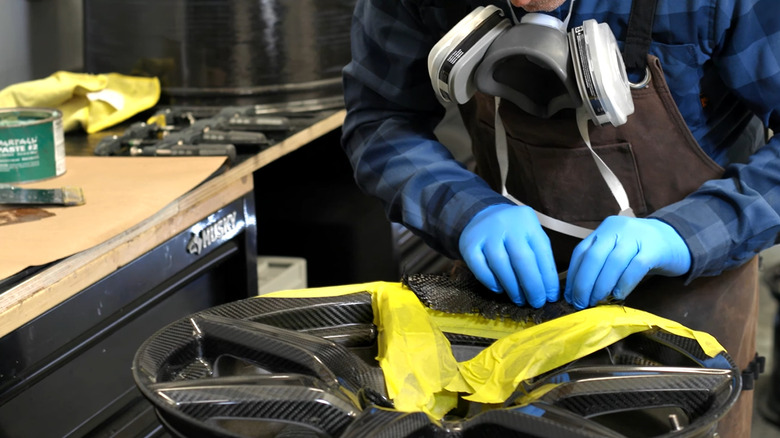
If your carbon fiber wheel just picked up a nick from a curb rash, you may be tempted to grab a sanding block, polish the crack smooth, and call it a day. In some cases, that's the correct procedure. Cosmetic scratches can be repaired with basic sanding and painting (adhesive primer, paint and clear coat). Many "cracks" are actually just surface chips in the epoxy finish, not the carbon structure underneath. This type of damage is pretty harmless and fixable with some patience and a steady hand.
However, once cracks go deeper — especially if the weave itself is damaged — the game changes. Fixing structural damage requires advanced methods like x-ray inspections, stripping, layering up of carbon fiber and resin, curing, and post-curing (sanding, painting, touch-ups) in a controlled environment. In other words, these aren't repairs that you can complete in your buddy's home garage. Repairs done improperly risk leaving weak points that could fail under load. That's the nightmare scenario — imagine a repaired wheel failing at highway speeds.
And of course, there's the cost. Basic cosmetic repairs might run $100 to $250, while structural fixes can hit $400 to $800 or more, depending on the severity. That's still cheaper than a full replacement, which can cost around $1500 to $5000 or more, depending on the model. However, it does mean weighing the risk, price, and peace of mind.
Is it worth repairing carbon fiber wheels?
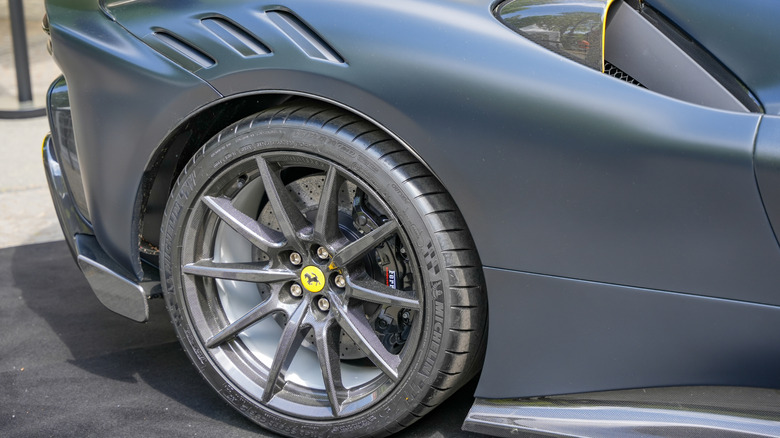
Here's the brutal truth: Carbon fiber wheels can be repaired, but not every repair is worth trusting. Yes, carbon fiber wheels save weight and look like something ripped straight from a Le Mans prototype, but once damaged, the line between cosmetic and structural isn't always clear. Improper repairs could hide cracks that only fail under stress, and, unlike aluminum, carbon fiber won't display warning signs — it just snaps. Reddit threads are filled with owners torn between saving thousands through a repair or swallowing the cost of replacement. Some swear by their repaired wheels, while others admit they never felt safe again.
The real problem is certainty. An aluminum wheel can be repaired easily (unless it's a wreck). Carbon fiber is trickier. Even after professional work, you're relying on advanced inspection methods to say whether it's safe at triple-digit speeds. Some companies acknowledge this uncertainty, which is why they draw such a hard line between what's cosmetic and what's structural.
At the end of the day, the decision blends logic with gut feeling. Carbon fiber, which was nearly banned in Europe at one point, is cutting-edge tech, but repairing it is a gray zone where not all fixes are equal. If peace of mind matters more than saving cash, replacement might be the smarter play. If not, a trusted composite expert could keep those glossy carbon hoops spinning for years.